What if the most aggressive way to clear your land is actually the most expensive way to ruin its future? Many Kentucky landowners watch their fields disappear under a thicket of invasive bush honeysuckle and cedar, feeling the pressure of lost productivity every season. You might worry that the only solution is a heavy bulldozer, yet the fear of losing your precious topsoil and facing massive erosion often keeps you from starting. It's a common dilemma, but restoring your property doesn't have to mean destroying the ground beneath it.
This guide provides a clear roadmap for pasture reclamation Kentucky residents can use to transform overgrown brush into high-value grazing land. We'll explore modern, soil-friendly techniques like forestry mulching that protect your acreage while increasing property value and curb appeal. You'll also learn about available resources, such as the Kentucky State Cost Share program which can provide up to 75% reimbursement for eligible conservation practices. From managing invasive species to preparing for livestock or hay, we'll show you how to reclaim your land with precision and care.
In this guide, you will learn:
- How pasture reclamation Kentucky landowners can transform unproductive brush into high-value grazing land while significantly increasing property value.
- The specific characteristics of invasive species like bush honeysuckle and eastern red cedar that commonly impact farms in Adair, Green, and Taylor Counties.
- Why modern forestry mulching is a superior, soil-friendly alternative to traditional clearing methods that often lead to topsoil loss and erosion.
- A practical five-step roadmap for successfully restoring your acreage, from initial boundary identification to professional clearing.
- The benefits of working with a local partner who understands the unique soil conditions and vegetation challenges of South Central Kentucky.
What is Pasture Reclamation and Why Does Your Kentucky Land Need It?
In the rolling hills of South Central Kentucky, land that isn't actively managed quickly reverts to a wild state. What is Pasture Reclamation exactly? At its core, it's the systematic process of restoring unproductive, overgrown acreage to its original state as fertile grazing or hay fields. For many landowners in Adair, Green, and Taylor Counties, pasture reclamation Kentucky services aren't just about aesthetics; they're about reclaiming lost economic potential. When brush and invasive species take over, your livestock capacity drops and your property value stagnates. Reclaiming that land turns a liability back into an asset.
Waiting to address overgrowth often leads to what locals call the "Creeping Cedar" problem. Eastern Red Cedars and other fast-growing softwoods can take over a field in just a few seasons. As these trees mature, they shade out the grass and suck moisture from the soil, making the eventual restoration more complex and labor-intensive. Beyond the financial aspect, reclamation is a form of environmental stewardship. By removing the invasive canopy, you allow native grasses to return, which improves local biodiversity and provides better habitat for regional wildlife.
Signs Your Land is Ready for Reclamation
How do you know when a field has crossed the line from "unmowed" to "overgrown"? One of the clearest indicators is canopy closure. If the brush is so thick that sunlight can't reach the ground, grass will stop growing entirely. You should also assess the density of invasive species like Autumn Olive and Multiflora Rose; these plants spread aggressively and can choke out a pasture in a matter of months. Finally, check your fence lines. If you can't see your boundaries or access them with farm equipment, it's time to consider a professional intervention.
The Difference Between Clearing and Reclamation
It's a common mistake to use the terms clearing and reclamation interchangeably. Traditional clearing often focuses solely on removing trees, sometimes leaving the ground scarred or stripped of nutrients. In contrast, reclamation is about restoring the entire ecosystem. This process prioritizes nutrient cycling, where organic material is returned to the earth to feed the soil rather than being hauled away or burned. Pasture reclamation is a strategic investment in soil health and land utility. It ensures that once the brush is gone, the land is actually ready to support life again.
Common Obstacles: Invasive Species and Overgrowth in South Central Kentucky
In the rolling landscapes of Adair, Green, and Taylor Counties, the battle for productive land is often a fight against three primary invaders. We call them the "Big Three": Bush Honeysuckle, Eastern Red Cedar, and Multiflora Rose. These species aren't just a nuisance; they're biological competitors that actively degrade your property's utility. Because South Central Kentucky has fertile, limestone-rich soils, these plants find the perfect environment to spread with alarming speed. If left unchecked, a clear field can transition into an impenetrable thicket in just a few growing seasons.
The impact of these invasives goes deeper than the surface. Species like the Eastern Red Cedar are notorious water consumers, often sucking moisture away from the soil that native forage grasses desperately need. This creates a localized drought effect even during periods of normal rainfall. UK research on reclaimed land emphasizes that managing these soil and water variables is essential for the long-term success of any forage crop. Beyond nutrient theft, dense overgrowth creates a damp, shaded microclimate. This environment serves as a primary breeding ground for ticks, posing a health risk to both your family and your livestock.
Livestock safety is a significant concern for those pursuing pasture reclamation Kentucky projects. Multiflora Rose, for instance, grows in sprawling, thorny mounds that can injure a cow's eyes or hide. These thickets also hide old fence wire, deep holes, and jagged stumps, making it dangerous to move cattle or operate machinery. Reclaiming this land isn't just about appearances; it's about making your farm a safe, functional workspace again.
Identifying Kentucky-Specific Invasive Plants
Spotting these plants early is the key to preventing a total takeover. Bush Honeysuckle is one of the first plants to leaf out in the spring and the last to lose its leaves in the fall, making it easy to identify in a wooded understory. Eastern Red Cedar is a hardy evergreen that often colonizes neglected pastures, starting as small spikes and quickly growing into dense, light-blocking trees. Multiflora Rose is characterized by its long, arching stems and clusters of small white flowers. If you see these plants encroaching on your fence lines, your land is already under threat.
The Problem with Traditional "Bush Hogging"
Many landowners attempt to handle overgrowth with a standard tractor and bush hog. While this works for tall grass, it's often insufficient for heavy reclamation. Trying to mow through thick woody stems or hidden cedar stumps can easily shatter blades or damage your PTO. When the "brush" becomes too thick for a standard mower, it's a sign you've moved beyond maintenance and into the territory of professional restoration. If you're facing a wall of thorns and cedar, seeking out professional invasive plant removal is a safer and more effective way to protect your equipment and your time.
Methods of Reclamation: Forestry Mulching vs. Traditional Clearing
For decades, the standard response to overgrown land was to call in a bulldozer. While this approach is effective at moving mass, it often leads to significant topsoil loss and erosion issues in our local Kentucky terrain. When you scrape the earth to remove a stump, you aren't just clearing brush; you're stripping away the organic layer needed for future forage growth. This "brute force" method also creates the burn pile problem. You're left with massive mounds of debris that either require hazardous burning or take years to rot, which adds more logistical hurdles to your project.
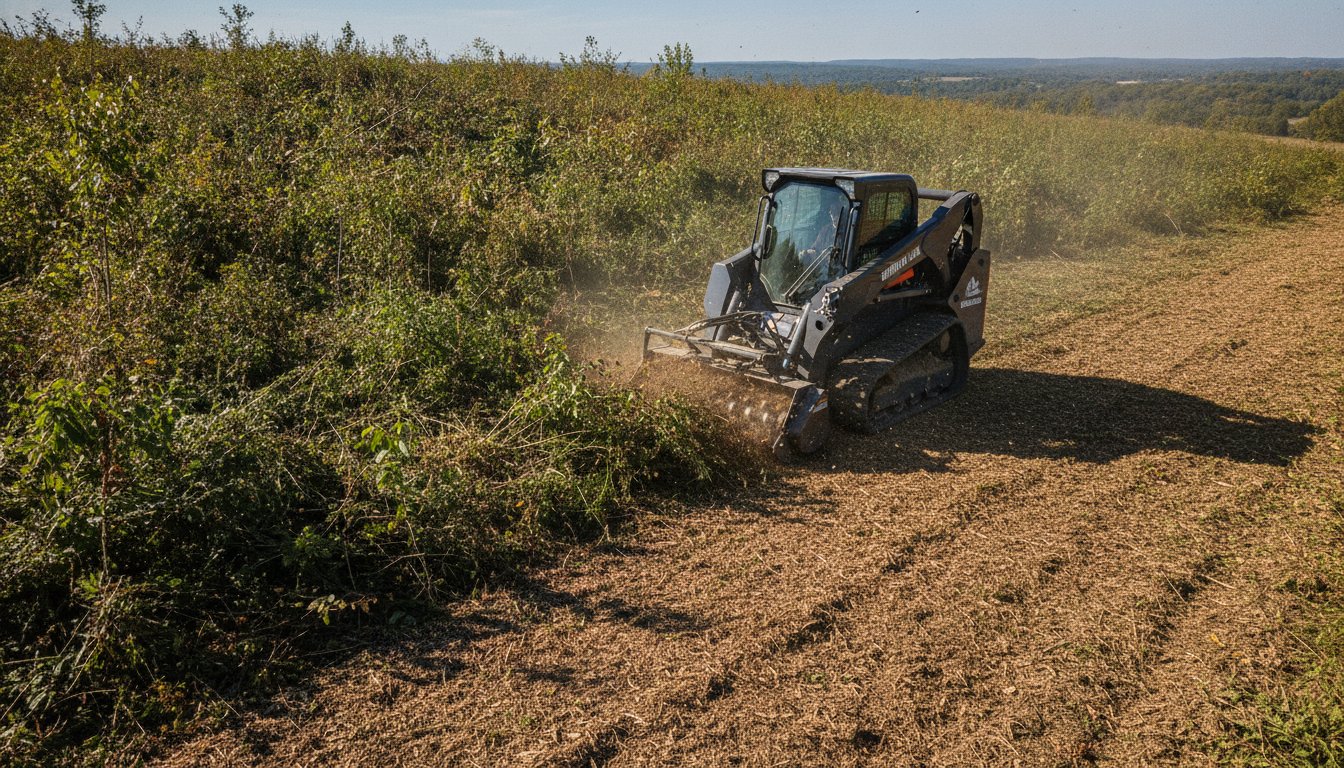
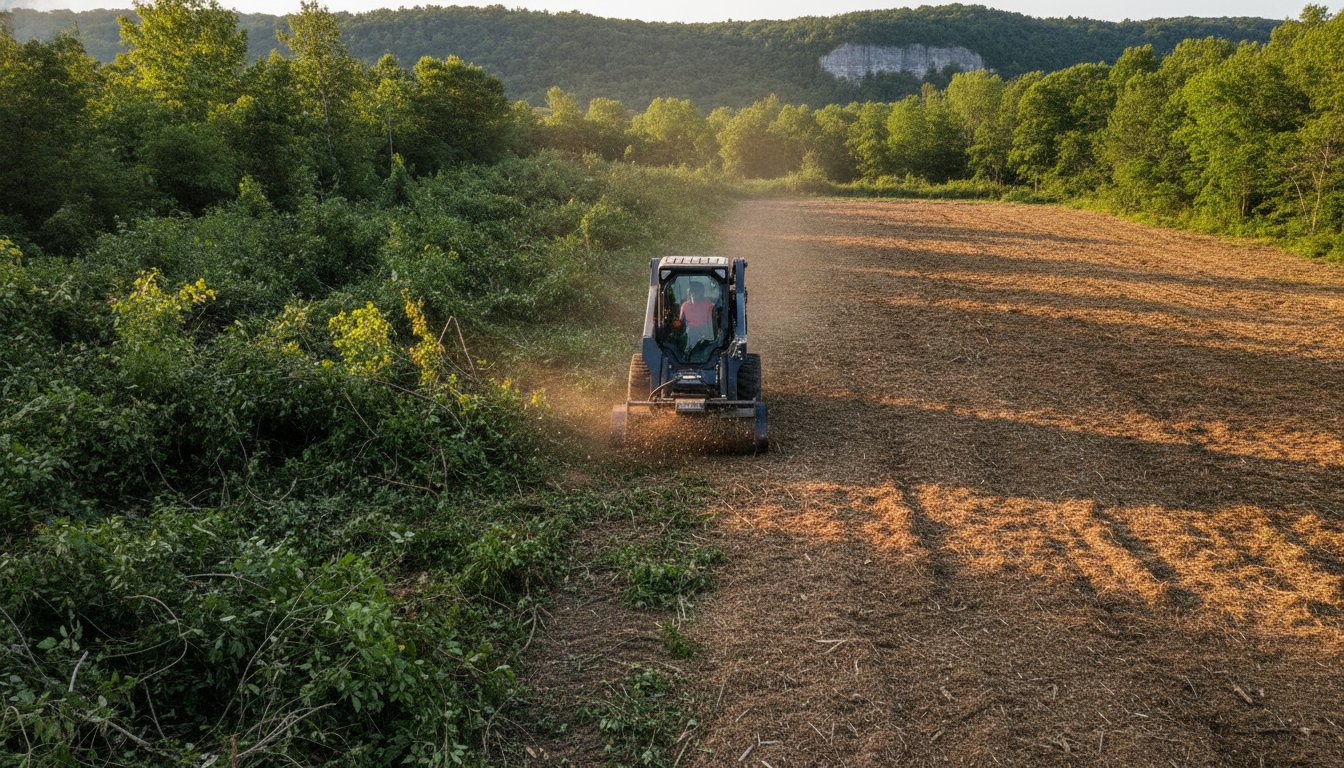
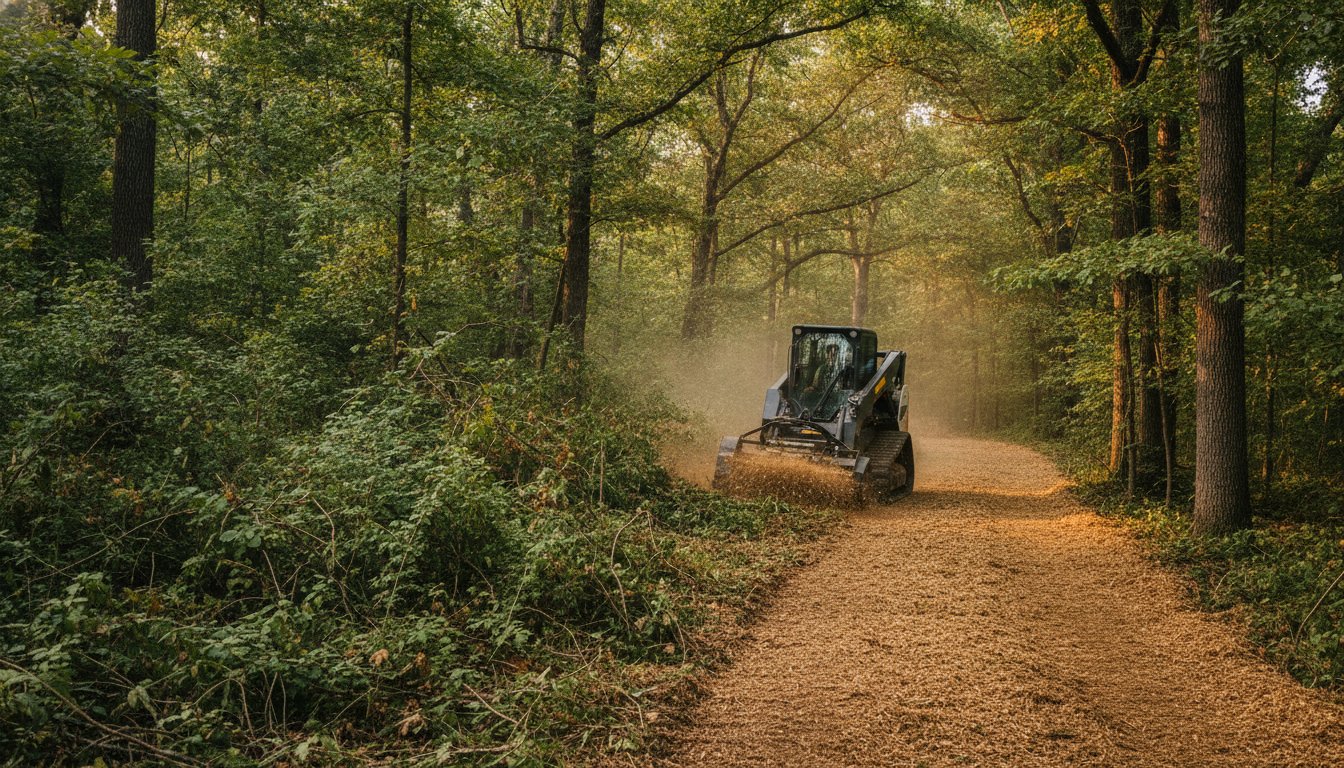
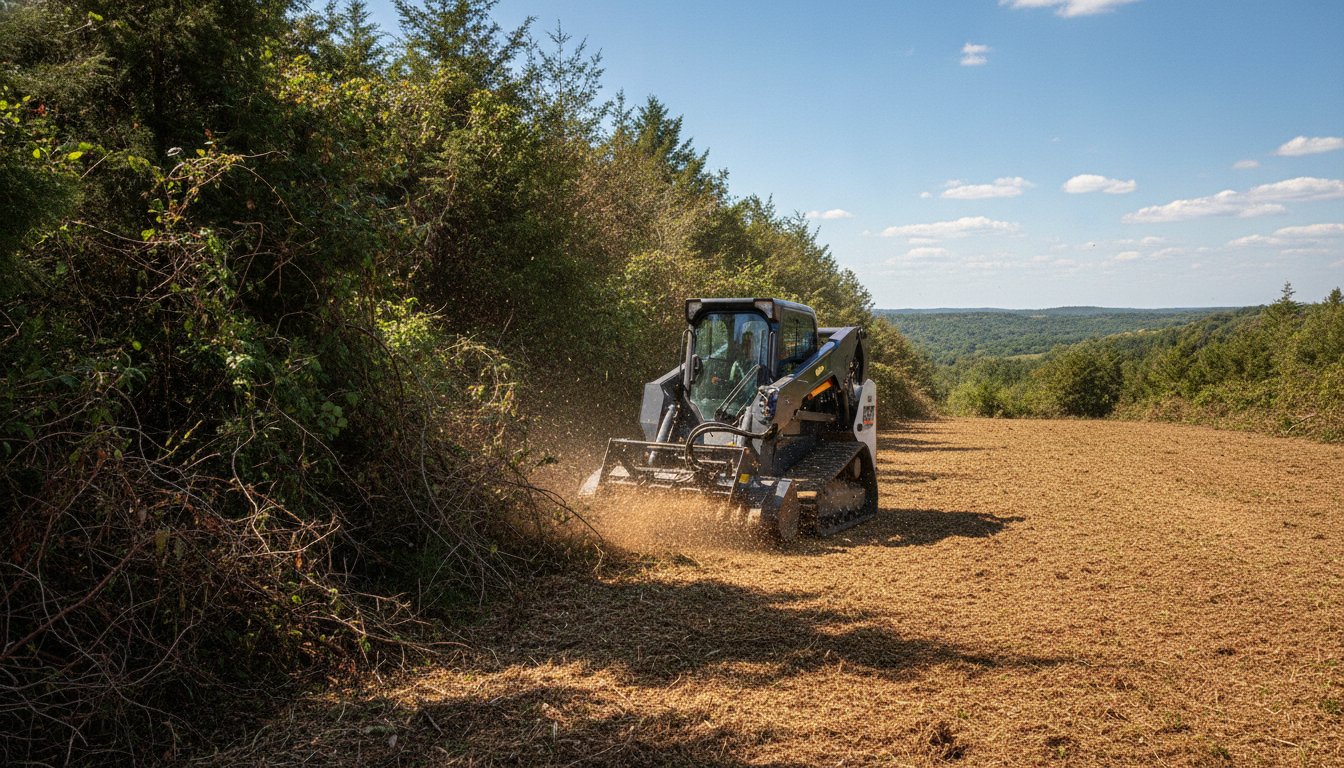
Modern pasture reclamation Kentucky projects favor a more surgical approach. Forestry mulching is a one-step process that grinds vegetation into a fine mulch right where it stands. This technique is often 30-50% less expensive than traditional land clearing because it eliminates the need for multiple machines, hauling fees, and debris disposal. Instead of creating waste, you're creating a nutrient-rich layer that protects the ground. In fact, the mulch layer created by this process can reduce soil erosion by 30-50%, keeping your valuable Kentucky dirt exactly where it belongs.
Why Forestry Mulching is the Gold Standard
Forestry mulching provides immediate results by turning thick brush into organic ground cover in minutes. Because all biomass stays on-site, you aren't exporting the nutrients your land worked hard to produce. The equipment used also features low ground pressure, which is critical for protecting the delicate clay and loam structures found in our region. This prevents the heavy compaction that often occurs with bulldozers, ensuring the soil remains porous and ready for new seed.
Comparing Land Clearing Techniques
Choosing the right method depends on your long-term goals for the property. If you're looking for a "ready-to-seed" finish without the mess of traditional clearing, mulching is the clear winner. This is especially true for the rolling hills of Taylor and Hart Counties, where steep grades make erosion a constant threat. For a deeper look at how these methods stack up, you can read our detailed guide on Forestry Mulching vs Bulldozing.
| Feature | Bulldozing | Forestry Mulching |
|---|---|---|
| Soil Impact | High (Topsoil Loss) | Low (Soil Preservation) |
| Speed | Slow (Multiple Steps) | Fast (One-Step Process) |
| Debris | Burn Piles/Hauling | Nutrient-Rich Mulch |
| Ready-to-Seed | Requires Grading | Immediate |
Ultimately, the goal is to restore the land's utility without compromising its health. By choosing a method that mimics natural nutrient cycling, you're setting your future pasture up for years of productive growth with minimal maintenance requirements.
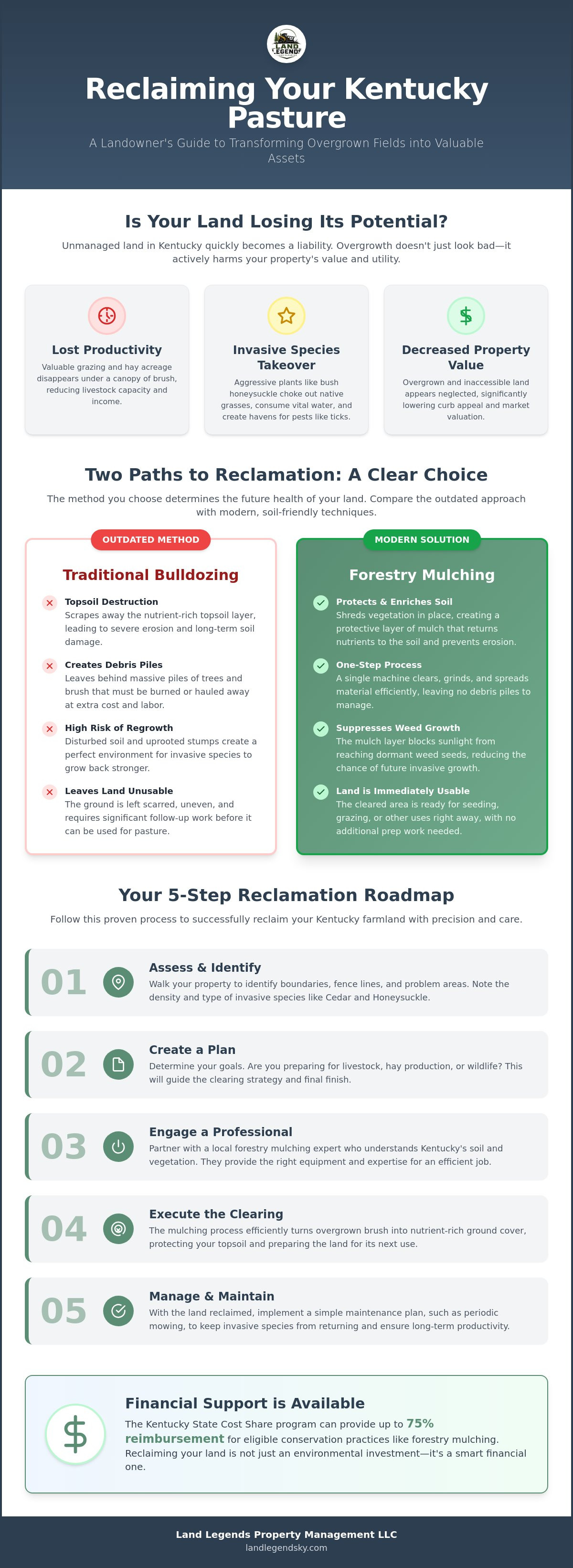
5 Steps to Successfully Reclaiming Your Kentucky Farmland
Restoring a field is a methodical process that requires more than just heavy equipment. It's a sequence of actions designed to shift the biological balance of your property from invasive brush back to productive forage. When approaching pasture reclamation Kentucky landowners often find that a structured plan prevents costly mistakes and ensures the long-term health of the soil. By following these five steps, you can move from an overgrown thicket to a functional meadow with confidence.
Step 1: The Pre-Reclamation Walkthrough
Before any machinery touches the ground, you must walk the property to identify critical features. This is the time to mark "Legacy Trees" such as mature white oaks or walnuts that provide essential shade for livestock and aesthetic value. Kentucky's karst topography often hides hazards like sinkholes, rock outcroppings, and old hand-dug wells that can swallow a machine or a cow. You should also flag hidden fence lines and prioritize specific areas for invasive plant removal. Knowing exactly what to keep versus what to clear is the foundation of precise land stewardship.
Step 2: Professional Mulching and Clearing
Once the boundaries are set, the primary overgrowth is removed. As discussed in previous sections, forestry mulching is the preferred method here. It eliminates the invasive canopy in a single pass, instantly changing the light levels reaching the forest floor. This step is the visual turning point for your property, where the potential of the land finally becomes visible.
Steps 3 & 4: From Mulch to Meadow
The mulch layer left behind acts as a natural nursery for your new seeds. It holds moisture, prevents erosion on Taylor County's rolling hills, and slowly releases nutrients back into the earth. However, you shouldn't guess when it comes to soil health. We recommend working with local extension offices in Green or Russell County for professional soil testing. Keep in mind that programs like the County Agricultural Investment Program (CAIP) require a soil test from the last 12 months before you apply for seeding cost-share assistance. For Kentucky pastures, a blend of Orchardgrass, Fescue, and Clover is typically the most resilient choice for local livestock.
Step 5: Maintenance and Rotational Management
The final step is protecting your investment. Invasives are opportunistic and will try to return. Implementing rotational grazing or a consistent mowing schedule prevents new saplings from taking hold. If you're ready to start this transformation, you can schedule a professional property assessment to determine the best path forward for your specific acreage.
Successful reclamation is a marathon, not a sprint. By taking the time to test your soil and choose the right forage, you ensure that the land remains productive for decades rather than just a single season. This systematic approach turns a neglected woodlot back into the hardworking farmland it was meant to be.
Partnering with Land Legends for Professional Reclamation
Why choose a local specialist? When it comes to pasture reclamation Kentucky property owners need a partner who knows that no two fields are exactly alike. At Land Legends, we view ourselves as more than just equipment operators. We're local stewards who recognize the difference between a nuisance weed and a legacy oak. Our approach is rooted in precision and safety. This ensures your restoration project is handled with the methodical care your family's heritage deserves.
Our local expertise in South Central Kentucky allows us to anticipate the challenges unique to our region. Do you have heavy clay soil that compacts easily under heavy machinery? We use high-performance skid steer mulchers designed with low-ground-pressure tracks. This specific equipment allows us to move across your property with minimal site impact, protecting the soil structure we've discussed in previous sections. Whether we're clearing a simple fence line to keep your cattle secure or restoring a full 20-acre pasture, our services scale to meet the specific needs of your farm. We understand how the limestone-rich soil in Taylor and Green counties fuels the rapid growth of cedar and honeysuckle, and we have the right tools to stop it.
Serving Adair, Taylor, Green, and Surrounding Counties
We're deeply committed to the communities we serve. By focusing on precise land clearing rather than mass disruption, we help you maintain the character of your property while reclaiming its utility. We don't believe in a one-size-fits-all approach. Instead, we provide custom quotes based on a thorough understanding of your goals and the current state of your vegetation. This ensures you aren't paying for "brute force" when a surgical touch is what's required. Our team understands the local landscape because we live here too, and we're dedicated to helping our neighbors succeed.
The Land Legends Guarantee
Confidence in your contractor is essential. We maintain transparent communication from the initial walkthrough to the final pass of the mulcher. Our methodical project execution means we show up when we say we will and treat your land as if it were our own. We aren't just clearing brush; we're supporting the long-term health and value of your Kentucky property. If you're ready to see your land again, Contact Land Legends for a pasture reclamation consultation today.
Take the First Step Toward a Productive Future
Restoring your property is a significant undertaking, but it's also one of the most rewarding investments you can make in your land's legacy. Throughout this guide, we've explored how pasture reclamation Kentucky landowners can use surgical forestry mulching to bypass the mess and soil damage of traditional clearing. By following a methodical five-step plan, you can shift from managing a liability to enjoying a high-value, functional meadow that supports livestock and increases your property's overall curb appeal.
As a family-owned and operated team in Adair County, Land Legends understands the unique challenges of our local landscape. We combine specialized skid steer mulching technology with deep local expertise in South Central Kentucky invasives to deliver results that prioritize your soil's health. We're ready to help you navigate the process from the initial property assessment to final forage establishment. If you're tired of watching your fields disappear under cedar and honeysuckle, it's time to take control of your acreage again.
Get a Free Pasture Reclamation Quote from Land Legends
Your land has the potential to be fertile and productive once more. We look forward to helping you uncover the beautiful, hardworking farm that's waiting just beneath the surface.
Frequently Asked Questions
How much does pasture reclamation cost per acre in Kentucky?
Costs for pasture reclamation in Kentucky vary significantly based on the density of the vegetation and the specific clearing method used. Industry data suggests that forestry mulching typically ranges from $400 to $2,500 per acre depending on how thick the brush and small trees have become. Factors such as the presence of rocky karst terrain or steep slopes also influence the final investment. We provide custom property assessments to ensure you receive a precise estimate for your specific acreage and goals.
Will forestry mulching kill the grass I already have?
Forestry mulching does not kill existing grass; it often helps it flourish by removing the invasive canopy that blocks vital sunlight. Because the specialized tracks on our equipment distribute weight evenly, we avoid the deep soil compaction that often kills root systems when using heavier bulldozers. Once the brush is shredded into a fine mulch, the underlying forage can finally access the light and nutrients it needs to grow. This makes it a preferred method for maintaining established fields while removing encroaching woods.
How long does it take to grow grass after mulching?
You can begin the seeding process immediately after the mulching is complete. In our region, grass typically takes between 14 to 21 days to germinate under ideal conditions, such as the moderate temperatures found in the spring or early fall. The mulch layer acts as a protective blanket, retaining moisture in the soil and preventing your new seed from washing away during heavy Kentucky rains. This accelerated preparation helps you transition from unproductive brush to a functional meadow in a single growing season.
Is it better to clear land in the winter or summer in Kentucky?
Winter is often considered the ideal time for pasture reclamation Kentucky projects because the firm ground allows for minimal soil disturbance. Clearing during the dormant season also increases visibility for identifying hidden fence lines and prevents the immediate spread of certain invasive seeds. However, forestry mulching is a year-round service. Summer clearing is highly effective for identifying specific invasive species while they are in full leaf, allowing for a more targeted removal process before they go to seed.
Can forestry mulching handle large cedar trees?
High-performance mulchers can efficiently shred cedar trees up to several inches in diameter, turning them into beneficial organic ground cover. While we specialize in small tree clearing and underbrush removal, very large, mature cedars might require different handling if they exceed the machine's capacity. For most overgrown pastures in our area, mulching is the fastest way to remove invasive evergreens without the need for the mass disruption of bulldozing or the creating of large, unsightly burn piles.
What happens to the mulch left behind after the clearing process?
The mulch remains on-site to serve as a protective nutrient layer for your soil. This organic material slowly decomposes, returning vital minerals to the earth and feeding the new forage crops you plant. It also plays a critical role in erosion control, which is especially important on the rolling hills of South Central Kentucky. By keeping the biomass on your property, you avoid the logistical headaches and environmental waste associated with hauling or burning debris, keeping your topsoil healthy and intact.
Do I need a permit for pasture reclamation in Adair or Taylor County?
Most private agricultural reclamation projects in Adair or Taylor County don't require a specific clearing permit. However, landowners should always maintain an up-to-date Agricultural Water Quality Plan, as it's a requirement for many state cost-share programs. If your project involves significant changes to protected wetlands or waterways, additional state or federal regulations might apply. It's always a good practice to consult with your local extension office to ensure full compliance with current regional agricultural guidelines.
How do I stop invasive honeysuckle from growing back after it is cleared?
Preventing the return of Bush Honeysuckle requires a combination of consistent mowing and healthy forage competition. Once the primary canopy is removed, the increased sunlight encourages grass to grow, which naturally competes with invasive seedlings. Implementing a rotational grazing plan or a bi-annual mowing schedule ensures that any new sprouts are managed before they can establish deep root systems. This proactive maintenance is the key to protecting your investment and ensuring your land stays productive for years to come.