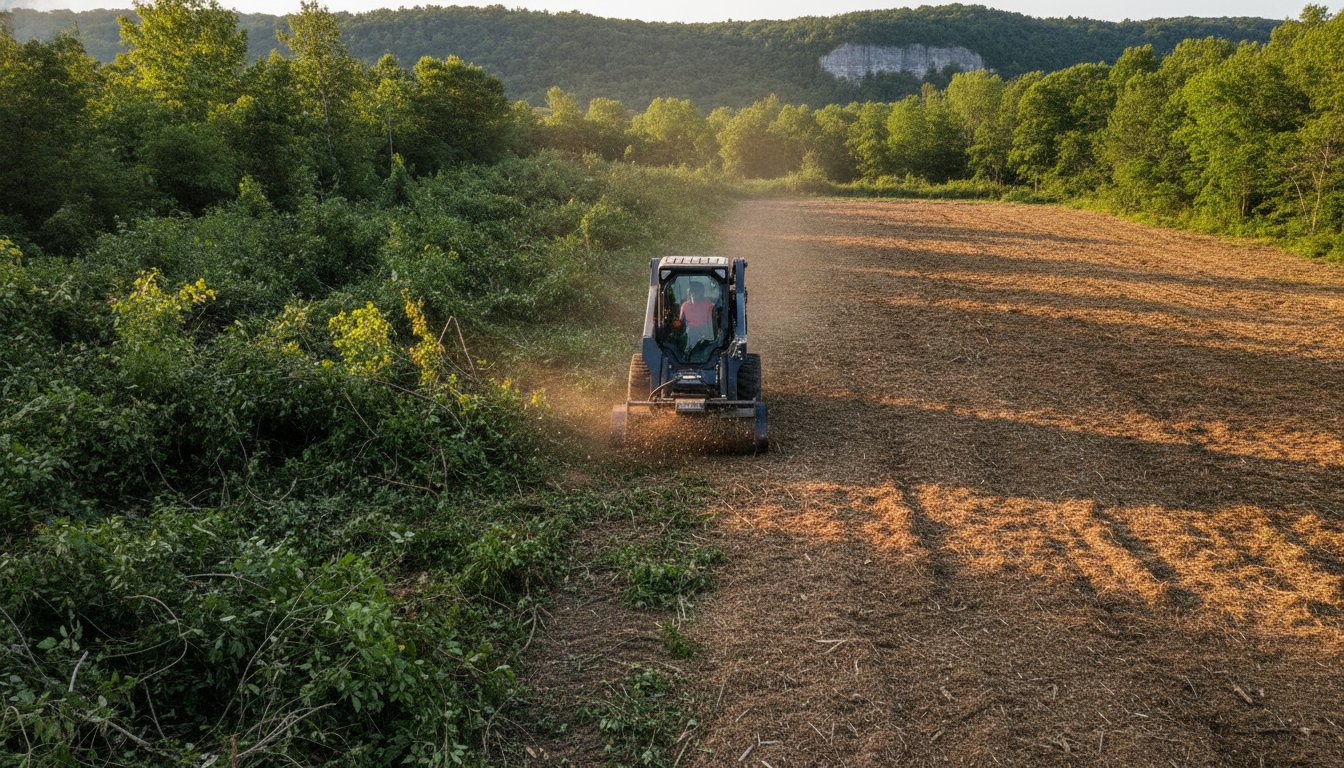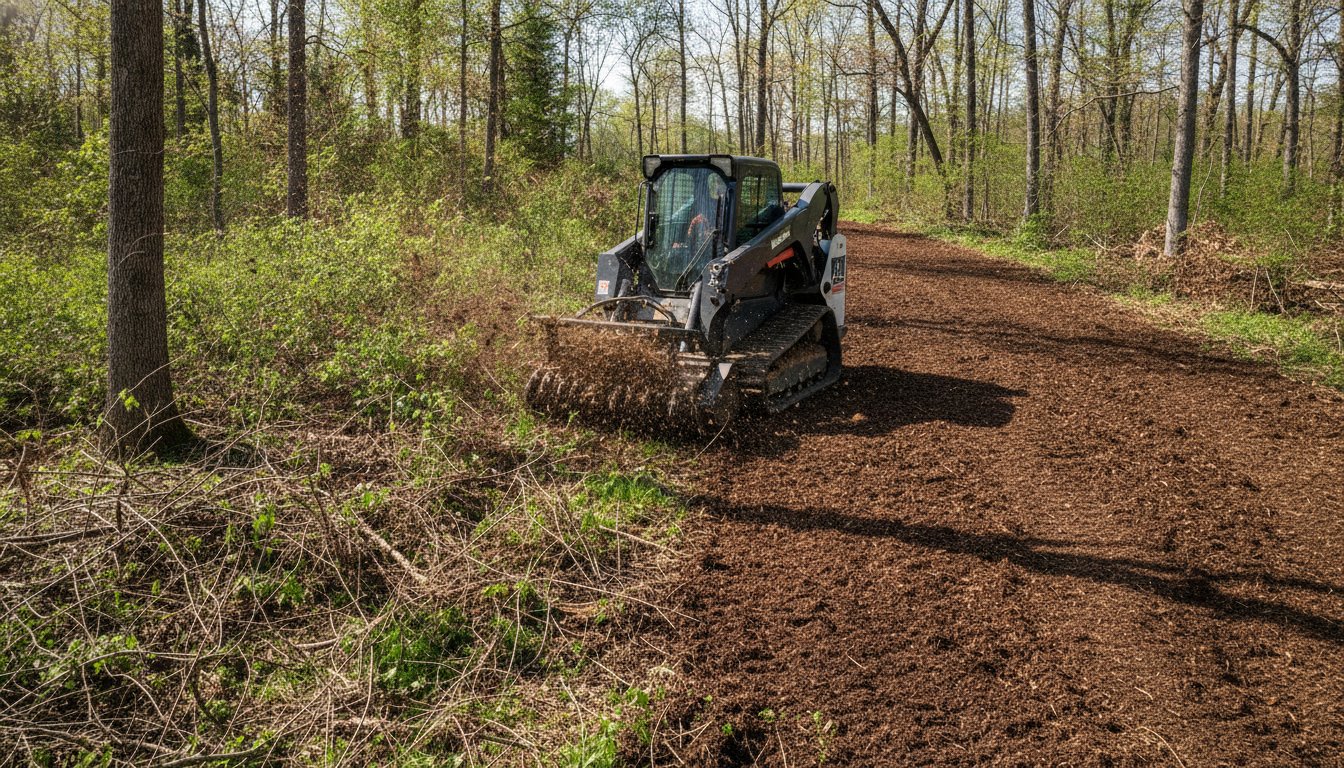
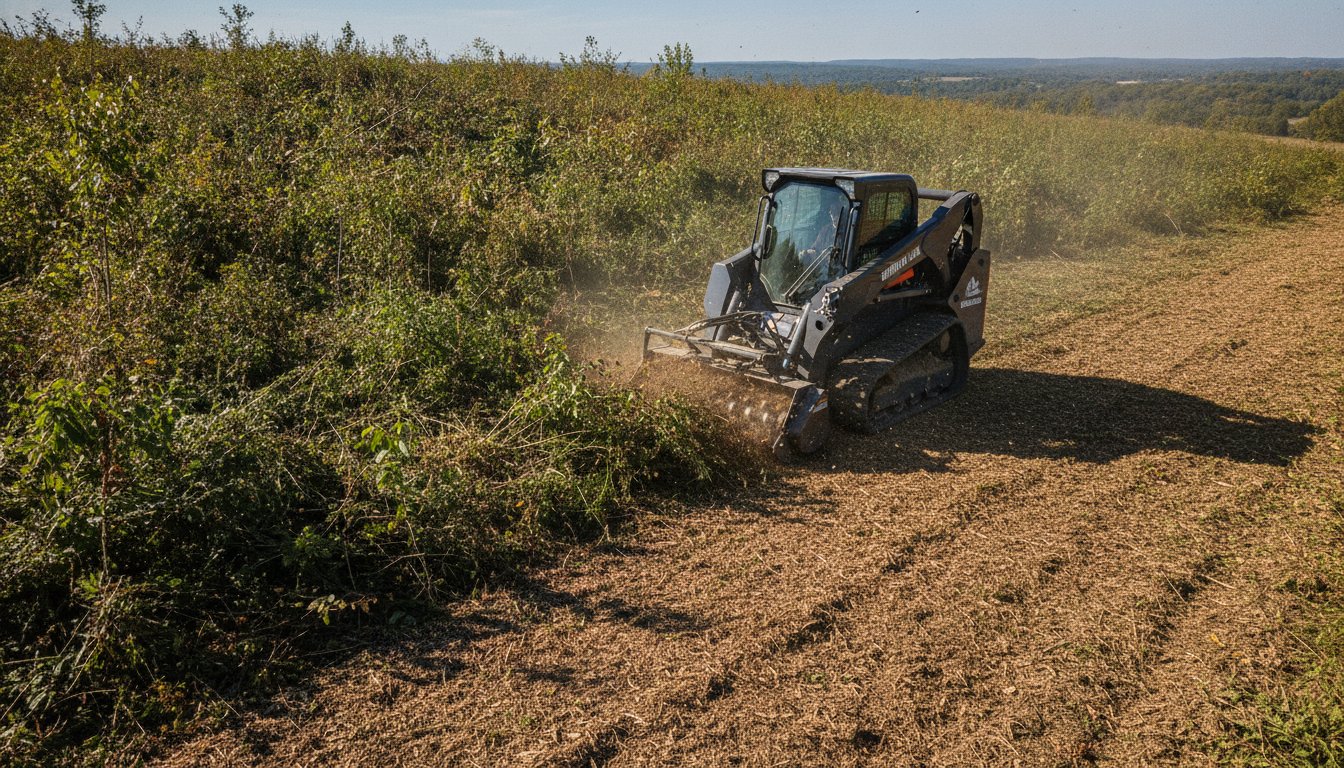
Why spend thousands of dollars hauling debris off your property when that same material could be your land's greatest asset? Managing commercial acreage in South Central Kentucky often feels like a difficult choice between high overhead and environmental damage. You're likely familiar with the headaches of burning permits or the unsightly erosion that follows traditional bulldozing. It's frustrating to watch a project budget disappear into hauling fees while invasive species wait for the first sign of disturbed soil to take over.
This resource guide explores the most efficient ways to approach commercial land clearing Kentucky property managers use to maximize their return on investment. We'll show you how to achieve build-ready or pasture-ready land while preserving the soil health that maintains your property's market value. You'll learn how modern methods like forestry mulching eliminate the need for debris piles and reduce your long-term maintenance costs. We'll also preview the latest 2026 permitting requirements, including KPDES updates, and provide a clear path to preparing your acreage for its next chapter without the typical site prep stress.
Key Takeaways
- Learn why forestry mulching is the most cost-effective method for commercial land clearing Kentucky property managers use to eliminate hauling fees and preserve topsoil.
- Understand the regulatory landscape for South Central Kentucky, including the latest 2026 KPDES permit requirements for sites over one acre.
- Discover how precision clearing improves real estate curb appeal and increases property value for residential or commercial development.
- Follow a professional site assessment checklist to identify invasive species and define your specific land-use goals before breaking ground.
- See how specialized skid steer technology allows for selective thinning and pasture reclamation while protecting the environmental health of your acreage.
Understanding Commercial Land Clearing in South Central Kentucky
What exactly separates commercial land clearing Kentucky projects from simple residential brush removal? It comes down to scale, intent, and the regulatory environment. While a homeowner might want a better view, a property manager needs a site that is build-ready or pasture-ready without incurring massive hauling fees or legal fines. In South Central Kentucky, this often involves managing hundreds of acres of dense undergrowth and small trees. Understanding the nuances of the local landscape is vital for any successful project.
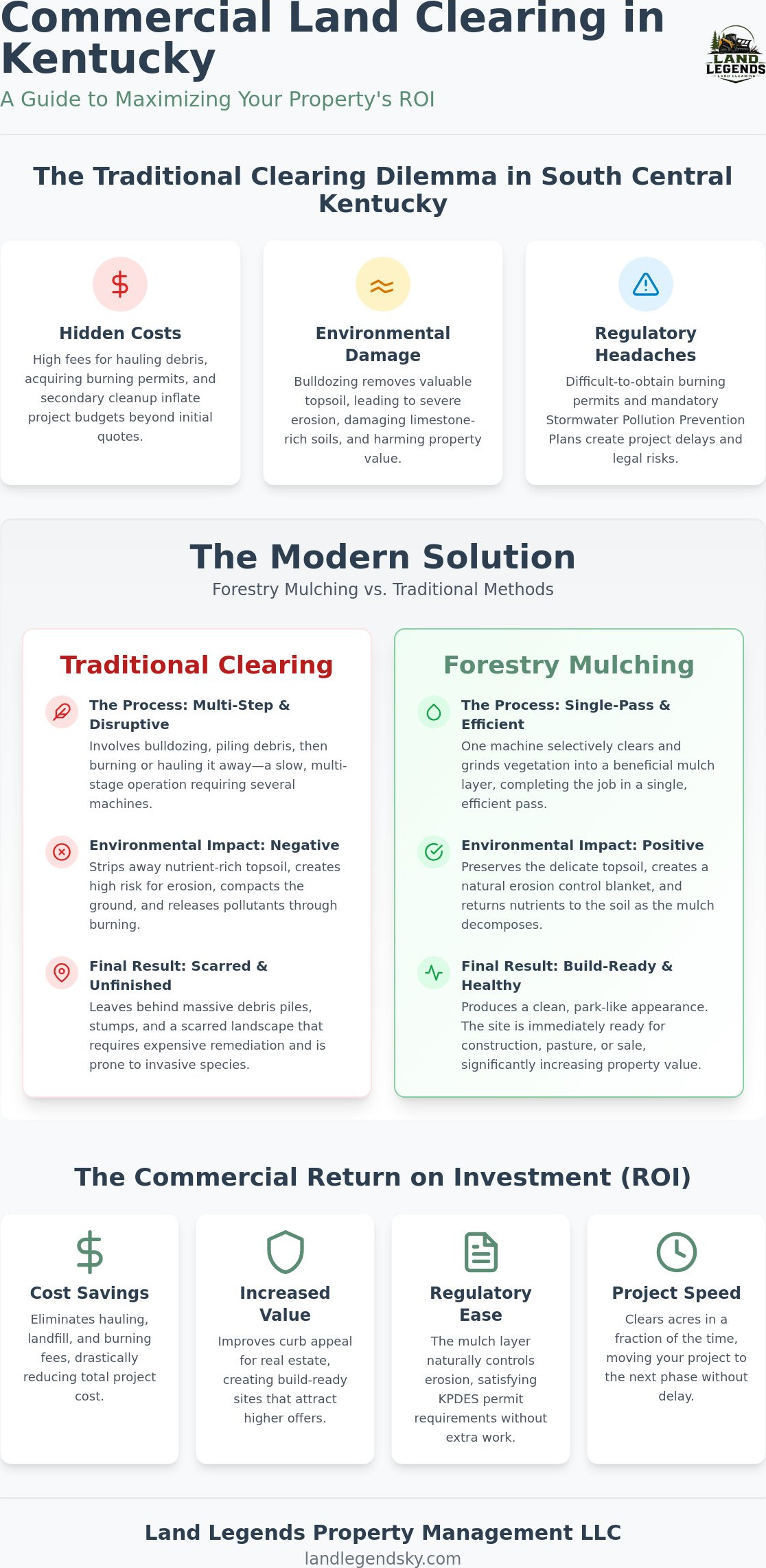
The traditional approach of "push and pile" is quickly becoming a liability for modern developers. Using heavy bulldozers to scrape the land often removes valuable topsoil and creates massive debris piles. These piles require open burning permits, which are increasingly difficult to obtain in commercial zones, or expensive hauling services. Instead, land stewardship has become a key driver of real estate value. Buyers today want land that shows careful management, not a scarred landscape that will require years of soil rehabilitation. A methodical approach preserves the integrity of the property while preparing it for its next use, and when you're ready to market that potential, Linemark offers the commercial printing expertise to help your property stand out.
Regional Challenges: Soil and Vegetation
Property managers in the Green River region, stretching from Adair to Taylor County, face specific geographic hurdles. The limestone-rich soils are excellent for drainage but can be easily damaged by heavy equipment during wet seasons. Common obstacles like dense cedar thickets and invasive honeysuckle can quickly reclaim a property if not managed correctly. Local weather patterns also dictate tight schedules. Spring rains can turn a site into a mud pit, making low-impact land clearing methods essential for maintaining project timelines without destroying the soil structure. Using the right machinery for these specific conditions ensures the land remains stable and productive.
Regulatory and Environmental Considerations
Managing commercial land clearing Kentucky regulations requires a proactive approach to site prep. Compliance isn't optional. The Kentucky Division of Water oversees the KPDES permits required for any land disturbance of one acre or more. Property managers must develop a Stormwater Pollution Prevention Plan to prevent runoff into local watersheds. Avoiding the pitfalls of open burning is another major concern. Smoke management and fire safety regulations in commercial sectors make burning a high-risk activity. Precision clearing through forestry mulching addresses these issues. It leaves a protective layer of mulch on the ground, which naturally controls erosion and satisfies most environmental guidelines without the need for additional permits.
Forestry Mulching vs. Traditional Clearing: The Commercial ROI
How do you measure the return on your land clearing investment? For many property managers, the initial quote is only the beginning of the story. Traditional methods involving bulldozers and excavators often leave behind a path of destruction that requires secondary spending. When you choose forestry mulching for your commercial land clearing Kentucky project, you're opting for a method that processes vegetation exactly where it stands. This eliminates the need for heavy excavators to dig out root balls and bulldozers to push massive debris piles across your site. Precision skid steers equipped with mulching heads turn standing brush and small trees into a stable ground cover in a single pass.
The speed of execution is another critical factor for commercial timelines. A single mulching unit can often clear several acres of medium brush in a fraction of the time it takes a traditional crew to clear, pile, and burn. Because there are no debris piles, you don't have to wait weeks for wood to dry or monitor burn sites for days. This efficiency allows you to move directly from clearing to the next phase of your development or agricultural plan. If you're looking for a way to streamline your project, specialized forestry mulching provides a cleaner, faster alternative to the heavy-handed methods of the past.
Calculating the Total Cost of Clearing
The true cost of clearing isn't just the hourly rate of the machinery. Hidden expenses in traditional clearing include hauling fees, landfill tipping charges, and the eventual cost of site remediation. When a bulldozer scrapes the land, it often destroys the existing grade, leading to expensive leveling requirements later. Mulching offers a more predictable, project-based fee structure because it removes the logistical variables of debris disposal. Adhering to Kentucky's Official Forestry Best Management Practices helps managers avoid environmental fines while qualifying for potential tax benefits associated with sustainable land stewardship.
Soil Preservation and Topsoil Health
Bulldozing often strips away the nutrient-rich topsoil that takes decades to form. This leads to soil compaction, which prevents new grass or crops from taking root and creates drainage issues. Forestry mulching creates a "mulch blanket" that protects the ground from the elements. This layer provides natural weed suppression, retains essential moisture, and eventually decomposes to feed the soil. In the rolling hills of South Central Kentucky, this processed organic material creates a natural erosion barrier that prevents rain from washing away your property's value. By keeping the biomass on-site, you're investing in the long-term fertility and stability of your acreage.
Key Commercial Applications for Kentucky Landowners
Why do property managers invest in commercial land clearing Kentucky services? It is rarely just about removing trees; it is about unlocking the hidden potential of a specific piece of acreage. The application dictates the strategy. A site intended for a new commercial subdivision requires a different touch than a farm being reclaimed for cattle pasture. In South Central Kentucky, we see a wide range of needs that require a specialized, methodical approach to land management.
From clearing dense fence lines to maintaining utility rights-of-way, professional clearing ensures that infrastructure remains accessible and functional. When brush is allowed to grow unchecked, it doesn't just look untidy; it becomes a liability that can hide property damage or provide cover for pests. By using precision equipment, property owners can address these issues without the collateral damage caused by larger, less maneuverable machinery.
Maximizing Real Estate Curb Appeal
Does your property invite potential buyers to explore, or does it push them away with impenetrable thickets? Real estate developers know that a "park-like" thinning sells land significantly faster than raw, overgrown acreage. Strategic underbrush removal allows buyers to see the actual topography of the land, the health of the mature timber, and the potential for building sites. This aesthetic thinning highlights the property's best features while removing the "work" a buyer sees when looking at a neglected lot. For those managing properties in our local area, this Professional Land Clearing in Taylor County KY: Your Local Resource Guide provides deeper insights into region-specific preparation.
Hunting and Recreational Trail Cutting
Kentucky’s outdoor heritage makes recreational land management a high priority for many commercial landowners. If you are managing land for hunting leases, precise shooting lanes and sustainable ATV trails are essential. We focus on understory thinning, which removes the dense "trash" wood while leaving the mast-producing trees that wildlife depend on. This doesn't just make the land more usable for hunters; it improves the overall habitat by allowing sunlight to reach the forest floor, encouraging the growth of native forage.
Invasive Species Management
What is the cost of doing nothing? In counties like Adair and Green, invasive honeysuckle and autumn olive can quickly choke out native hardwoods, significantly reducing the long-term timber value of a commercial property. These species grow aggressively, creating a monoculture that prevents new oak or hickory saplings from taking root. Effective management requires more than just cutting; it requires a systematic removal of the root systems or the use of mulching to suppress regrowth. You can learn more about these specific threats in our guide on Invasive Plant Removal in Taylor County: Protecting Your Kentucky Land. Consistent suppression is the only way to protect the economic value of your timber stands over time.
Preparing Your Site: A Commercial Land Clearing Checklist
Successful site preparation is the difference between a project that stays on budget and one that spirals into unexpected delays. When managing commercial land clearing Kentucky projects, a structured approach ensures every stakeholder is on the same page. Before the first mulching head touches the brush, follow this checklist to secure your investment and protect the land's long-term value.
- Define your end-use goals: Determine if you need a completely build-ready pad or selective aesthetic thinning. This decision dictates the intensity of the clearing and the type of equipment required.
- Conduct a professional assessment: Walk the property to identify rock outcroppings, steep grades, or boggy areas that might affect machinery access.
- Mark "keep" trees and sensitive zones: Use high-visibility flagging tape to protect mature hardwoods or environmental buffer zones near water sources.
- Verify property lines and utilities: Confirm boundaries to avoid neighbor disputes. You must also identify underground lines to ensure safety throughout the process.
- Schedule for optimal conditions: While mulching is low-impact, scheduling during drier windows or winter freezes helps minimize soil disturbance on sensitive Kentucky acreage.
Following these steps creates a predictable environment for both the property manager and the operator. It's about more than just removing vegetation; it's about setting the stage for future construction or agricultural success. If you're ready to begin the assessment phase, you can schedule a professional site walkthrough to identify the specific needs of your acreage.
Pre-Clearing Logistics
Communication is vital when working in tight-knit areas like Adair County. It's a good practice to notify adjacent landowners of your timeline to maintain neighborly relations. Safety is the top priority, so remember the "Call Before You Dig" rule by contacting 811 well in advance. This prevents costly damage to underground utility lines that might cross your commercial site. You should also plan for equipment access. While skid steer mulchers are highly maneuverable, they still require a clear entry point and a designated staging area for support vehicles and fuel.
Post-Clearing Maintenance
The work doesn't end when the machines leave the site. While the mulch layer provides immediate protection, you should consider seeding and stabilizing the soil to encourage the growth of desired ground cover. Monitor the property closely over the first 12 months for any sign of invasive regrowth. Species like honeysuckle are persistent and may require a light follow-up pass to ensure they don't reclaim the area. Finally, think about your year-round property needs. For many Kentucky businesses, the same paths cleared for access in the summer will require commercial snow removal to stay functional during the winter months.
Partnering with Land Legends Property Management LLC for Your Kentucky Project
How do you choose a partner that values your land as much as you do? For a commercial land clearing Kentucky project, it requires a team that views your acreage through the lens of long-term stewardship. At Land Legends Property Management LLC, we've built our reputation on being reliable craftsmen who understand the specific needs of South Central Kentucky property managers. We don't just clear land; we prepare it for its next purpose with a level of precision that national franchises often overlook. Our roots are here, and our commitment is to the health and productivity of our local landscape.
Our focus on precision skid steer mulching allows us to navigate tight spaces and handle the dense undergrowth typical of our region without the heavy-handed destruction of traditional bulldozing. Whether you're managing a development site in Taylor County or a farm reclamation in Green County, you need a partner who respects your property boundaries and your budget. Land Legends Property Management LLC prioritizes safety and environmental health in every commercial project, ensuring that your property remains a valuable asset. This methodical approach is why we're considered trusted local stewards of the land we work on.
Why Choose a Local Kentucky Specialist?
Adair, Green, and Taylor counties have unique geological profiles that require deep local knowledge. From the specific drainage patterns of the Green River region to the limestone-heavy soil profiles, we've worked across this landscape for years. Unlike distant contractors who might not understand local vegetation cycles, we're your neighbors. You have direct access to the owners and operators at Land Legends Property Management LLC who are personally invested in the success of your project. For those specifically looking at work in the Columbia area, our guide on Forestry Mulching in Adair County KY: The Complete Landowner’s Guide offers deeper regional context and preparation tips.
Ready to Reclaim Your Property?
Starting your project shouldn't be a guessing game. When you reach out to Land Legends Property Management LLC, we begin with a thorough site assessment to understand your specific end-use goals. During our first consultation, we'll walk the property with you to identify obstacles, mark sensitive zones, and provide a transparent project estimate. We believe in providing clear, actionable information so you can make an informed decision for your commercial acreage. If you're ready to see the true potential of your land, Contact Land Legends Property Management LLC for a Commercial Site Evaluation and let us help you reclaim your property today.
Take Control of Your Commercial Acreage
Reclaiming your property starts with choosing a method that respects the land while meeting your business objectives. You've seen how forestry mulching eliminates the high costs of hauling and burning while protecting the topsoil that maintains your property's value. Whether your focus is on invasive plant removal or large-scale pasture reclamation, the right equipment is essential. The specialized skid steer mulching technology utilized by Land Legends Property Management LLC is designed to handle the specific vegetation and terrain challenges found throughout Adair, Green, Taylor, Hart, Russell, and Cumberland counties.
Successfully managing a commercial land clearing Kentucky project requires a balance of modern technology and local environmental knowledge. By following a structured site assessment and partnering with a local specialist, you can transform overgrown acreage into a productive, high-value asset. Land Legends Property Management LLC is here to help you navigate every step of the process with precision and transparency. Ready to see what your land can become? Get a Professional Commercial Land Clearing Estimate from Land Legends Property Management LLC to start your project with confidence. Your property has incredible potential, and we're ready to help you unlock it.
Frequently Asked Questions
What is the typical cost per acre for commercial land clearing in Kentucky?
The cost for commercial land clearing Kentucky projects varies based on the density of the vegetation and the complexity of the terrain. While industry averages provide a baseline, heavy forestation or sites with dense hardwoods often require a more intensive investment than light brush clearing. Factors like soil stability and the presence of invasive species also influence the final estimate. It's best to request a site walkthrough for a project-specific quote tailored to your acreage.
Do I need a permit for forestry mulching on my commercial property in Adair County?
Permit requirements depend on the scale of your project and its proximity to protected water sources. For any land disturbance of one acre or more, a Kentucky Pollutant Discharge Elimination System (KPDES) permit is typically required to manage stormwater runoff and prevent pollution. While forestry mulching is a low-impact method, you should always check with local Adair County planning offices to ensure compliance with specific zoning or environmental regulations before you begin work.
How long does it take to clear 10 acres of wooded land using a forestry mulcher?
Clearing 10 acres of wooded land generally takes between five to ten days depending on the thickness of the undergrowth and the size of the trees. A high-flow skid steer mulcher can process roughly one to two acres per day in moderate conditions. If your site is heavily choked with dense cedar thickets or invasive honeysuckle, the timeline may extend. We provide a detailed schedule after assessing the specific vegetation density and terrain during an initial assessment.
Can forestry mulching be done in the winter or during wet Kentucky seasons?
Yes, forestry mulching can be performed year-round, and winter is often an ideal time for site preparation. Because the machine processes vegetation into a mulch mat, it creates a stable surface that supports the equipment even on damp soil. This layer prevents the deep rutting and soil compaction that traditional bulldozers often cause during Kentucky's wet seasons. Clearing during the dormant season also offers better visibility for marking property lines and identifying "keep" trees.
Will forestry mulching kill the large hardwood trees I want to keep?
Forestry mulching is a precision method that allows us to clear around mature hardwoods without damaging their root systems. Unlike bulldozing, which can scrape bark and compact the soil around roots, our skid steers are maneuverable enough to thin the understory selectively. We work with property managers to flag specific trees for preservation, ensuring that only the undesirable brush and small saplings are processed while the valuable timber remains healthy.
What happens to the mulch left behind after the clearing process?
The mulch stays on the ground to serve as a natural erosion barrier and soil conditioner. Over time, this organic material decomposes and returns vital nutrients to the soil, which improves the health of the remaining timber or pasture. This layer also suppresses new weed growth and retains moisture, helping to stabilize the area immediately. Most property managers find this result much more beneficial than the high cost of hauling debris away or the liability of burning piles.
Is forestry mulching better than bush hogging for overgrown pastures?
Forestry mulching is far more effective than bush hogging for reclaiming land that has grown into thick brush and small trees. A bush hog is designed for routine maintenance of grass and light weeds; it cannot handle woody stems or saplings. Mulching grinds the entire plant, including small stumps, into a fine material that won't damage tires or future equipment. It's a comprehensive, one-pass solution for heavy pasture reclamation that a standard tractor cannot achieve.
Does Land Legends Property Management LLC offer commercial snow removal for businesses in South Central KY?
Yes, Land Legends Property Management LLC provides professional commercial snow removal for businesses throughout South Central Kentucky. We understand that property management is a year-round responsibility, so we use our equipment to keep access roads and parking lots clear of snow and ice. This service ensures that the same properties we clear in the summer remain accessible and functional for your clients and employees all winter long, providing a steady and dependable partnership through every season.