Is that dense wall of green at the edge of your woods a natural boundary, or is it a silent thief stealing your property's value and usable space? If you're a local landowner, you've likely watched as species like bush honeysuckle and autumn olive have turned once-clear pastures into impassable thickets. It's incredibly frustrating to see your hunting grounds shrink and the threat of ticks grow while DIY methods just don't seem to make a lasting dent. You want to enjoy your land again, but the overgrowth feels like a battle you're slowly losing.
You deserve a property that's both beautiful and productive, and effective invasive plant removal Taylor County services can make that a reality. In this article, you'll learn how to identify the specific species choking your Kentucky land and how professional forestry mulching techniques can eliminate them for good. We'll explore why a mulch-first approach is often more cost-effective than traditional clearing, providing a clear path toward healthy woodlands, restored pastures, and increased curb appeal for your home or farm.
Key Takeaways
- Learn to identify the aggressive species, such as Bush Honeysuckle and Multi-flora Rose, that are currently choking out native Kentucky hardwoods.
- Understand why professional invasive plant removal Taylor County services favor forestry mulching to eliminate debris hauling and preserve your soil's health.
- Compare the "one-step" mulching process to traditional clearing methods to determine which is more efficient for your specific property goals.
- Discover the essential steps of a land reclamation plan, from the initial site assessment to choosing the right machinery for dense undergrowth.
- Explore how restoring your land's natural balance can increase property value and create safer, tick-free environments for your family.
The Invasive Crisis: Why Taylor County Property Owners Must Act
Taylor County is known for its rolling hills and fertile soil, but these same qualities make it a prime target for aggressive vegetation. Invasive species are non-native plants that cause economic or environmental harm in Taylor County. When these plants take root, they don't just sit there; they aggressively colonize the landscape. They often outcompete the native Kentucky hardwoods, like oak and hickory, that have stood for generations. Professional invasive plant removal Taylor County services are often the only way to break this cycle of overgrowth before it permanently alters your land's ecosystem.
To better understand how these plants impact local landscapes, watch this helpful video showing the clearing process:
The cost of waiting is often higher than property owners realize. Beyond the visible mess, there is a tangible economic impact on land values in our region. Overgrown acreage is difficult to survey, nearly impossible to farm effectively, and significantly less attractive to potential buyers. Beneath the surface, these plants deplete soil nutrients and choke out the biodiversity necessary for a healthy forest floor. This loss of native seedlings means your woods won't regenerate naturally. Without intervention, your property's long-term health and resale potential are at risk.
The Rapid Spread of Overgrowth in South Central KY
Our climate in South Central Kentucky provides a perfect storm for rapid growth. High humidity and nutrient-rich limestone soil allow plants like Bush Honeysuckle to thrive. What begins as a few scattered bushes in a managed pasture can transition into an unmanageable thicket in just a few seasons. This aggressive spread turns productive farm ground into useless brush. It makes it nearly impossible to navigate or maintain your boundaries without heavy machinery.
Health and Safety: Ticks and Accessibility
Beyond aesthetics, safety is a major concern for local families. Invasive thickets create a dense, shaded understory that maintains high humidity. This is the exact microclimate tick populations need to explode. For families, pets, and livestock, this increases the risk of tick-borne illnesses throughout the year. Clearing these areas doesn't just look better; it's essential tick mitigation for a safer outdoor environment. Improved visibility also makes your land safer for hunting and recreation, allowing you to see what's ahead and move through your woods with confidence.
Common Invasive Species Threatening Your Taylor County Land
Understanding which plants are invading your property is the first step toward reclaiming your land. While some regions struggle with aquatic weeds, Taylor County landowners primarily face terrestrial shrubs and grasses that aggressively colonize the understory. These plants don't just take up space; they actively change the chemistry and structure of your soil, making it harder for native Kentucky hardwoods to survive. Identifying these culprits early can save you years of frustration and long-term restoration costs.
Identifying Bush Honeysuckle and Multi-flora Rose
Bush Honeysuckle is arguably the most destructive species in our local woods. In early spring, it's easy to spot because it's often the first plant to leaf out, creating a sea of green before our native oaks and maples have even started to bud. This early start allows it to create a dense canopy that shades out native seedlings, effectively stopping the next generation of your forest from growing. Multi-flora Rose, often called a "living fence," is another nightmare for farmers and hunters. Its thorny, arching stems create impenetrable thickets that can trap livestock and ruin equipment. Both species possess extensive root systems that make manual pulling nearly impossible. If you leave even a small fragment behind, the plant will likely return with renewed vigor.
If you're noticing these aggressive growers taking over your fence lines or woodlots, a professional invasive plant removal Taylor County assessment can help you determine the best path forward for your specific acreage.
The Danger of Autumn Olive and Privet
Autumn Olive is particularly deceptive because of its silvery leaves and bright red berries. While it might look attractive, it's a nitrogen-fixing plant that disrupts the natural soil balance, favoring other invasive species over native ones. It quickly dominates field edges and fence lines, pushing out the diverse food sources local wildlife actually need to thrive. Privet behaves similarly, forming dense "hedges" that block all visibility and access to your property. These woody species are difficult to eradicate with standard lawn equipment or hand tools. They require the precision and power of forestry mulching to grind the material down and prevent immediate regrowth.
Beyond these shrubs, Japanese Stiltgrass has become a significant threat to the forest floor. It forms a dense carpet that prevents native wildflowers and tree seeds from reaching the soil. When these species work together, they can completely transform a healthy woodlot into a monoculture of brush within a single decade. Effective invasive plant removal Taylor County requires a strategy that addresses these specific growth patterns to ensure your land remains productive and navigable for generations to come.
Forestry Mulching vs. Traditional Clearing: The Better Choice
When you decide to tackle invasive plant removal Taylor County, you face a choice between brute force and precision. Traditional land clearing often involves heavy bulldozers that scrape the earth, but this isn't always the best path for your woods or pastures. Forestry mulching offers a specialized alternative that prioritizes the long-term health of your Kentucky soil while delivering immediate results. It's a method that works with the land rather than against it.
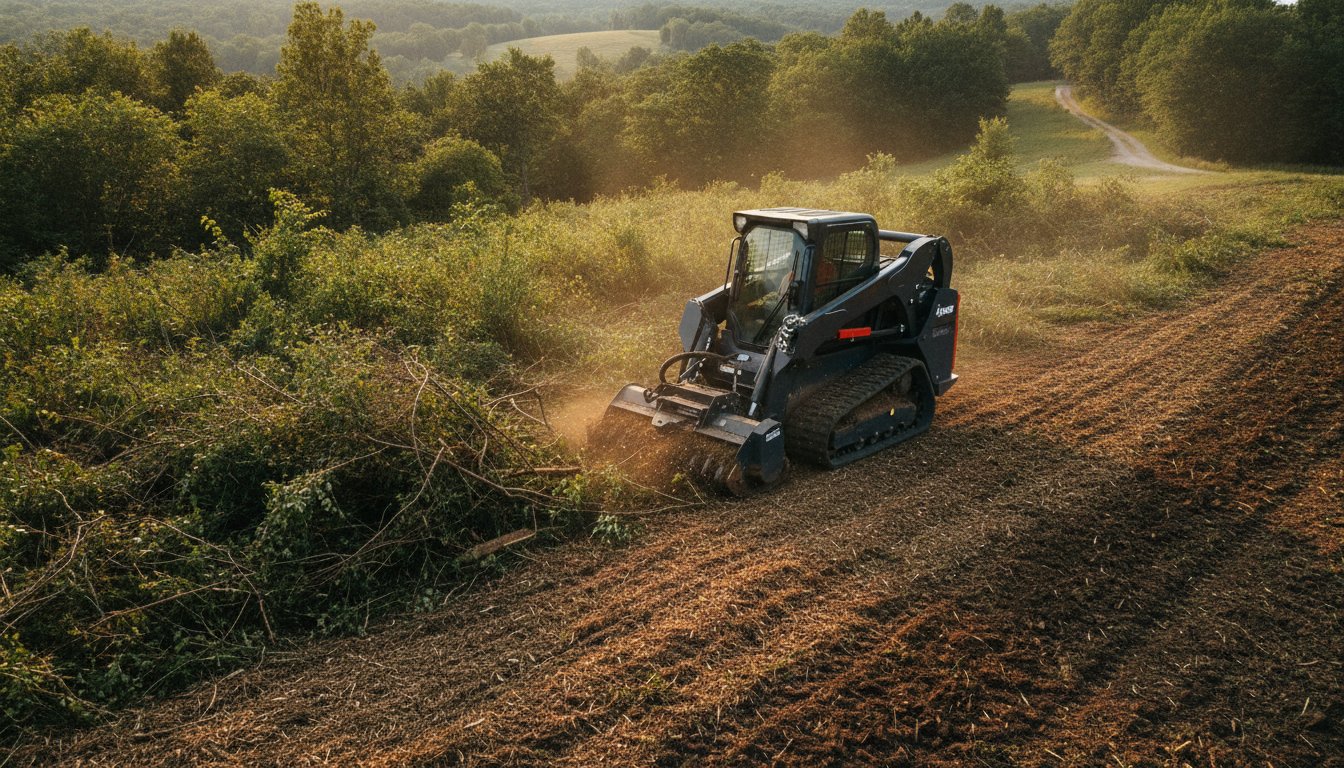
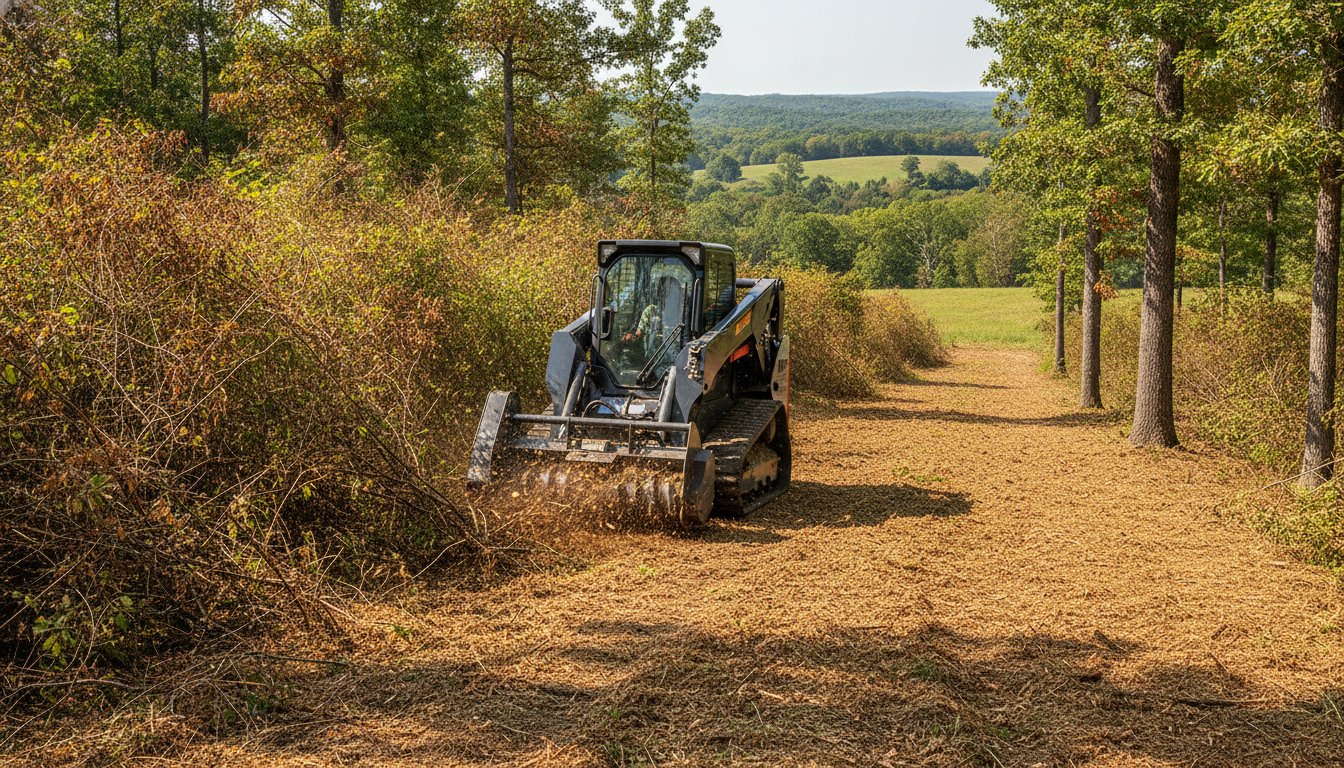
The primary advantage lies in the "one-step" process. A single machine cuts, grinds, and mulches vegetation right where it stands. This efficiency eliminates the need for multiple pieces of equipment and the logistical nightmare of hauling debris away. Instead of leaving behind unsightly stumps or bare dirt, you get a clean, navigable landscape that looks like a well-tended park. You can walk through your woods the same day the work is finished.
By grinding the invasive shrubs down to the ground but leaving the root systems intact, we provide a natural form of erosion control. This is vital in our region, where heavy rains can quickly wash away exposed topsoil on sloped ground. The roots eventually decay over time, but in the short term, they hold the earth together while the new mulch layer provides protection. This layer also helps retain moisture and suppresses the immediate return of weeds.
Why Bulldozers Often Make the Problem Worse
Bulldozers are designed for massive earthmoving, not selective clearing. When they push over a thicket of Bush Honeysuckle, they often take the native topsoil with them. This creates massive soil disturbance that can actually "wake up" the dormant invasive seed bank. Seeds that have been buried for years are suddenly exposed to sunlight and air, leading to a fresh explosion of growth. You also have to deal with the hidden costs of massive brush piles that require burning or expensive hauling, which can linger for months.
The Precision of Skid Steer Mulching
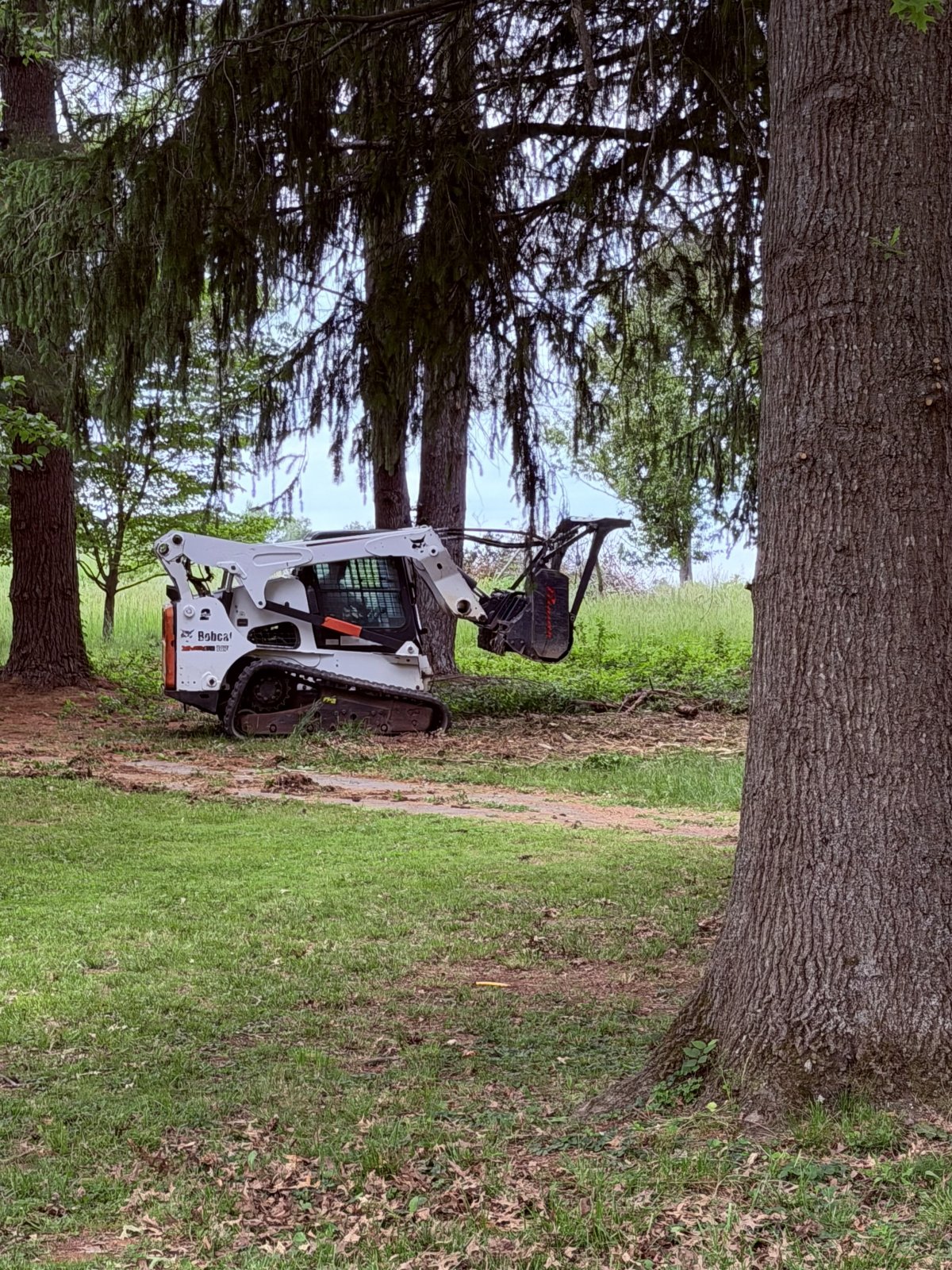
At Land Legends, we utilize skid steer technology that allows for incredible precision. We don't just clear a path; we selectively remove the bad stuff while preserving your valuable hardwoods. This maneuverability is especially important around sensitive areas like creek beds or property lines where you can't afford to be sloppy. The nutrient-rich mulch layer left behind acts as a natural weed barrier. Over time, it breaks down to feed the soil, promoting the healthy native ecosystem restoration you want for your property. Effective invasive plant removal Taylor County starts with using the right tool for the job.
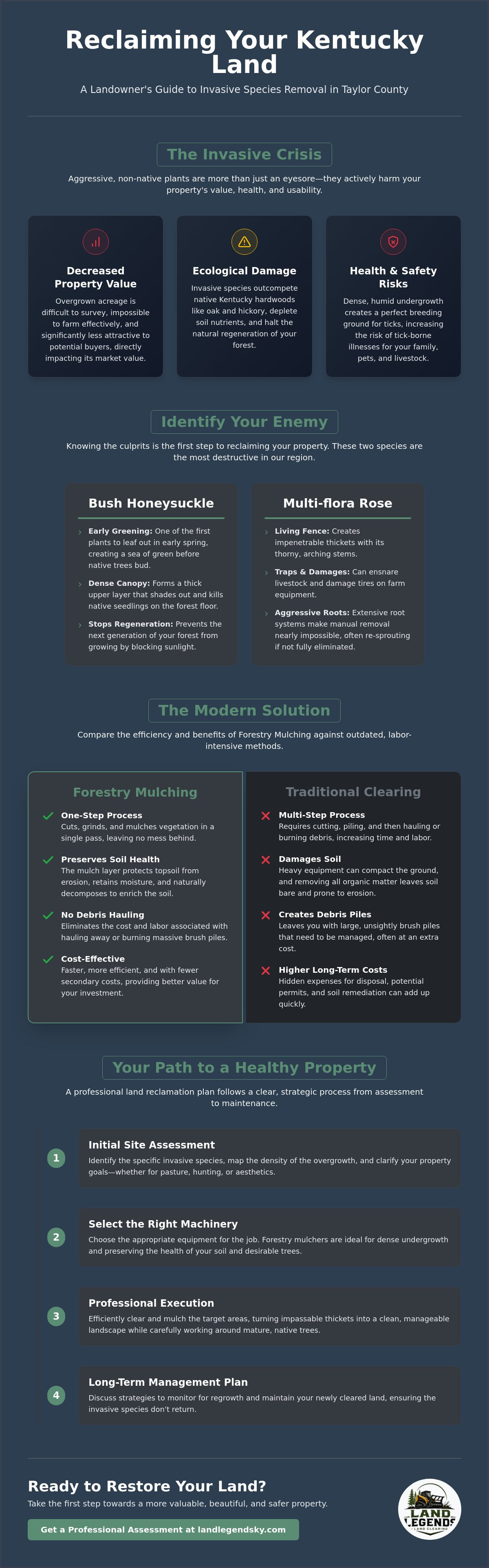
Strategic Plan for Reclaiming Overgrown Taylor County Property
Reclaiming your property from years of neglect requires more than just a weekend of work. It demands a methodical approach that addresses the specific biology of local overgrowth. Successful invasive plant removal Taylor County begins with a professional site assessment. During this phase, we identify exactly which species are present and map out the density of the vegetation. This allows us to select the right equipment for the job. We ensure we have the horsepower to mulch thick Autumn Olive while maintaining the precision needed to navigate around your mature oaks. It's about using the right tool for the specific density of your thickets.
Following the assessment, the mulching process itself is executed with a focus on soil health. We don't just "clear" the land; we process the organic material into a beneficial mulch. This step is where the transformation happens. You go from having an impassable wall of brush to a clean, navigable forest floor. The timing of this work plays a huge role in how effective the results will be over the next several years.
Timing Your Invasive Removal
Late fall and winter are often the most effective times for invasive plant removal Taylor County. During these months, deciduous native trees have dropped their leaves, but many invasives like Bush Honeysuckle remain green longer. This contrast makes identification foolproof. It allows us to work with surgical precision. Clearing during the dormant season also means we finish before the spring "green-up" occurs. This gives native seeds a head start on the coming growing season. Additionally, avoiding the peak spring and summer months helps protect the nesting seasons of local Kentucky wildlife, such as ground-nesting birds and deer fawns.
Maintaining Your Results Long-Term
Once the initial mulching is complete, the focus shifts to long-term stewardship. The layer of mulch left behind provides a great start, but dormant seeds in the soil may still attempt to sprout. Regular understory thinning is a property management best practice that keeps these newcomers in check. You can often manage regrowth through routine mowing or very targeted treatments if a stubborn patch reappears. Planting native grasses or wildflowers can also fill the gaps. This creates a competitive environment that naturally prevents invasives from returning. If you're ready to move from a plan to action, you can request a professional site assessment to see how we can restore your property's potential.
Restore Your Land with Land Legends Property Management
Choosing the right partner for invasive plant removal Taylor County makes the difference between a temporary fix and a long-term transformation. Land Legends Property Management LLC serves as a dedicated specialist for landowners throughout Taylor, Adair, and Green Counties. We don't just clear brush; we act as stewards of the local landscape, combining modern technology with a neighborly approach that values your property’s long-term health. Our goal is to build client confidence through transparency and a steady, dependable presence on every job site.
Our skid steer mulching equipment is versatile enough to handle a wide range of projects. Whether you have a small residential lot choked with honeysuckle or a large agricultural tract that needs pasture reclamation, we have the machinery to deliver precision results. We understand that every property has a unique history and a specific vision for its future. We take pride in being more than just a service provider; we’re your neighbors. This means we show up on time, communicate clearly, and leave your property in better shape than we found it. We invite you to request a precision land clearing assessment to discuss your goals in detail and see how we can help.
Local Knowledge, Professional Results
We live and work in South Central Kentucky, so we’ve seen firsthand how aggressive vegetation can diminish the value of a farm or woodlot. This local knowledge allows us to anticipate challenges that outside contractors might miss. Our commitment to safety and environmental stewardship means we treat your land with the same care we would our own. You won't find aggressive sales tactics here. Instead, you'll find an authoritative expert who listens to your concerns and offers practical solutions tailored to your specific acreage. We serve Taylor County with reliable, project-based land clearing that prioritizes the health of your native ecosystem.
Beyond Invasives: Full Property Management
While invasive plant removal Taylor County is a core part of what we do, our services extend to full property improvement. We help hunters establish recreational trails and shooting lanes that provide quiet, clear access to their favorite spots. For farmers, we offer pasture reclamation and farm services that turn overgrown thickets back into productive grazing ground. If you’re preparing a property for the real estate market, our underbrush removal and curb appeal services can significantly increase the visual appeal and perceived value for potential buyers. We help you maximize the potential of every acre.
Ready to take back your land? Contact Land Legends Property Management LLC for a free invasive removal estimate and let us help you restore the beauty and function of your Kentucky property.
Take Back Your Kentucky Property
Reclaiming your land from aggressive overgrowth is a vital step toward restoring your property’s value and natural beauty. As we’ve explored, species like Bush Honeysuckle and Multi-flora Rose don’t just look messy; they create a cycle of ecological damage that only specialized intervention can break. By choosing a method like forestry mulching, you ensure your topsoil remains protected while effectively managing tick populations. This approach turns a tangled thicket into a navigable, park-like space that your family can enjoy once again.
Land Legends Property Management is proud to be a local, owner-operated service dedicated to high-quality invasive plant removal Taylor County. We utilize specialized skid steer mulching technology to provide precise results that traditional bulldozing simply can't match. Whether you’re preparing for a real estate sale or reclaiming a hunting woodlot, we have the tools and regional expertise to help you succeed. Don’t let invasive species dictate how you use your land any longer.
Get Your Free Land Reclamation Estimate from Land Legends
Your property has incredible potential waiting just beneath the brush. We look forward to helping you uncover it and seeing your Kentucky landscape thrive for years to come.
Frequently Asked Questions
What is the most common invasive plant in Taylor County, KY?
Bush Honeysuckle is widely considered the most aggressive invasive plant in Taylor County. It thrives in our local soil and quickly dominates the understory of woodlots. This species is often the first to leaf out in the spring, which allows it to shade out native seedlings. Identifying it early is key to successful invasive plant removal Taylor County projects before the infestation becomes unmanageable.
Does forestry mulching prevent invasive plants from growing back?
Forestry mulching suppresses immediate regrowth but does not permanently eliminate the root systems of all species. The thick layer of mulch acts as a natural barrier that blocks sunlight from reaching dormant seeds. However, aggressive plants like autumn olive may still attempt to sprout from the ground. We recommend a long-term maintenance plan that includes occasional mowing or targeted treatments to ensure your land remains clear.
Is invasive plant removal covered by any Kentucky agricultural grants?
Landowners in Kentucky may be eligible for cost-share programs through the Natural Resources Conservation Service (NRCS) or the Taylor County Conservation District. While specific grants change annually, programs like the Environmental Quality Incentives Program (EQIP) often provide financial assistance for improving forest health and managing invasive species. It is best to contact your local USDA service center to see which current programs apply to your specific acreage.
How much does it cost per acre to remove invasive brush in Kentucky?
The cost to clear invasive brush varies significantly depending on the density of the vegetation and the specific machinery required. Factors such as terrain steepness and the thickness of the undergrowth influence the total time needed for the job. While industry averages for land clearing exist, we provide project-based estimates after a site assessment to ensure the quote reflects the actual conditions of your Taylor County property.
Can you clear invasive plants without damaging my large oak and maple trees?
Yes, we can clear unwanted brush with extreme precision without harming your mature oak and maple trees. Our specialized skid steer mulching technology allows us to navigate tight spaces and work right up to the base of desirable hardwoods. This selective clearing ensures that your valuable timber remains healthy while the competing invasive undergrowth is completely removed from the area.
What happens to the mulch after the invasive plants are ground up?
The mulch remains on the ground to serve as a protective layer for your topsoil. Over time, this organic material decomposes and returns vital nutrients to the earth, which promotes the growth of native grasses and wildflowers. This layer also provides immediate erosion control and helps retain soil moisture, creating a healthier environment for your remaining trees and local wildlife.
How long does the invasive removal process typically take for a 5-acre lot?
Clearing a 5-acre lot typically takes between two and four days, depending on how dense the overgrowth has become. A lot with light brush and small saplings will move much faster than one covered in mature, thick multi-flora rose or autumn olive. We provide a projected timeline during our initial site visit so you know exactly what to expect for your specific land reclamation project.
When is the best time of year to clear brush in South Central Kentucky?
The dormant season between late fall and early spring is the ideal time for invasive plant removal Taylor County. During these months, native trees have dropped their leaves, making it much easier to identify and target invasive species like honeysuckle that often stay green longer. This timing also avoids the peak nesting seasons for local wildlife and prevents heavy equipment from compacting wet, spring soil.