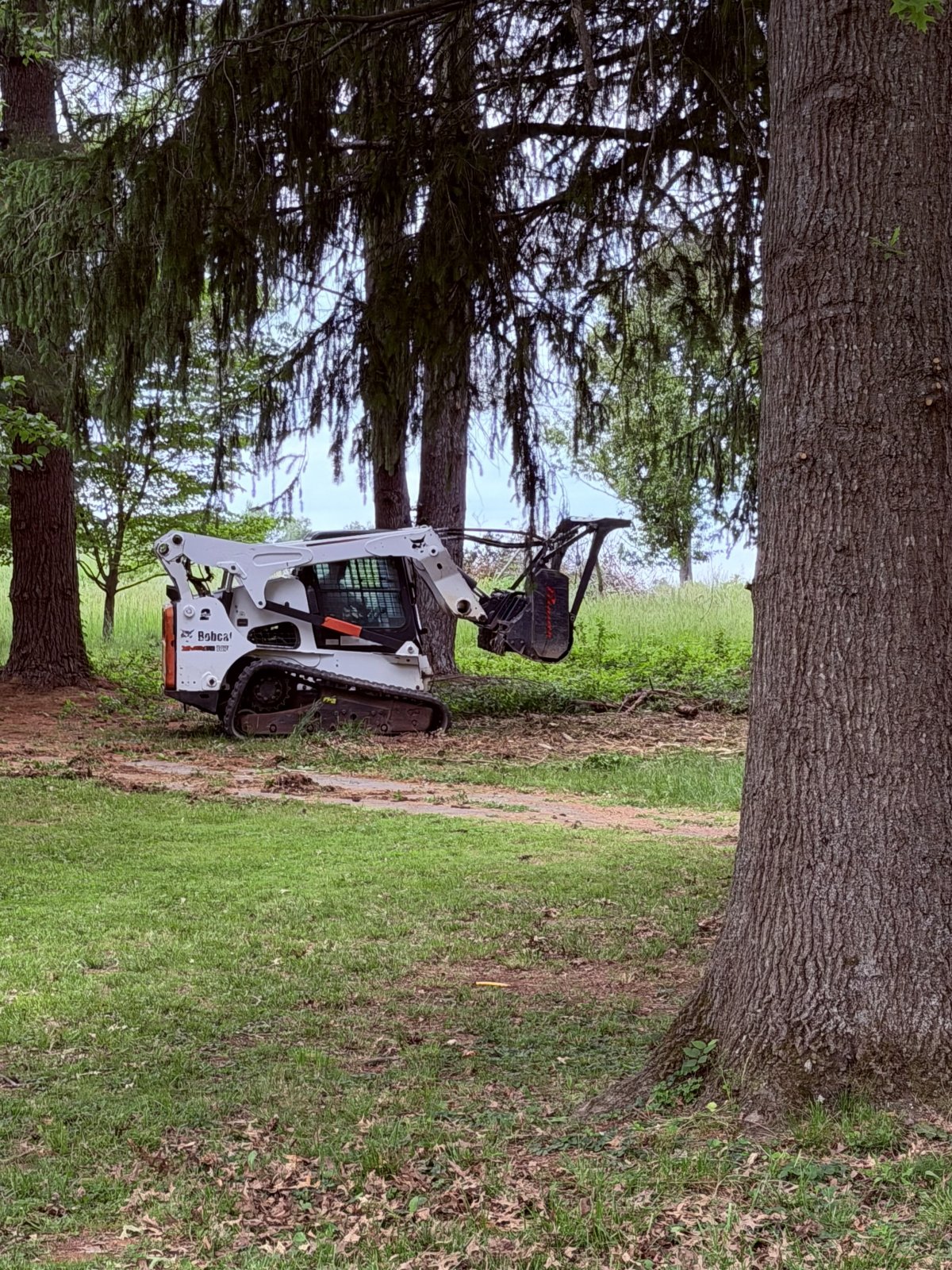
What if the biggest obstacle to your record-breaking hunting season isn't the seed you're planting, but the way you're clearing the ground? For many landowners, the dream of a lush, productive sanctuary is often choked out by aggressive Amur honeysuckle or stalled by the fear of turning delicate clay soil into a rutted mess. Effective food plot clearing Kentucky landowners can trust involves more than just removing brush; it's about precision stewardship that prepares a seedbed without destroying the land's long-term health.
You likely already know that a successful plot requires more than just throwing seed on the dirt; it demands a clean, manageable space where deer and turkey actually feel secure. We understand that your time is valuable and your property is an investment you want to protect. In this guide, you'll learn how to transform overgrown acreage into a professional-grade wildlife magnet using techniques that prioritize soil integrity. We will walk through the benefits of forestry mulching, how to target invasive species effectively, and the best ways to create a property that looks as managed as it is productive.
Key Takeaways
- Understand why strategic sunlight exposure and soil-to-seed contact are the foundational elements of any successful hunting season.
- Discover why forestry mulching is the preferred method for food plot clearing Kentucky landowners use to prevent topsoil damage and heavy rutting.
- Learn how to identify and permanently manage aggressive invasive species like Amur Honeysuckle that often thrive after improper clearing.
- Follow a methodical timeline to transition your property from dense, overgrown brush into a clean and ready-to-plant seedbed.
- Find out why local knowledge of South Central Kentucky soil and terrain is essential for creating a professional and sustainable wildlife habitat.
Planning Your Kentucky Food Plot: Why Strategic Clearing Matters
Does a successful food plot start with the bag of seed or the equipment you use to clear the trail? Most landowners in Adair, Green, and Taylor Counties focus on the brand of clover they're planting, but the foundation of a productive habitat is actually the preparation of the ground itself. Understanding What is a Food Plot? involves recognizing it as a managed area designed to provide high-quality forage for wildlife. Simply "cutting it down" isn't enough. Without a strategic approach, you're often just creating a temporary opening that will be reclaimed by brush within a single season.
Professional food plot clearing Kentucky requires a deep understanding of our local landscape. You have to decide if you're building a feeding plot or a hunting plot. Feeding plots are typically larger, designed to provide year-round nutrition and keep deer on your property. Hunting plots are smaller, strategically placed "kill zones" located near bedding areas or travel corridors. Each requires a different clearing intensity to ensure the right balance of security and accessibility for the animals.
To better understand this concept, watch this helpful video:
Assessing Your Property’s Current Vegetation
Before any equipment moves, you must identify what's currently growing. In South Central Kentucky, the "honeysuckle problem" is real. Amur and bush honeysuckle quickly choke out native forage and create a dense canopy that prevents sunlight from reaching the soil. If you just mow these down, they'll grow back even thicker. Effective food plot clearing Kentucky projects often involve understory thinning and specific invasive plant removal. This process opens up the canopy to let light hit the forest floor, encouraging the growth of both your planted crops and beneficial native plants.
The Importance of Site Selection and Sunlight
Where you clear is just as vital as how you clear. Most popular crops, such as brassicas or clover, require at least six hours of direct sunlight to thrive. We look for areas that naturally intersect with existing deer travel corridors but avoid low-lying spots. Kentucky clay is notorious for holding water; a plot that turns into a swamp after a spring rain will rot your seeds before they can take root. Selecting a site with proper drainage and the right solar orientation ensures your investment in seed and fertilizer doesn't go to waste.
Forestry Mulching vs. Traditional Clearing for KY Food Plots
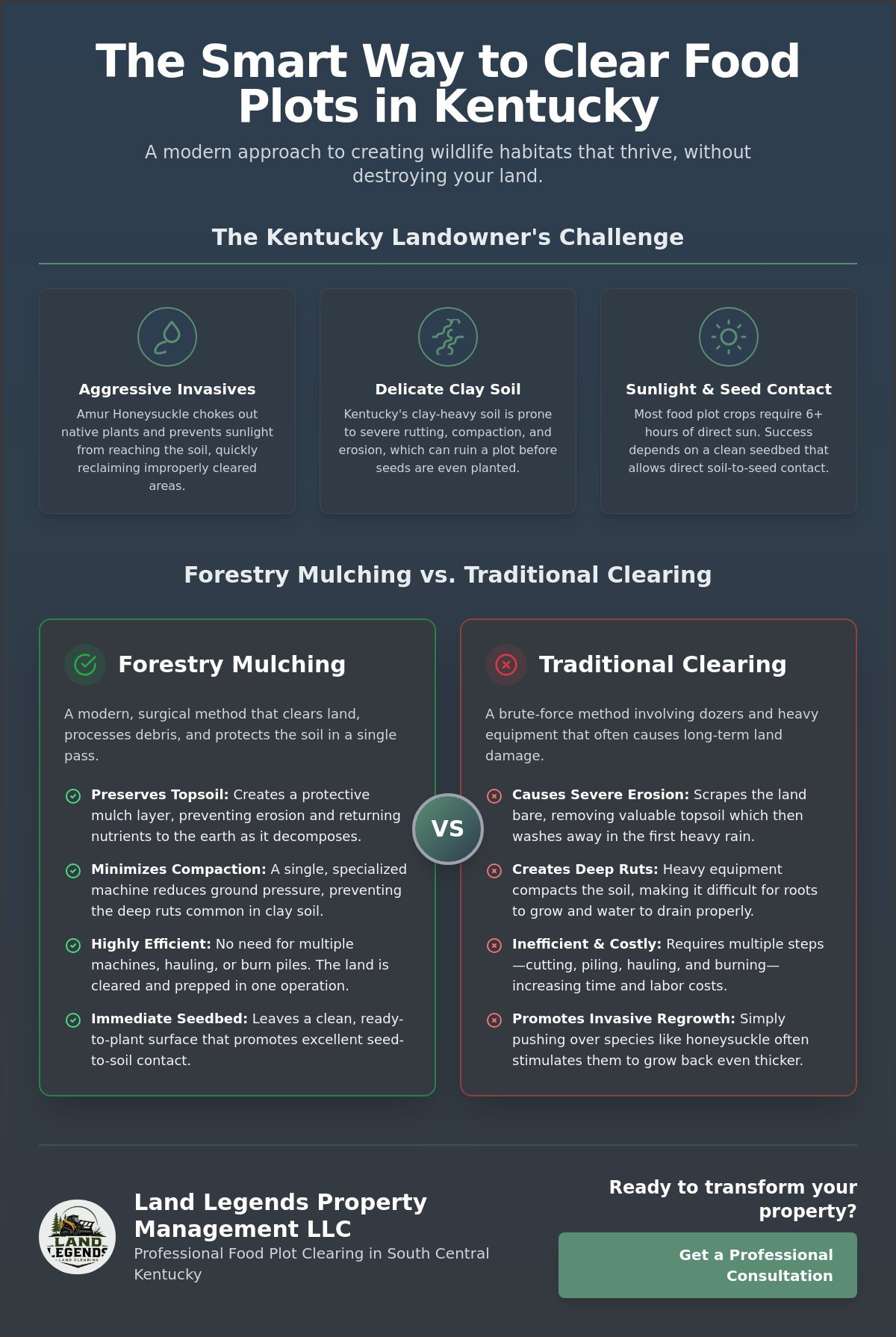
Why does the specific method of food plot clearing Kentucky landowners choose matter so much? It's easy to assume that any machine that removes brush is doing the same job, but the long-term health of your habitat depends on the footprint left behind. Traditional clearing often relies on brute force; modern forestry mulching takes a surgical approach to land management. This choice dictates whether your plot will flourish or struggle against poor soil quality for years to come.
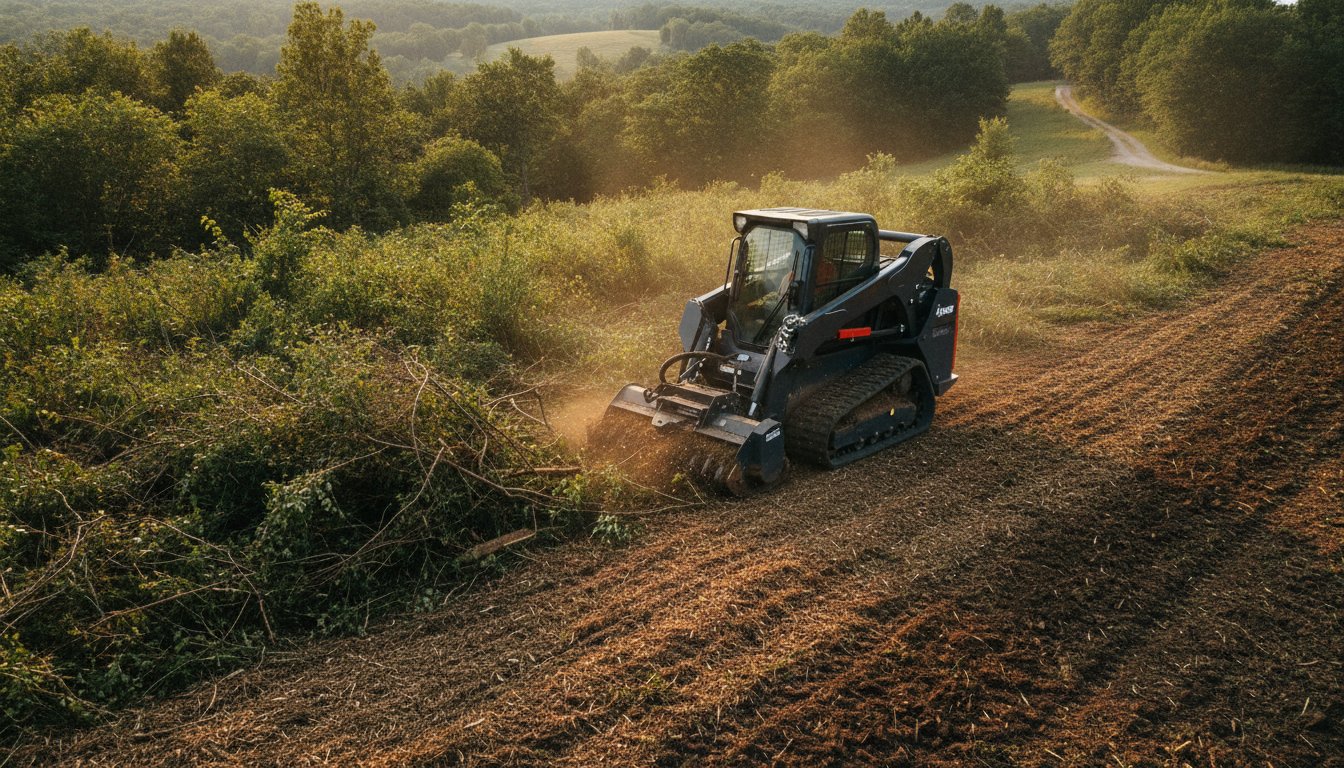
Forestry mulching has become the gold standard for creating wildlife plots because it addresses three problems at once. It clears the land, processes the debris, and protects the soil. Unlike traditional methods that require multiple machines for cutting, hauling, and burning, a mulcher finishes the job in a single pass. This efficiency isn't just about speed. It's about reducing the time heavy equipment spends on your property, which minimizes soil compaction in our clay-heavy regions. For a deeper look at the technical requirements for site preparation, the Kentucky Fish & Wildlife Food Plot Guide highlights the importance of maintaining soil quality to ensure crop success.
One of the most overlooked benefits of mulching is immediate erosion control. Kentucky's terrain is rarely flat. If you scrape a hillside bare with a dozer, the first heavy rain will wash your expensive seed and topsoil into the nearest holler. The shredded wood left behind by a mulcher creates a protective blanket. This layer holds moisture, stabilizes the ground, and prevents the "washing" that ruins so many new plots. If you want to clear your land without the mess of burn piles, our forestry mulching services provide a clean, ready-to-plant result.
Why Bulldozing Can Ruin Your Future Crop
Bulldozers are powerful, but they often leave lasting scars on the landscape. Traditional clearing usually involves "root raking," a process that doesn't just pull up stumps; it scrapes away the nutrient-rich topsoil that took centuries to form. You're often left with "dead soil" that struggles to support demanding crops like brassicas or clover. These traditional methods also create massive brush piles. These piles waste valuable hunting space and can take a decade to rot, often becoming a haven for the very invasive species you're trying to eliminate.
The Mulching Advantage: Nutrients and Protection
Mulching turns your unwanted brush into an asset. As the mulch layer decomposes, it pumps organic matter back into the Kentucky clay, acting as a slow-release natural fertilizer. This layer also serves as a highly effective weed suppressant. By covering the soil, it prevents sunlight from reaching dormant weed seeds, giving your desired forage a head start. The result is a professional, park-like finish that looks managed and intentional from day one.
Targeting Invasive Species During the Clearing Process
Why does your property feel like a jungle just weeks after you've finished mowing? If you're managing land in South Central Kentucky, you've likely encountered the relentless spread of invasive species. For many landowners, food plot clearing Kentucky projects are often sabotaged by plants that thrive on disturbance. Simply cutting these invaders down to ground level doesn't solve the problem. It actually triggers a survival response that leads to even more aggressive regrowth.
When you participate in the Habitat Improvement Program, you'll find that controlling these species is a top priority for long-term land health. A skid steer mounted forestry mulcher provides a distinct advantage here. By grinding the stump and root collar slightly below the soil surface, we disrupt the plant’s ability to resprout. This methodical approach ensures that your new food plot doesn't become a honeysuckle thicket by mid-summer. Effective food plot clearing Kentucky requires a plan for these persistent invaders that prioritizes permanent removal over temporary fixes.
Identifying Common Kentucky Invaders
- Bush Honeysuckle: This is arguably the biggest threat to your hunting land. It greens up earlier than native plants and stays green later, effectively stealing sunlight and nutrients from your crops.
- Autumn Olive and Multiflora Rose: These species create impenetrable barriers that deer often avoid, making certain parts of your property unusable.
Removing these doesn't just clear space for your seed. It releases native "soft mast" producers like blackberry and persimmon that have been suppressed for years. This diversity is what keeps wildlife on your property throughout the year, providing food long after your planted brassicas are gone.
Precision Removal in Tight Spaces
How do you clear a plot without losing your best mast-producing trees? Precision is the hallmark of a reliable craftsman. Using compact skid steer technology allows us to navigate between "keeper" trees like mature white oaks without damaging their root systems or bark. This isn't about clear-cutting; it's about surgical thinning. We focus on creating "feathered edges." This is a transition zone of thicket and native grasses between the open plot and the deep woods. These edges provide the vital security cover deer need to feel safe entering your plot during daylight hours. By protecting the understory and keeping your valuable timber intact, we help you build a professional habitat that looks managed and intentional.
Step-by-Step: From Overgrown Brush to a Ready Seedbed
How do you transition from a tangled thicket of briars to a lush, productive plot? Success in food plot clearing Kentucky depends on a disciplined timeline that respects the natural limitations of the soil and the season. While it's tempting to plant the day after the equipment leaves, a methodical approach ensures your seed actually takes root. This process moves through distinct phases, each designed to maximize seed-to-soil contact while preserving the organic integrity of your land.
Phase 1: The Initial Forestry Mulching Pass
The first step involves a high-performance skid steer with a mulching head to grind down standing timber and brush. During this pass, we adjust the ground speed and head rotation to achieve a specific mulch consistency. If you're planning on using a no-till drill for small seeds like clover, a finer mulch is often better. If you intend to disc the area for larger seeds like corn or soybeans, a slightly coarser mulch provides better erosion protection during the transition. Forestry mulching is a high-speed process that shreds standing vegetation into a nutrient-rich ground cover, serving as a one-step clearing and tilling preparation method.
This is also the ideal time to address the logistics of the hunt. We don't just clear the plot itself; we simultaneously cut recreational trails and shooting lanes. This ensures you have quiet, concealed access to your stands without disturbing the bedding areas we discussed in previous sections. Clearing these paths during the initial pass creates a cohesive, professional property layout that's ready for use immediately.
Phase 2: Soil Amendments and Prep
Once the brush is gone, the real work begins beneath the surface. Kentucky's forest soils, particularly in Adair and Green Counties, are notoriously acidic. You'll need a professional soil test to determine exactly how much lime is required to bring the pH levels into the 6.5 to 7.0 range. Skipping this step is the most common cause of plot failure. Without the right pH, your plants cannot absorb the nutrients in the fertilizer you've applied, regardless of how much you spend on high-quality seed.
You also need to decide on your planting method. In a mulched plot, many landowners prefer a no-till drill because it places the seed directly into the soil through the mulch layer, leaving the ground's structure undisturbed. If you choose traditional discing, you may need to wait several weeks for the fresh mulch to settle and begin its initial decomposition. This "wait and see" approach prevents the fresh wood chips from tying up the nitrogen your young plants need to thrive. If you're ready to start your transformation, our pasture reclamation and farm services can help you navigate this transition from brush to seedbed.
Timing your clearing is just as vital as the technique itself. For a fall plot featuring brassicas or winter wheat, you should aim to have your food plot clearing Kentucky project completed by mid-summer. This gives you ample time for soil testing and lime application before the late-summer planting window. For spring plots, late winter clearing is preferred, as it allows the winter freeze-thaw cycles to help settle the mulch and prepare the soil for clover or alfalfa.
Professional Food Plot Services with Land Legends
How do you ensure your property reaches its full potential without causing lasting damage to the ecosystem? Choosing a local specialist for food plot clearing Kentucky landowners can trust is the first step toward a professional result. At Land Legends Property Management LLC, we view land management as a form of stewardship. Our approach combines authoritative technical expertise with a neighborly understanding of the specific challenges found in Adair, Green, and Taylor Counties. We don't just clear brush; we prepare your land for a future of productive wildlife activity and long-term environmental health.
Our services extend beyond the boundaries of the food plot itself. To truly manage a property, you need accessible routes and clear sightlines. We provide specialized recreational trail and shooting lane cutting to ensure your hunting experience is as professional as the habitat you've created. This holistic view of land management ensures that every acre of your property is working toward your vision. Whether you're reclaiming an old pasture or thinning a dense understory, we bring the right tools and a steady, dependable presence to every project.
Our Specialized Equipment and Technology
Why do we prioritize skid steer forestry mulching over heavier, more traditional machinery? The answer lies in the precision and safety it offers for both residential and agricultural lots. Our equipment is designed to minimize ground pressure, which is vital for protecting the delicate topsoil layers we discussed in previous sections. By using high-performance mulching heads, we can achieve a clean, park-like finish that enhances your property's curb appeal while creating an ideal seedbed. This meticulous attention to detail ensures that even in the deep woods, your land looks managed, intentional, and professional.
Serving South Central Kentucky Landowners
Our roots are deep in the communities of Columbia, Campbellsville, and Greensburg. We understand that your property is more than just a piece of dirt; it's an investment and a legacy. We've helped numerous clients transform "junk land" choked with invasives into thriving hunting paradises. By focusing on precision and stewardship, we build lasting partnerships with property owners who share our vision for healthy, productive Kentucky landscapes. If you're ready to see what your acreage can truly become, Contact Land Legends Property Management LLC today for a property walkthrough. We provide custom quotes tailored to the specific needs of your terrain and your long-term goals.
Take the First Step Toward a Premier Kentucky Habitat
Creating a successful wildlife sanctuary requires a balance of strategic planning and precise execution. We've explored how professional food plot clearing Kentucky landowners rely on goes far beyond simply removing brush. It involves protecting your topsoil, managing aggressive invasive species like honeysuckle, and preparing a seedbed that's actually ready for growth. By choosing forestry mulching over traditional bulldozing, you ensure that your land remains healthy and productive for seasons to come.
As local South Central KY experts, we use specialized skid steer mulching technology to achieve results that respect the natural landscape. Our commitment to environmentally conscious land stewardship means we treat your property with the same care we'd give our own. Are you ready to see what your land can truly become? Request Your Free Property Assessment from Land Legends today. We're here to help you turn your vision for a managed hunting paradise into a reality.
Frequently Asked Questions
How much does food plot clearing cost per acre in Kentucky?
Industry averages for forestry mulching in Kentucky typically range from $1,000 to $2,500 per acre. These rates depend heavily on the density of the vegetation and the complexity of the terrain. While every property is unique, using a mulcher is often 30% to 50% more cost-effective than traditional bulldozing and hauling methods because it combines several steps into a single pass.
What is the best time of year to clear land for a food plot?
Late winter and mid-summer are the most effective times to start your project. Clearing in late winter prepares the ground for spring clover, while mid-summer clearing allows enough time for soil testing before fall brassica planting. This timing ensures that your soil amendments have several weeks to react with the earth before you ever drop seed into the ground.
Can you clear a food plot without using a bulldozer?
Forestry mulching is the modern alternative to bulldozing that most wildlife managers now prefer. Unlike a dozer, which scrapes away vital topsoil and leaves massive burn piles, a mulcher grinds vegetation in place. This method is the preferred way to handle food plot clearing Kentucky landowners use to create productive habitats without leaving behind deep ruts in the clay.
Do I need to remove the mulch after forestry mulching?
You should leave the mulch on the ground rather than removing it. This organic material acts as a natural fertilizer as it decomposes and provides immediate erosion control on sloped Kentucky terrain. It also serves as a protective blanket that suppresses weed regrowth, giving your desired crops a significant advantage during the critical germination phase.
How do I handle invasive honeysuckle when clearing my plot?
Successful honeysuckle management requires grinding the plant's root collar slightly below the soil surface. Simple mowing often fails because it leaves the root system intact, leading to even more aggressive regrowth within a single season. Our specialized skid steer attachments are designed to handle these persistent invaders, ensuring your new plot doesn't get choked out by invasive brush.
What counties does Land Legends serve for land clearing?
Land Legends proudly serves property owners throughout Adair, Green, and Taylor Counties. We focus our expertise on these South Central Kentucky communities to provide a reliable, neighborly service that understands our local soil types and weather patterns. Whether you're in Columbia, Campbellsville, or Greensburg, we bring the right tools for your specific land management goals.
Can forestry mulching help with tick mitigation on my property?
Removing dense underbrush through forestry mulching is a highly effective way to reduce tick populations. Ticks thrive in the humid, shaded environment provided by invasive thickets and heavy leaf litter. By opening up the understory and allowing more sunlight to reach the forest floor, you create a drier environment that is much less hospitable to these pests.
How soon can I plant after the land is cleared?
Most landowners find the best results by waiting two to four weeks after food plot clearing Kentucky projects are finished before they begin planting. This window allows the fresh mulch to settle and gives you time to apply necessary soil amendments like lime. Proper preparation ensures that your seeds achieve the direct soil contact they need to thrive in our regional clay.