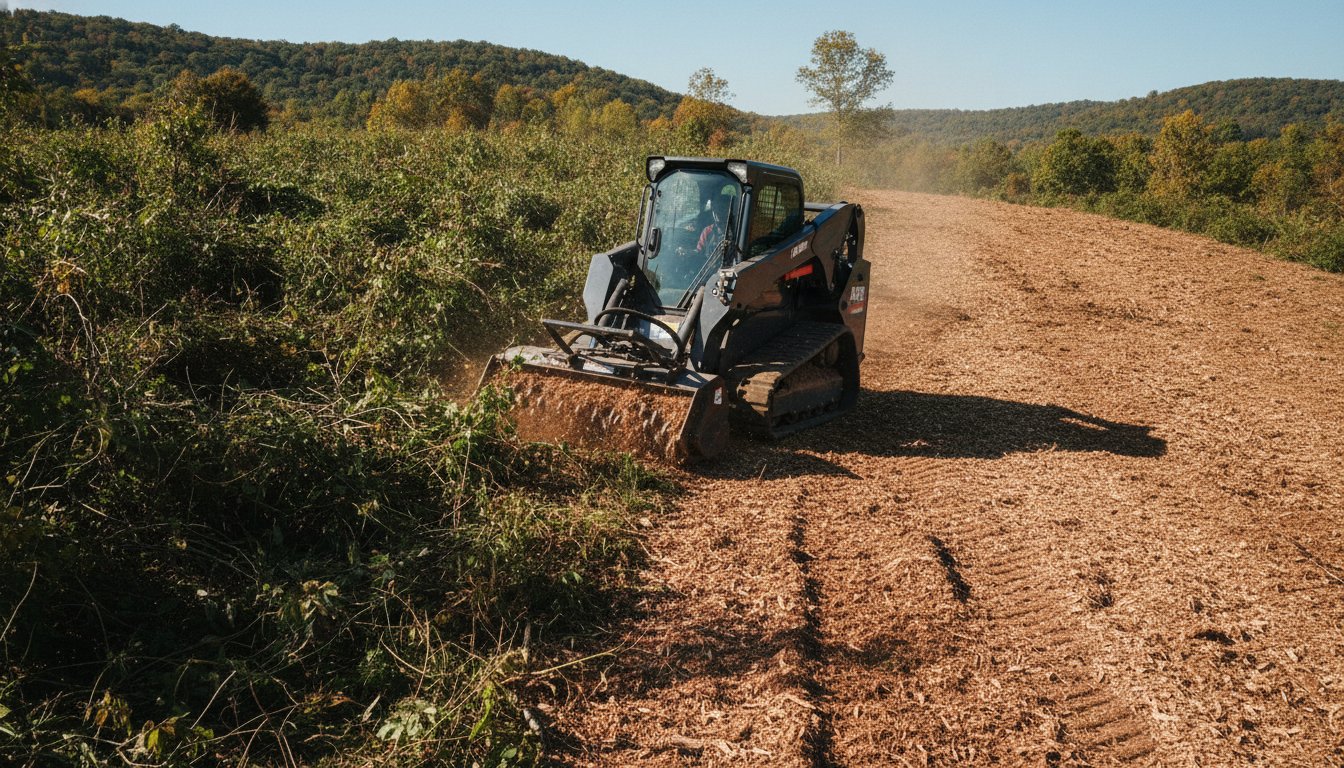
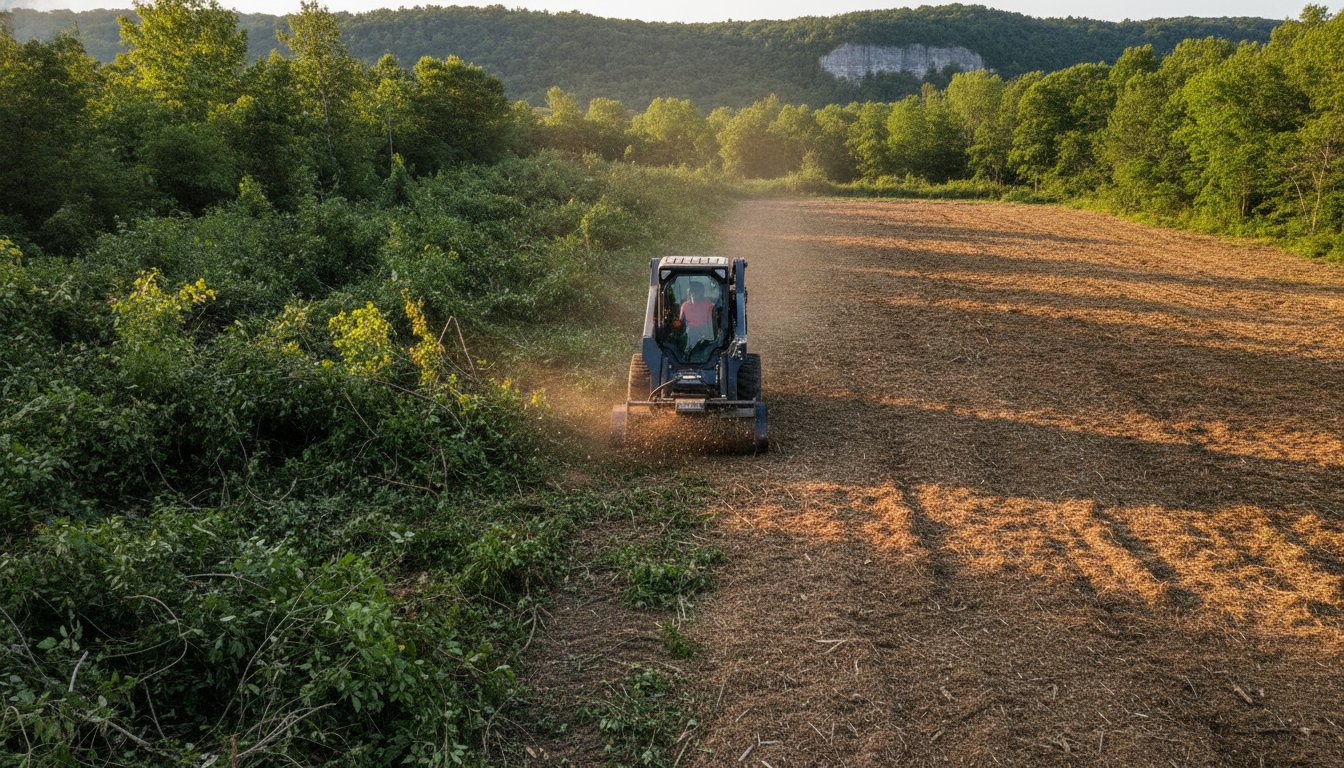
The true value of your Kentucky property isn't found in how fast you can strip it bare, but in how much topsoil you manage to keep once the machines leave. You likely look at those aggressive honeysuckle thickets or cedar groves and see a daunting, expensive mess that hinders your vision for a functional farm or hunting ground. It's frustrating to feel like your own acreage is becoming inaccessible or overgrown. Understanding the cost to clear 1 acre of land in Kentucky involves more than just a line item for equipment; it's about choosing a strategy that protects your investment for the long haul.
This guide provides a transparent look at regional land management trends and explains why specific methods save you money by avoiding the hidden traps of debris removal. We'll break down the variables that impact your budget, explain the June 2026 permit regulation changes, and help you achieve that clean, park-like finish. You'll discover how to reclaim your land for trails or curb appeal while avoiding the soil damage and erosion risks common with traditional bulldozing.
In this guide, we break down the essential factors that determine the cost to clear 1 acre of land in Kentucky, from the density of hardwoods to the complexities of South Central Kentucky’s Karst topography. You'll find a clear comparison between forestry mulching and traditional clearing methods, helping you understand how debris disposal and labor impact your final investment. We also provide 2026 pricing estimates for Adair, Taylor, and Green Counties, along with a checklist of "hidden" costs like soil restoration and new permit regulations. Finally, we explain how a stewardship-focused approach ensures your land remains healthy, functional, and visually appealing for years to come.
Factors Influencing Land Clearing Costs in South Central Kentucky
Every property owner in South Central Kentucky knows that no two acres are identical. When you begin calculating the cost to clear 1 acre of land in Kentucky, you quickly realize that the price isn't just about the surface area. It's about the biological and geological reality of your specific lot. In our region, the difference between a flat meadow and a tangled hillside can change the project scope overnight. Why does one acre take four hours while another takes two days? The answer lies in the unique intersection of Kentucky's native vegetation and its complex terrain.
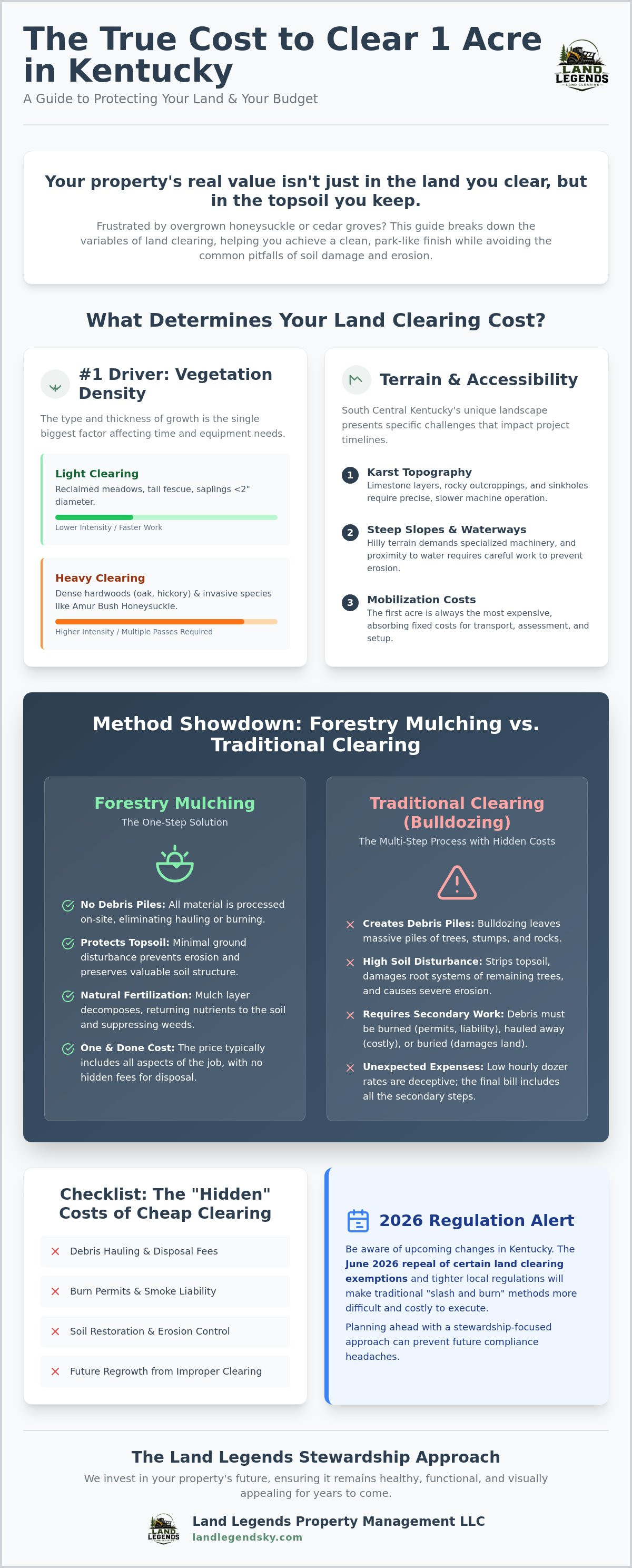
The type of wood on your property dictates how much energy and time a machine must expend. Kentucky hardwoods like white oak, hickory, and sugar maple are significantly denser than invasive softwoods like Eastern Red Cedar. While a mulcher might move quickly through a cedar thicket, a stand of mature hardwoods requires a more methodical, patient approach to ensure the equipment isn't overtaxed. Choosing between various land clearing methods depends largely on what is currently growing in your soil and what you hope to see there in the future.
How does the local landscape affect the timeline? South Central Kentucky is famous for its Karst topography. This means your land likely sits above a network of limestone layers, sinkholes, and rocky outcroppings. For an operator, these aren't just scenic features; they are obstacles that require precision. Moving heavy machinery over uneven limestone ledges or around sensitive sinkhole edges slows down the "acres per day" rate, which ultimately impacts your total investment. Additionally, the first acre of any project is almost always the most expensive. This is because the initial acre must absorb the fixed costs of equipment mobilization, site assessment, and safety setup before the work even begins.
Vegetation Density: The #1 Cost Driver
We generally categorize vegetation into "Light" and "Heavy" clearing to help owners visualize the work involved. Light clearing typically involves reclaimed meadows, tall fescue, and small saplings under two inches in diameter. These jobs move quickly and leave a very fine mulch. Heavy clearing, however, involves dense hardwood stands and "impenetrable" thickets. In our area, the primary culprit for heavy clearing is Amur Bush Honeysuckle. This invasive species grows in multi-stemmed, tangled clusters that are far more labor-intensive to mulch than native saplings. It requires multiple passes to ensure the root crowns are properly addressed so the plant doesn't immediately rebound.
Terrain and Accessibility in the Green River Region
Terrain plays a massive role in Taylor County and surrounding areas where the rolling hills meet the Green River watershed. Steep slopes aren't just a safety concern; they require specialized machines with a low center of gravity to prevent tipping. Working near Kentucky's protected waterways also adds a layer of responsibility. We must move carefully to prevent silt and debris from entering the water, which often means slower, more precise machine movements. Equipment transport fees typically fluctuate based on how many miles the machinery must travel from our central hub to your specific gate in Adair, Taylor, or Green Counties.
Comparing Methods: Forestry Mulching vs. Traditional Clearing Costs
Choosing a clearing method is the most significant decision you'll make when calculating the cost to clear 1 acre of land in Kentucky. Many property owners look at the hourly rate of a bulldozer and assume it's the most economical route. While the machine rate might be lower upfront, the secondary expenses often catch people off guard. A bulldozer doesn't just move trees; it creates massive debris piles that require burning, burying, or hauling away. Each of those steps adds a new line item to your final bill.
Hand-clearing is an alternative, though it's rarely feasible for a full acre unless you have significant time and physical stamina. The labor costs for a crew to manually saw, drag, and chip brush are often double or triple the cost of mechanized options. For most South Central Kentucky landowners, the choice eventually narrows down to traditional excavation or modern forestry mulching. The "slash and burn" approach is also becoming more difficult to execute. With tighter local regulations and the 2026 repeal of certain land clearing exemptions, managing smoke liability and fire safety has become a costly logistical hurdle.
The One-Step Advantage of Forestry Mulching
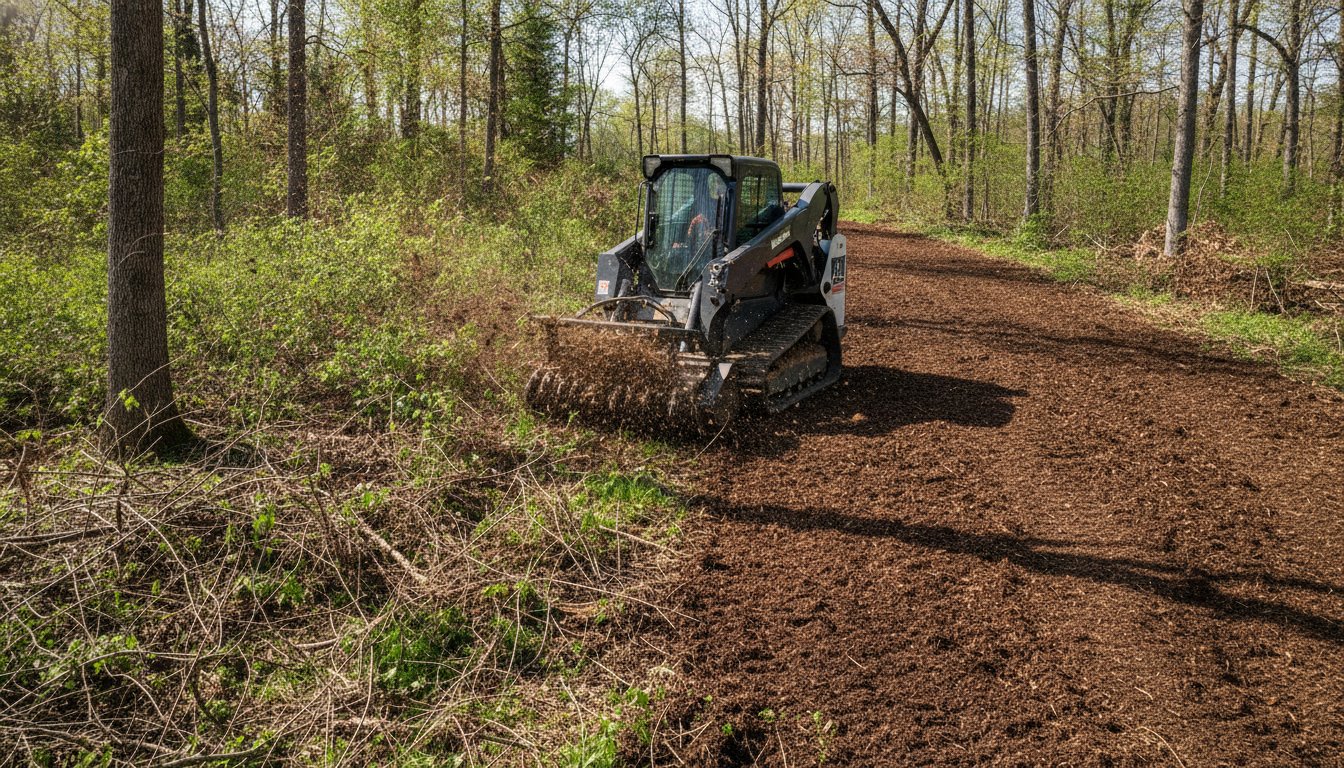
Forestry mulching is a "one and done" solution. It eliminates the need for haul-off trucks and expensive landfill fees because the organic material stays on your property. This method turns invasive brush and small trees into a nutrient-rich mulch bed. On our heavy Kentucky clay, this mulch acts as immediate erosion control. It protects the ground from the washing effects of heavy rains while providing a clean, park-like finish that you can walk or drive over immediately. If you're looking for a way to improve your property's utility quickly, forestry mulching offers a level of precision that traditional methods simply can't match.
Traditional Clearing Pitfalls
Traditional clearing with dozers or excavators often leaves a scarred landscape. These machines are designed for mass earthmoving, not delicate underbrush removal. The pitfalls of this method include:
- Stump Removal: Dozers leave holes that must be filled and graded, adding hours of additional machine time.
- Topsoil Loss: Heavy blades often scrape away the fertile top layer of soil, making it difficult to grow grass or crops later.
- Reseeding Costs: Because the ground is left bare and disturbed, you must immediately invest in straw and seed to prevent a muddy mess.
- Multiple Contractors: You might need one person to clear, another to haul debris, and a third to grade the site.
By the time you pay for the dozer, the debris removal, and the site restoration, the "cheap" option often ends up being the most expensive. Stewardship-minded landowners usually find that staying with a single-pass method preserves the integrity of their soil while keeping the total project timeline manageable.
Budgeting for 2026: Estimated Cost Per Acre in Kentucky
As we move through 2026, several economic factors have shifted the baseline for land management services. Fuel prices and rising insurance premiums for heavy equipment operations have created a new pricing floor. When you investigate the cost to clear 1 acre of land in Kentucky, it's helpful to view these figures as a reflection of the specialized skill and machinery required to handle our regional vegetation. While prices remain relatively stable across Adair, Taylor, and Green Counties, the specific requirements of your lot will dictate where you fall on the pricing spectrum.
One significant change for 2026 involves the regulatory environment. As of June 22, 2026, the previous exemption that allowed clearing on two acres or less without a permit has been repealed. This means most projects now require a formal permit, which can add anywhere from $50 to over $500 to your total budget depending on your specific county's requirements. Additionally, for those clearing land for agricultural use, the Kentucky County Agricultural Investment Program (CAIP) currently offers a 50% cost-share for custom land clearing services, which can significantly offset your investment.
Typical Price Ranges for Kentucky Landowners
Based on current market data for the 2026 season, costs are generally categorized by the density of the growth. These ranges reflect the machine time and labor required for different levels of "biological resistance" on the ground:
- Light clearing: For meadow reclamation, tall grass, and saplings under two inches, estimates typically range from $600 to $1,300 per acre.
- Moderate clearing: For land with established shrubs, invasive thickets, and small trees, the price often sits between $2,100 and $4,100 per acre.
- Heavy clearing: Dense forests with large hardwoods or mature cedar groves can range from $5,100 to over $8,100 per acre.
- Forestry mulching: As a standalone method, mulching typically costs between $1,500 and $3,500 per acre, providing a finished look without the need for debris disposal.
Why Estimates Vary by Project Scope
A common point of confusion for landowners is why a single acre often costs more per-acre than a ten-acre tract. Most professional outfits maintain a "minimum call-out" fee to cover the logistics of transporting heavy machinery, site setup, and safety inspections. When you clear larger tracts (5+ acres), these fixed mobilization costs are spread across more area, which often brings the per-acre rate down by 15% to 25%. A thorough site walk-through is essential because it allows an expert to identify hidden limestone ledges or specific invasive species that satellite imagery simply cannot reveal. Whether you're in Columbia, Campbellsville, or Greensburg, local terrain nuances like Karst sinkholes or steep Green River embankments will always influence the final quote more than a generic "per-acre" average.
The "Hidden" Costs of Cheap Land Clearing
A rock-bottom initial bid often hides the long-term financial burden of site restoration. When you analyze the cost to clear 1 acre of land in Kentucky, you've got to account for the potential liability of traditional methods like "slash and burn." While a burn pile seems like a cost-effective way to handle debris, it carries significant risks that aren't always reflected in a quote. Shifting winds in South Central Kentucky can quickly turn a controlled burn into a liability nightmare. Beyond the safety concerns, managing smoke impact on neighbors and securing the necessary permits adds unexpected logistical costs and stress to your project timeline.
Another common hidden expense involves repairing the physical damage left behind by heavy bulldozers. These massive machines are designed for mass earthmoving, not for the delicate task of clearing underbrush. Their heavy steel tracks often leave deep ruts in our native clay soil, leading to immediate drainage issues and severe soil compaction. This compaction makes it difficult for new vegetation to take root, often requiring you to hire a second contractor for grading or to bring in expensive topsoil to fix the "moonscape" left behind. Massive soil disturbance also acts as a catalyst for a "weed explosion." By scraping the ground bare, you expose the dormant seed bank of invasive species. This leads to a significantly higher bill for herbicides and manual maintenance in the following seasons.
Environmental Stewardship and Soil Health
The A-horizon topsoil in South Central Kentucky is a precious resource that takes centuries to build but only minutes to destroy with a heavy blade. Stewardship-focused clearing preserves this fertile layer rather than scraping it into a debris pile. Mulching provides a nutrient-rich organic blanket that decomposes over time, feeding the soil while preventing the need for costly silt fences or mechanical erosion control measures. If you want to understand how this process works specifically in our local area, read our Forestry Mulching in Adair County KY: The Complete Landowner’s Guide for a deeper look at protecting your soil's integrity.
Post-Clearing Maintenance
A clean lot is not a "set it and forget it" investment. You should budget for follow-up treatments, especially if your acreage was previously dominated by aggressive species like Bush Honeysuckle or Autumn Olive. These plants are incredibly resilient and often require a second pass or targeted spot-treatments to ensure they don't reclaim your new pasture or trail system. For those focused on recreational use, maintaining your progress is much easier when the initial clear was done with precision. We recommend checking out our guide on How to Master ATV Trail Clearing in Kentucky to learn how to keep your new trails functional and beautiful year-round.
Don't let a "cheap" clearing job turn into an expensive, multi-year restoration project. If you're ready to see the difference that precision equipment and local expertise can make for your property, get a precise quote for your property today.
Investing in Your Kentucky Property: The Land Legends Property Management LLC Approach
Understanding the cost to clear 1 acre of land in Kentucky is the first step in a larger journey of property stewardship. While the market numbers provide a baseline for your budget, the actual value of the work is found in the precision of the execution. In Adair, Taylor, and Green Counties, our local landscape requires a steady hand and an intimate knowledge of the soil. We don't just see a thicket of brush; we see the potential for a thriving pasture or a strategic hunting lane. By focusing on the long-term health of your environment, Land Legends Property Management LLC ensures that your investment today translates into higher property value tomorrow.
When you evaluate a professional land clearing quote, look beyond the bottom line. A comprehensive estimate should clearly outline the equipment to be used, the plan for debris management, and a timeline that respects your property's seasonal needs. It's also vital to verify that your contractor is fully insured and understands the specific regional nuances of South Central Kentucky. A professional approach doesn't just clear the land; it prepares it for its next chapter, whether that involves agricultural production or recreational enjoyment. A clean, well-managed lot is significantly more attractive to future buyers, often allowing you to recoup your clearing investment through a higher per-acre listing price.
Precision Mulching for Specific Land Goals
Every landowner has a different vision for their property. For some, the goal is functional hunting land. We specialize in cutting shooting lanes and recreational trails that follow the natural contours of the hills, avoiding the erosion pitfalls common with heavier, less precise machinery. For our local farmers, pasture reclamation is often the priority. We remove invasive softwoods and underbrush, allowing native grasses to return without the need for massive, expensive reseeding projects. If you're preparing a property for the market, our real estate curb appeal clearing can transform an impenetrable thicket into a park-like setting, allowing potential buyers to actually walk the land and visualize its potential.
Ready to Reclaim Your Acreage?
Reclaiming your land is a significant milestone for any property owner. Hiring a local Kentucky specialist ensures that the person operating the machinery understands our unique Karst topography and the resilience of our native hardwoods. Land Legends Property Management LLC takes pride in being a reliable partner for property owners who value meticulous work and environmental awareness. A site assessment is the best way to get an accurate picture of your project's scope and to discuss your specific goals for the 2026 season. If you're ready to move forward, you can Request a precise land clearing estimate from Land Legends Property Management LLC to start the process with a team that treats your soil like their own.
Reclaiming Your Kentucky Landscape for the Future
Deciding how to manage your acreage involves balancing immediate budgets with the long-term stewardship of your soil. We've explored how vegetation density and the unique Karst topography of South Central Kentucky dictate the project timeline. You now understand why the one-pass efficiency of forestry mulching often outperforms traditional bulldozing by eliminating debris disposal and protecting your fertile topsoil. The total cost to clear 1 acre of land in Kentucky is an investment in your property’s future utility and value.
As a fully insured local team, we use specialized skid steer mulching technology to help property owners in Adair, Green, and Taylor Counties achieve their land goals with precision. Whether you're clearing for a new home site, reclaiming overgrown pastures, or improving hunting lanes, the right partner makes all the difference. We focus on results that look professional on day one and remain healthy for years to come.
Get Your Custom Land Clearing Quote from Land Legends Property Management LLC
We look forward to helping you transform your overgrown thickets into a clean, functional landscape you can take pride in for generations.
Frequently Asked Questions
Is it cheaper to clear land with a bulldozer or a forestry mulcher in Kentucky?
Forestry mulching is generally more cost-effective because it eliminates the secondary expenses of debris disposal and site restoration. While a bulldozer might have a lower machine rate, it creates massive piles of brush and stumps that require burning, burying, or hauling away. By processing everything into a fine mulch in a single pass, you avoid the high labor costs and landfill fees associated with traditional methods. This efficiency makes it a preferred choice for managing the cost to clear 1 acre of land in Kentucky.
How much does it cost to clear 1 acre of wooded land in Kentucky in 2026?
The cost for heavily wooded areas in 2026 typically ranges from $5,100 to over $8,100 per acre. This price reflects the significant machine time and fuel required to process dense hardwoods and thick undergrowth. For properties that are only moderately wooded or require underbrush thinning rather than total clearing, the investment often drops to a range between $2,100 and $4,100 per acre. Every lot is unique, so vegetation density remains the primary factor in your final budget.
Do I need a permit to clear land on my Kentucky property?
Yes, as of June 22, 2026, new regulations require most land clearing projects to obtain a permit following the repeal of previous small-acreage exemptions. While specific requirements vary between Adair, Taylor, and Green Counties, you should expect permit fees to range from $50 to $500. It's essential to consult with your local planning and zoning department before moving equipment onto the site. This ensures your project remains compliant with updated environmental and erosion control standards.
Does land clearing increase my property value in South Central KY?
Land clearing significantly boosts property value by improving curb appeal and making the acreage accessible for potential buyers. In the South Central Kentucky market, a lot that is already thinned and features clean trails or open pastures is far more desirable than an impenetrable thicket of invasive honeysuckle. Professional clearing allows buyers to visualize home sites or agricultural uses immediately. This often leads to a faster sale and a higher per-acre price than comparable overgrown parcels.
Can forestry mulching handle large trees or just brush?
Forestry mulching is specifically designed for underbrush, invasive thickets, and small trees up to roughly 8 inches in diameter. It is the most efficient tool for thinning a forest to create a park-like look while leaving mature, healthy hardwoods standing. For massive oaks or large-scale logging, traditional felling methods are necessary. Our approach focuses on precision understory removal, which protects the root systems of your large "keeper" trees while eliminating the messy scrub growth beneath them.
What is the best time of year to clear land in Kentucky?
Late fall and winter are the ideal seasons for land clearing in Kentucky because the ground is firmer and visibility is at its peak. With the leaves gone, operators can move more precisely around rocky outcroppings and limestone ledges. Dormant season clearing also minimizes the spread of invasive seeds and reduces the impact on local wildlife habitats. While we can operate year-round, avoiding the peak saturated soil of early spring helps prevent unnecessary ruts and soil compaction on your property.
How long does it take to clear one acre of heavy brush?
A skilled operator can typically clear an acre of heavy brush in one full working day using a high-flow forestry mulcher. This is roughly two to three times faster than traditional methods involving bulldozers and manual labor crews. Traditional clearing often stretches into a three to five-day project when you factor in the time needed to pile, burn, or haul away debris. Mulching provides a finished result much faster, which is critical for projects on tight construction or real estate timelines.
Will the mulched wood chips attract termites or pests?
Mulched wood chips spread across a field do not typically attract termites to your home or other structures. Subterranean termites require large, damp sources of wood or buried logs to establish a colony, whereas shredded mulch dries out quickly and decomposes on the surface. Because the mulching process destroys the structural integrity of the wood fibers, it creates an environment that is less hospitable to pests than the standing dead timber or debris piles left by traditional clearing methods.
More Articles
How to Master ATV Trail Clearing in Kentucky: A Private Landowner's Guide
Forestry Mulching Benefits for Topsoil: How to Feed Your Land While Clearing It