What if the very act of clearing your land could be the secret to keeping your soil exactly where it belongs? If you've ever watched a heavy Kentucky rainstorm turn a freshly cleared slope into a muddy mess in Adair or Taylor County, you know the frustration of seeing valuable topsoil wash away into nearby ponds or creeks. It's a common concern for landowners who want a clean property but fear the consequences of traditional bulldozing. You shouldn't have to choose between a clear view and a stable hillside.
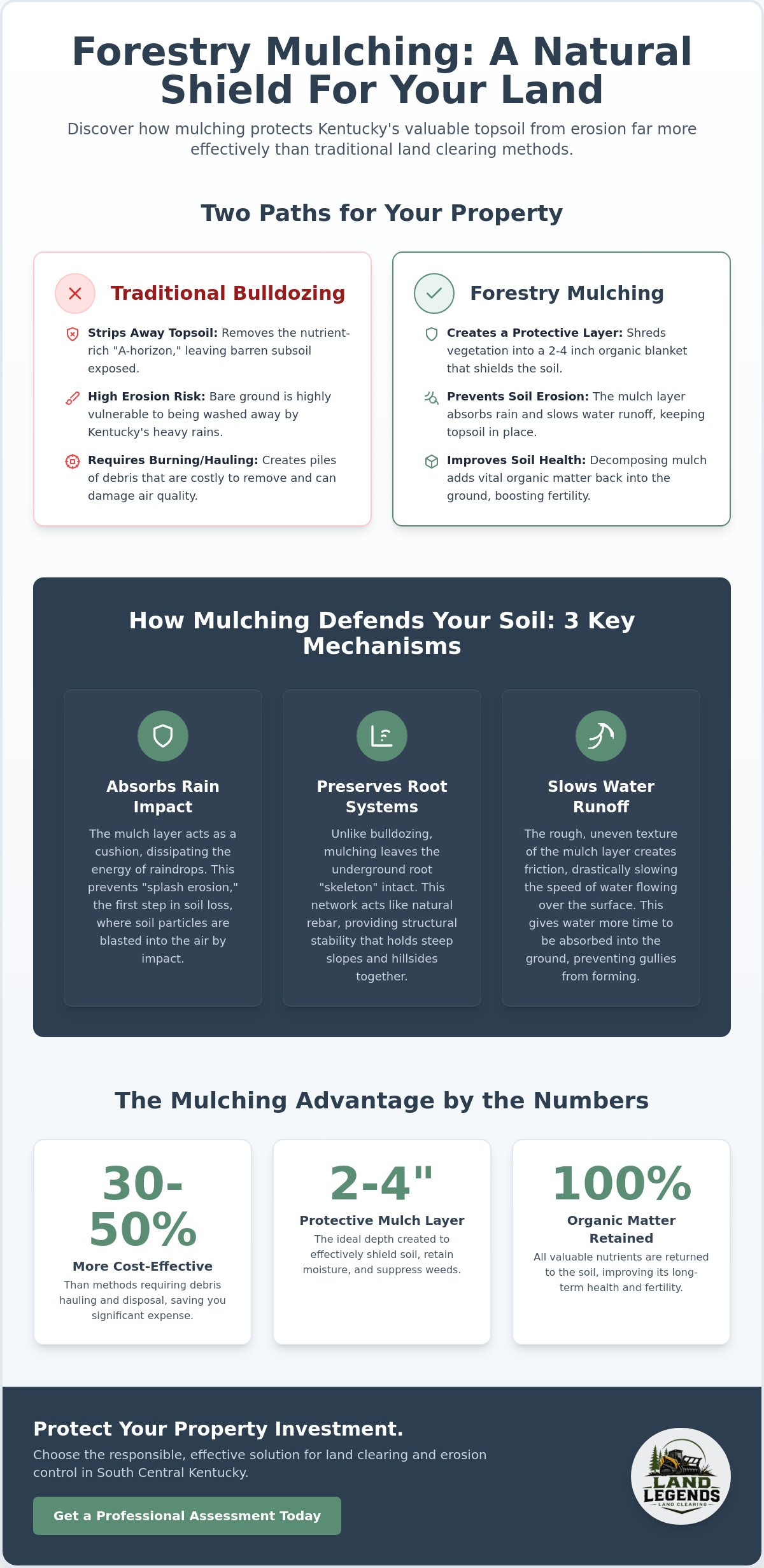
In this guide, you'll discover how forestry mulching erosion control provides a superior alternative by mimicking the natural forest floor to protect your land. We'll explain how creating a protective layer of organic mulch 2 to 4 inches deep shields the earth from impact and prevents runoff far better than bare-dirt methods. You'll learn about the structural benefits of this technique, how it can be 30 to 50 percent more cost-effective than hauling debris, and why it's the most reliable way to improve your property value while acting as a responsible steward of the local environment.
Key Takeaways
- Learn why shredding vegetation is safer for your soil than traditional "grubbing" that leaves the earth vulnerable.
- Understand how a specialized mulch layer absorbs rain impact and slows water velocity to keep your topsoil in place.
- Discover how preserving the underground root "skeleton" provides a natural rebar system that holds steep slopes together.
- Master the specific techniques for forestry mulching erosion control in South Central Kentucky’s unique clay and karst topography.
- Identify how to assess erosion "hot zones" on your property to create a clearing plan that balances aesthetics with land health.
The Science of Forestry Mulching and Erosion Control
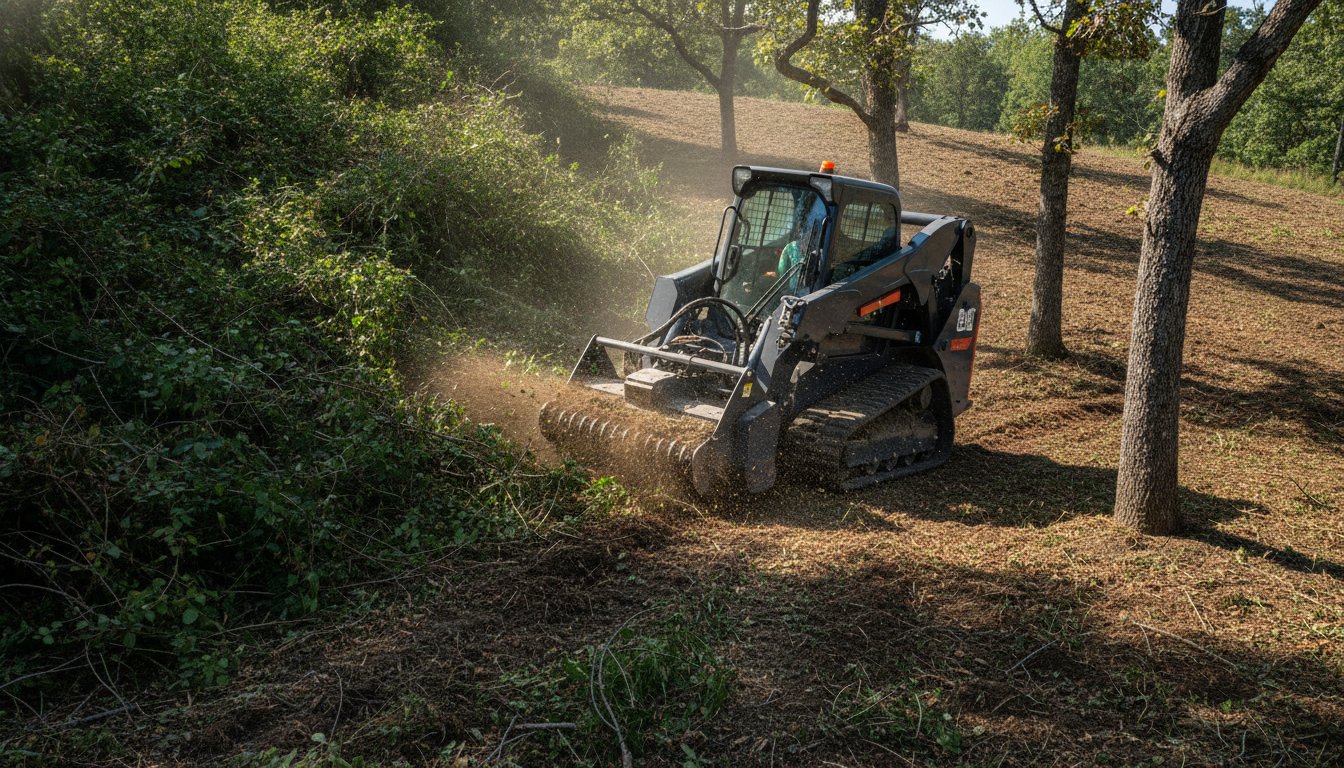
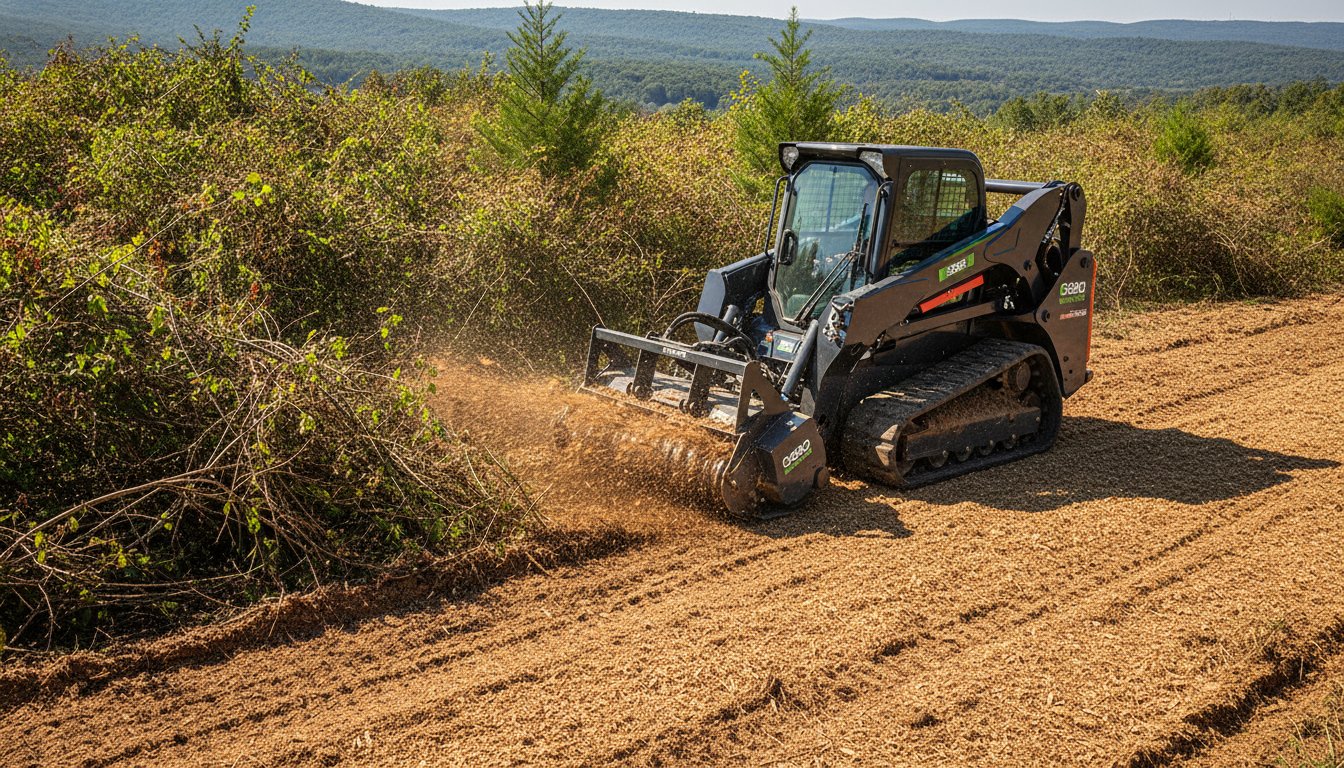
Forestry mulching isn't just a way to clear brush; it's a sophisticated method of land management that prioritizes long-term soil health. By using specialized machinery equipped with high-speed cutting teeth, we shred trees and undergrowth into a nutrient-rich layer of wood fibers. This process allows for effective forestry mulching erosion control because it leaves the soil surface undisturbed. Unlike traditional methods that rip vegetation out by the roots, mulching creates an immediate, protective barrier. This barrier provides what professionals call "mechanical stabilization," where the weight and interlocking texture of the wood chips physically shield the earth from the elements. It's a methodical approach that respects the existing landscape instead of stripping it bare.
Mulching vs. Traditional Clearing: An Erosion Perspective
Why does the specific method of clearing matter so much for your property's future? Traditional "grubbing" or bulldozing often involves scraping away the top layer of earth to remove stumps and roots. This action removes the "A-horizon," which is the dark, nutrient-dense topsoil where most plant life thrives. Once this layer is gone, you're left with raw, exposed subsoil that has very little resistance to wind or water. This vulnerability is a primary concern in Erosion control strategies, especially for properties located near sensitive watersheds or Kentucky's many creeks. Mulching is the preferred choice for these areas because it maintains the soil's integrity from day one. It eliminates the need for hauling debris or burning, which can further damage the soil structure and local air quality.
The Role of Organic Matter in Soil Health
The science of soil stability relies heavily on the presence of organic matter. As the shredded mulch begins to decompose, it creates a substance called humus. This organic component acts like a natural glue, binding individual soil particles into larger aggregates. These larger structures are much harder for heavy rainwater to wash away. How does this help with drainage? This process significantly improves "infiltration," which is the soil's ability to absorb water rather than letting it sheet off the surface. If you're looking toward future pasture reclamation or establishing a healthy lawn, this organic foundation is essential. It prevents the ground from becoming a hard-packed, impermeable surface that rejects new growth and encourages muddy runoff. By keeping the organic matter on-site, you're investing in the future fertility and stability of your land.
How the Mulch Layer Acts as a Protective Soil Blanket
Think of the wood fiber layer created during the clearing process as a custom-fit shield for your property. When you choose forestry mulching erosion control, you aren't just removing unwanted brush; you're installing an organic barrier that performs several critical physical tasks at once. This blanket doesn't just sit on the surface. It actively manages how water interacts with your land, ensuring that the heavy rainfall typical of our region doesn't turn your investment into runoff. It's a methodical approach to land stewardship that prioritizes the long-term health of your acreage.
Dissipating Raindrop Impact
A single raindrop can dislodge soil particles up to five feet away on bare ground. When rain hits unprotected Kentucky clay, it acts like a microscopic hammer, shattering the soil's surface structure and launching sediment into the air. This is known as "splash erosion," and it's the invisible first step toward losing your valuable topsoil. A porous mulch layer changes this dynamic completely by breaking one large, high-velocity drop into many tiny, harmless droplets. By the time the water reaches the actual soil, it has lost its kinetic energy. This "interception" effect is a cornerstone of effective land management, as detailed in the USDA’s Erosion Control Treatment Selection Guide.
Reducing Surface Runoff Velocity
Once water is on the ground, the primary challenge becomes speed. On a smooth, cleared slope, water gains velocity quickly, carving out rills and gullies that deepen with every storm. Mulching introduces what experts call a high "roughness factor" to the landscape. The irregular shapes and sizes of the shredded wood chips create millions of tiny dams and diversions. This friction forces the water to slow down significantly. Slower water has more time to soak into the ground, which recharges your groundwater and prevents silt from filling up your ponds or local creeks. If you're managing a particularly hilly area in Adair or Taylor County, having a professional evaluate your property's drainage can help determine the ideal mulch depth for your specific slopes.
Beyond water movement, this protective blanket regulates the soil's internal environment. During a hot summer, bare earth can dry out and crack, creating deep fissures that actually accelerate erosion when the next rain arrives. A consistent layer of mulch keeps the soil cool and holds moisture where it belongs. This temperature regulation is vital for the soil microbes that break down organic matter and keep your land fertile. It's a systematic way to ensure your property remains productive and stable long after the clearing work is finished.
Preserving Root Systems for Structural Stability
The true strength of a stable hillside doesn't just come from what you see on the surface. While the mulch layer protects the topsoil from rain, the real work of holding the earth together happens underground. One of the most significant advantages of forestry mulching erosion control is that it leaves the root "skeleton" of the vegetation perfectly intact. Unlike traditional clearing methods that use excavators to rip out stumps and root balls, mulching cuts the plant off at ground level. This leaves a pre-installed, natural support system that keeps your land's structure solid during and after the clearing process.
Natural Rebar: The Underground Network
In a wooded area, root systems are incredibly complex and interlocking. When we mulch the top growth, these roots remain in the soil as a "natural rebar" system. Even though the plant is no longer growing, the root structure continues to provide what engineers call "shear strength." This is the soil's ability to resist the downward pull of gravity and the pressure of moving water. What happens when you pull those roots out? You're left with massive, unstable craters and loose, churned-up dirt that is prone to immediate collapse. By leaving the roots, we ensure the soil particles stay tightly bound together. In our Kentucky climate, these hardwood root systems can provide structural support for three to five years, giving you a massive head start while you establish new ground cover or pasture grass.
Stabilizing Slopes and Embankments
Managing the steep terrain common in South Central Kentucky requires a specialized approach that prioritizes safety and stability. Clearing a hillside down to bare dirt is a recipe for disaster, as it often leads to the formation of "rills" and "gullies." These small channels quickly turn into deep trenches that can ruin the value of your property. Our mulching equipment is designed to operate safely on inclines that would be dangerous for traditional bulldozers. Because we aren't digging into the earth, we don't disturb the delicate balance of the slope. This is critical for preventing landslides and ensuring that your steep banks remain manageable. Keeping the root mass in place acts as a secondary line of defense, catching any sediment that might try to move beneath the mulch layer. It's a systematic way to achieve a clean, open look without sacrificing the physical integrity of your hillsides.
When you contrast this with the holes left by traditional "grubbing," the choice becomes clear. A bulldozer leaves a property looking like a battlefield, with loose dirt ready to wash into the nearest creek. Forestry mulching leaves the ground firm and walkable immediately after the job is done. You get the aesthetic of a cleared property with the structural reliability of an established forest floor. It's a professional solution for landowners who want to improve their property value without risking the very soil that makes their land valuable.
Managing Erosion in South Central Kentucky’s Terrain
Landowners in South Central Kentucky face a unique set of geological hurdles. While the general principles of forestry mulching erosion control apply everywhere, our local landscape requires a more nuanced approach. Between the heavy seasonal rainstorms and our specific soil composition, managing a property in Adair or Taylor County isn't the same as clearing land in the plains. It's a task that requires an understanding of how our earth actually moves when the weather turns.
Clay Soils and Water Infiltration
Our region is defined by heavy red clay. This soil is excellent for some crops but a nightmare for drainage once it's cleared of cover. Bare Kentucky clay develops a hard "crust" when exposed to the sun. When the rain hits that crust, it doesn't soak in; it slides right off at high velocity. This runoff carries sediment into local pastures and waterways, causing long-term damage. By applying a consistent mulch layer, we keep the clay cool and moist, preventing that crust from forming in the first place. This is vital for maintaining the health of pastures in Green and Taylor counties, where soil productivity is the lifeblood of the farm.
Protecting Karst Features and Sinkholes
Much of our region sits on "Karst" topography. This means we have a complex network of sinkholes, caves, and underground drainage systems. If you clear land traditionally near these features, you risk sending sediment and debris directly into the groundwater. Forestry mulching provides a natural filter strip. It allows water to enter the soil slowly, trapping pollutants on the surface. Protecting these features is also tied to managing the vegetation around them. For example, removing invasive species like bush honeysuckle is a key part of Invasive Plant Removal in Taylor County, as these plants often choke out the native growth that naturally stabilizes sinkhole edges.
The heavy spring and fall rains we experience can dump inches of water in a matter of hours. Without a professional strategy, your topsoil doesn't stand a chance. We see many properties where invasive bush honeysuckle has taken over, creating a "biological desert" where nothing grows underneath. When we mulch these invasives, we turn a problem into a solution. We create a protective ground cover that stays put during the next deluge, giving native grasses a chance to return. If you're concerned about how your property will handle the next big storm, you can request a professional site assessment to see how mulching can stabilize your specific terrain.
Implementing a Professional Erosion Control Strategy
Successful land management requires more than just high-powered machinery; it requires a strategic eye for the terrain. Before the first tree is shredded, a professional assessment must identify erosion "hot zones." These are the specific areas, like the base of a steep hill or a natural drainage path, where water velocity is highest. By identifying these vulnerabilities early, we can tailor the forestry mulching erosion control strategy to fit the unique contours of your property. Sometimes, this means choosing a "thinning" approach rather than total clearing. By leaving select clusters of native trees, we maintain a multi-layered canopy that further breaks rainfall impact while the mulch protects the ground below.
Custom Mulching Plans for Kentucky Properties
Not every acre of Kentucky land demands the same level of intensity. A flat pasture reclamation project has different requirements than a steep, wooded hillside in the Green River watershed. Land Legends Property Management LLC evaluates factors like slope grade, current vegetation density, and soil type to determine the precise approach needed for your land. For a comprehensive look at how these factors play out in our region, Forestry Mulching in Adair County KY provides a deeper dive into the full process. Our goal is to balance your vision for a clear property with the scientific requirements of soil stability.
What to Expect During the Process
When our equipment arrives on your site, you'll notice the low-impact nature of our skid steer mulchers. Unlike heavy bulldozers that can compact soil and damage the roots of the "keeper" trees you want to save, our machinery is designed to tread lightly. We carefully adjust the mulch depth as we work. While a standard layer of 2 to 4 inches is often the baseline, we may increase this depth on steeper inclines to provide extra weight and stability. This precision ensures the organic blanket stays put even during heavy downpours.
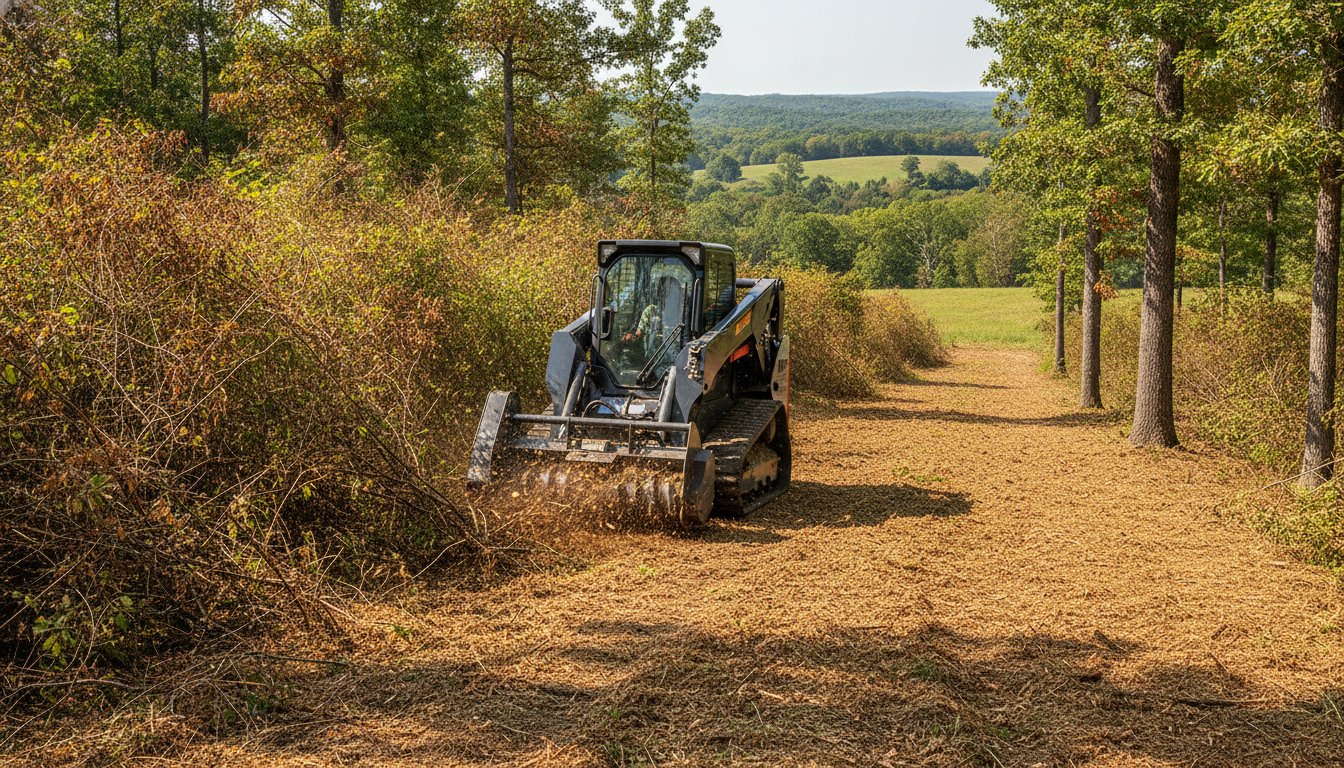
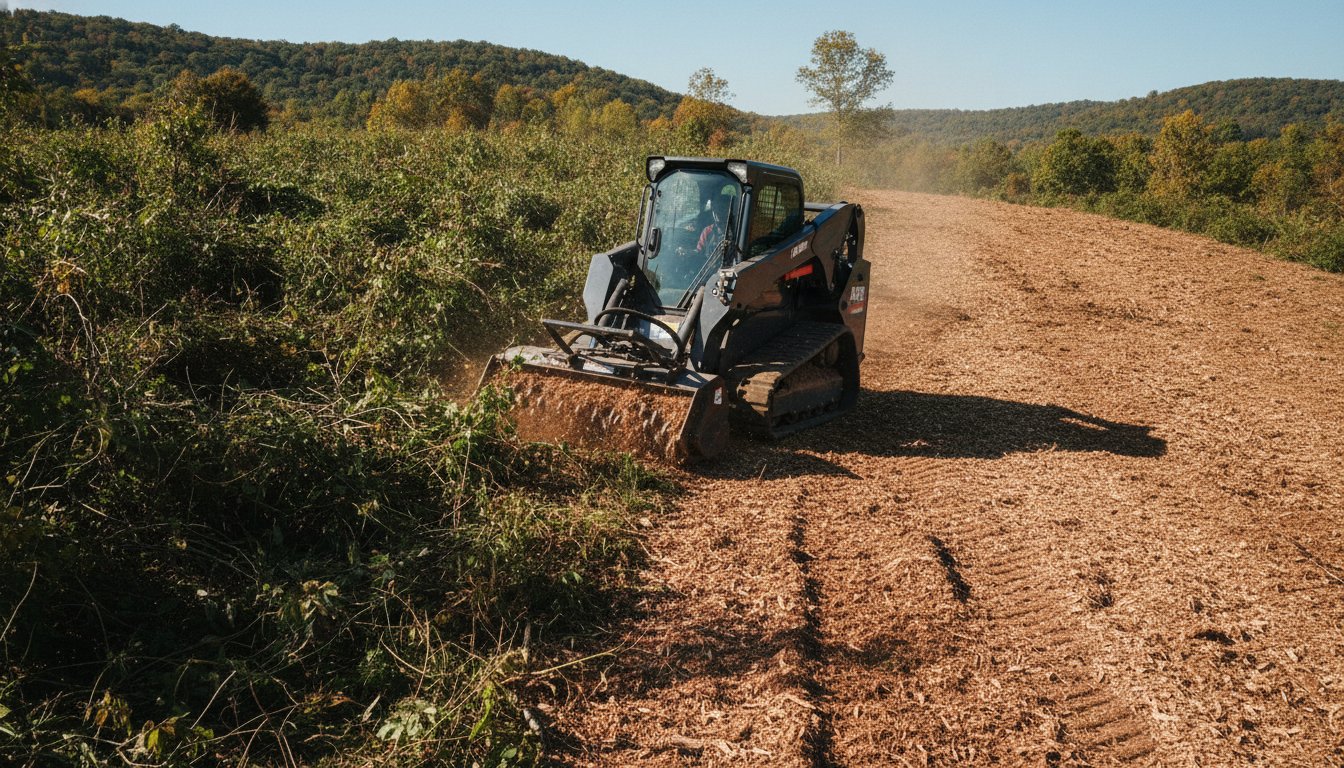
The result is a finished, park-like setting that is immediately functional. You won't be left with unsightly brush piles or a scarred landscape. Instead, you'll have a clean, walkable property with a stable floor that is ready to handle the next Kentucky rainstorm. Landowners should always consult with a professional who understands our local South Central Kentucky landscape and the specific behavior of our clay soils. As your local stewards, Land Legends Property Management LLC takes pride in delivering a result that improves your property's value while protecting the environment for the long haul.
Securing the Future of Your Kentucky Acreage
Protecting your property from the elements doesn't have to mean sacrificing its beauty or health. By choosing a method that prioritizes the organic structure of your land, you ensure that your topsoil remains exactly where it belongs. You've seen how a well-placed mulch blanket dissipates rain impact and how leaving the underground root network provides the necessary structural support to keep slopes stable. In South Central Kentucky, where our red clay and karst features present unique challenges, having a plan that respects these geological realities is the only way to achieve lasting results.
Land Legends Property Management LLC is your trusted partner for agricultural and residential land stewardship across Adair, Green, and Taylor Counties. We use specialized skid steer mulching technology to deliver precision clearing that traditional heavy machinery simply can't match. If you're ready to transform your property into a stable, park-like setting, contact Land Legends Property Management LLC for a professional site evaluation today. Effective forestry mulching erosion control is an investment in the long-term value and safety of your land. We look forward to helping you build a property that stands strong against every Kentucky season.
Frequently Asked Questions
Does forestry mulching prevent all erosion on steep hills?
Forestry mulching doesn't provide a 100 percent guarantee against extreme geological events, but it significantly reduces the risk compared to any other clearing method. It provides immediate structural stability by shielding the earth from rain impact. For very steep grades in our region, we often leave a thicker layer of wood fiber to increase the weight and friction on the slope, preventing the soil from sliding during a storm.
How long does the mulch layer last before it decomposes?
Typically, a standard layer of hardwood mulch will last between three and five years in our humid Kentucky climate. This timeline is ideal because it gives native grasses and ground cover enough time to establish a permanent root network before the mulch disappears. As the wood eventually breaks down, it enriches the soil with organic matter, improving the long-term fertility and water absorption of your property.
Can I plant grass directly into the mulch left behind?
You can certainly seed over a mulched area, though the success depends on the thickness of the material. If the layer is two inches or less, grass seed can often reach the soil and germinate successfully. For thicker layers, you may need to wait for some decomposition or lightly incorporate the mulch into the topsoil. This organic base provides an excellent environment for protecting young seeds from birds and drying sun.
Is forestry mulching better than silt fences for erosion control?
These two methods serve different roles in a comprehensive land management plan. Silt fences are temporary barriers designed to catch sediment that is already moving across your property. In contrast, forestry mulching erosion control is a source control that prevents the soil from moving in the first place. It's usually a more cost-effective and permanent solution for large acreages because it doesn't require maintenance or eventual removal.
Will the mulch wash away during a heavy Kentucky rainstorm?
The interlocking nature of shredded wood fibers makes them remarkably resistant to water movement during heavy storms. Unlike lightweight straw or loose store-bought wood chips, the heavy, jagged fibers created by a professional mulcher knit together on the ground. They stay put during typical heavy Kentucky rainstorms, providing a steady shield for the underlying red clay and ensuring your topsoil doesn't wash into the nearest creek or pond.
Do I need to seed the area immediately after forestry mulching?
Seeding isn't strictly required to prevent immediate soil loss because the mulch itself provides instant protection. However, if your goal is pasture reclamation or a manicured lawn, we recommend seeding within the first growing season. This ensures that beneficial vegetation takes hold before any dormant weed seeds in the soil have a chance to compete. The mulch acts as a natural nursery, keeping the ground moist for new growth.
How does mulching affect the water quality of my farm pond?
Mulching acts as a natural filtration system that keeps your pond water clear and healthy. By slowing down surface runoff and trapping sediment on the hillside, it prevents the siltation that can turn a healthy farm pond into a shallow, muddy mess. This protection is vital for maintaining fish habitats and ensuring clean water for livestock in counties like Taylor or Green, where pond health is a priority.
What happens to the invasive plants after they are mulched?
Invasive plants like bush honeysuckle are shredded into fine debris that helps suppress new weed growth on the forest floor. While the mulching process kills the top of the plant and removes its seed-producing capability, some aggressive species may require a follow-up spot treatment to prevent regrowth from the roots. This combined approach is the most reliable way to reclaim your land from dense invasive thickets while building up the soil's organic layer.