What if the overgrown brush you're currently fighting is actually the best fertilizer your property has ever seen? Many landowners worry that clearing their land means choosing between a clean view and healthy ground. It's a common fear that clearing away thickets will strip the fertile surface or leave the earth vulnerable to washouts and erosion. You shouldn't have to sacrifice the long-term health of your soil just to reclaim your space.
Understanding how forestry mulching benefits topsoil changes the way you look at land management. Instead of hauling away debris or burning it, this method transforms invasive species and underbrush into a nutrient-rich layer of organic matter. This guide explains how that mulch acts as a protective shield, retaining moisture and preventing the loss of valuable dirt during heavy rains. We will look at how this single-pass process builds a foundation for lush pastures and healthy lawns while keeping your property’s ecosystem intact. By the end, you will see how modern technology can achieve traditional goals of stewardship and land improvement.
Key Takeaways
- Learn why keeping root systems intact is the most effective way to anchor your ground and prevent washouts on Kentucky slopes.
- Understand how forestry mulching benefits topsoil by creating a protective organic barrier that suppresses weeds while feeding the earth.
- Discover why traditional clearing methods like bulldozing often strip away the most fertile layers of your land and how to avoid this common mistake.
- Find out the science behind how shredded wood fibers decompose into humus, providing natural fertilization for your future pastures or lawns.
- Get practical advice on managing your newly cleared property, including the crucial first steps for long-term invasive species control.
How Forestry Mulching Works to Protect Your Kentucky Soil
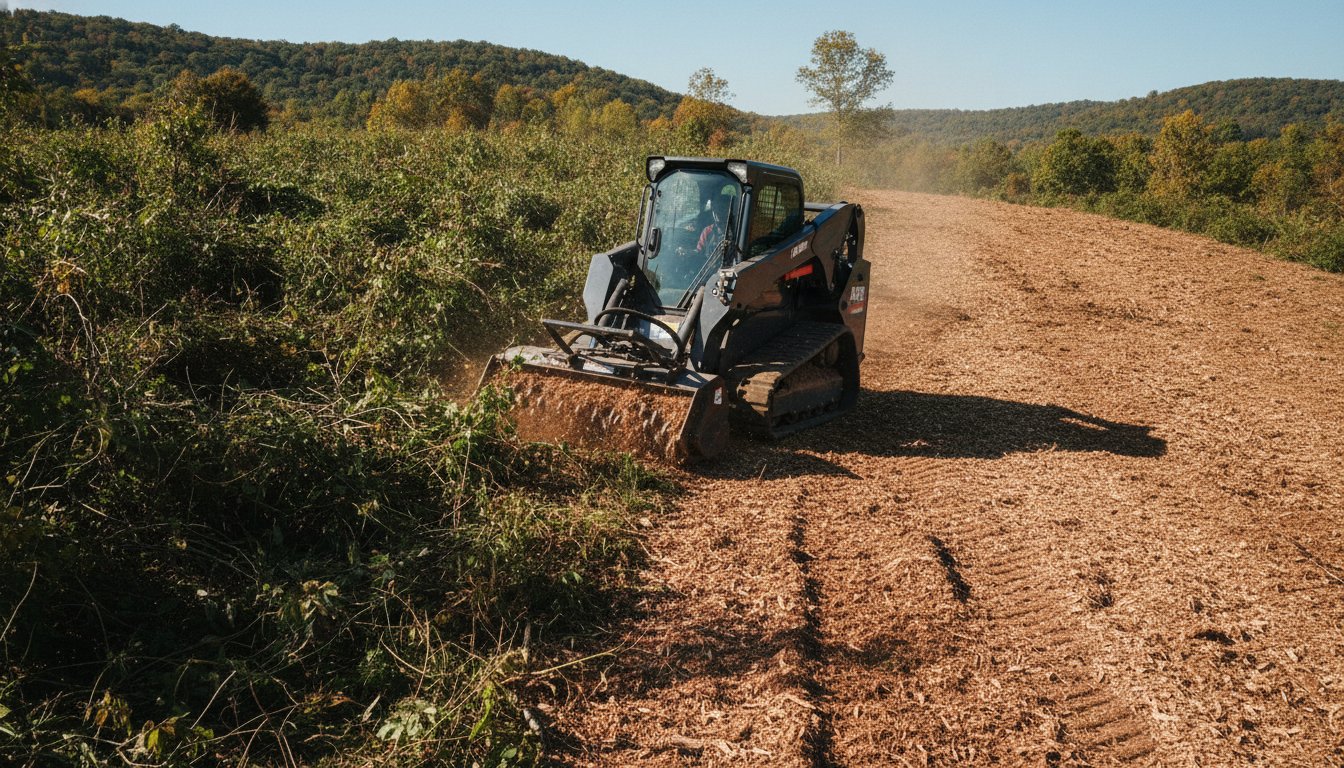
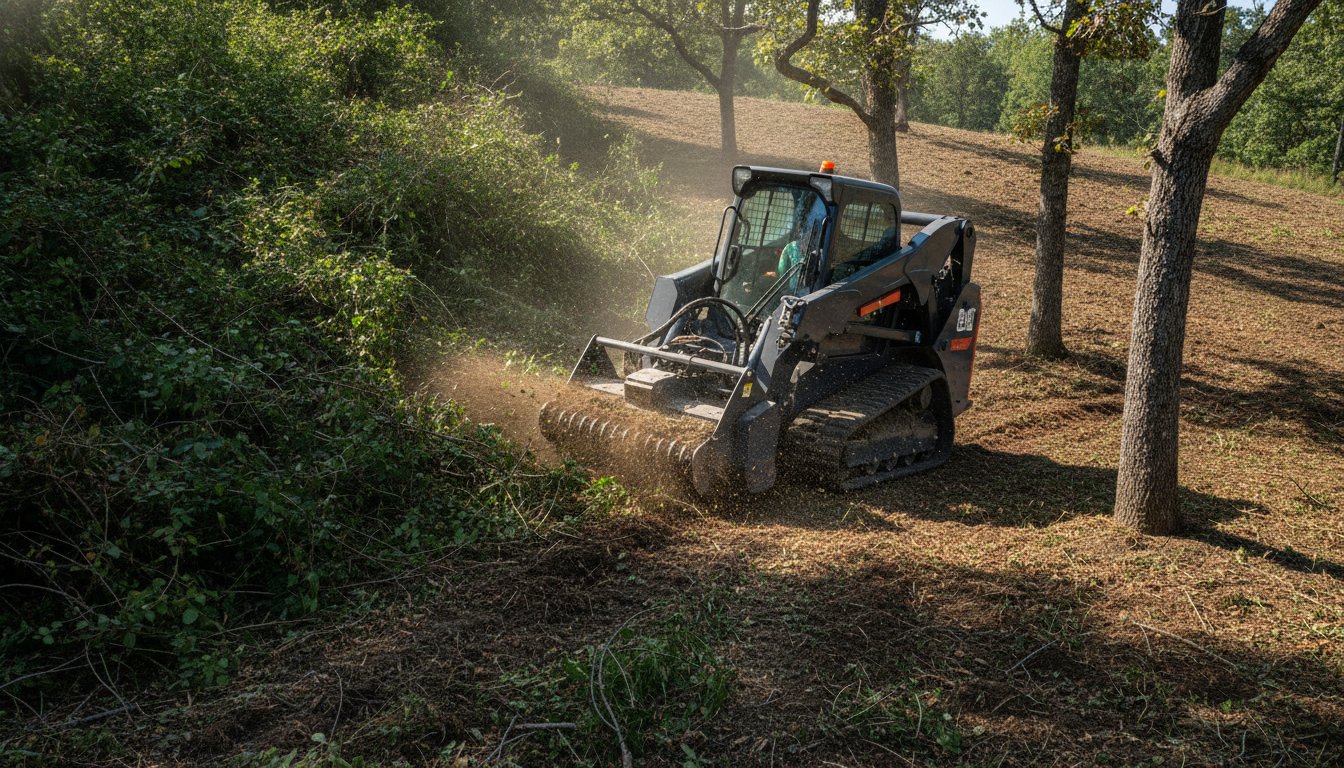
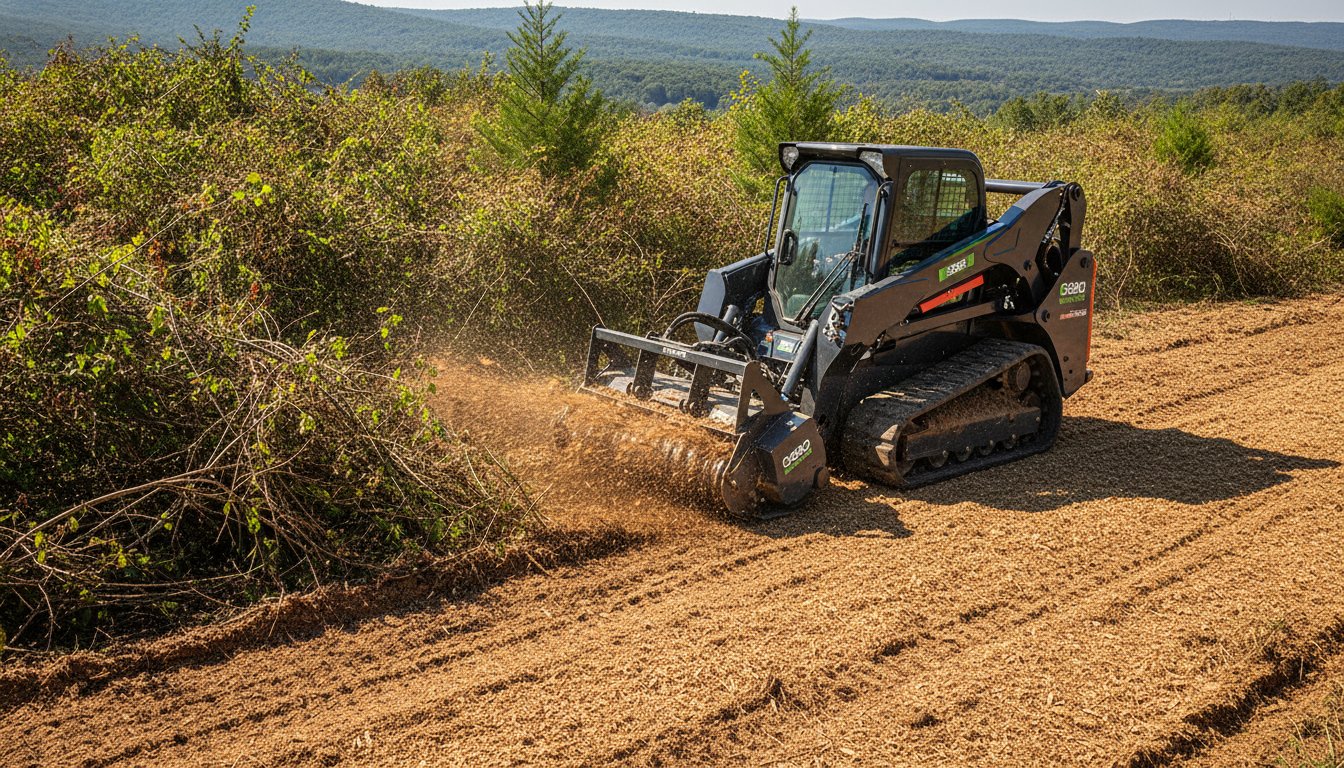
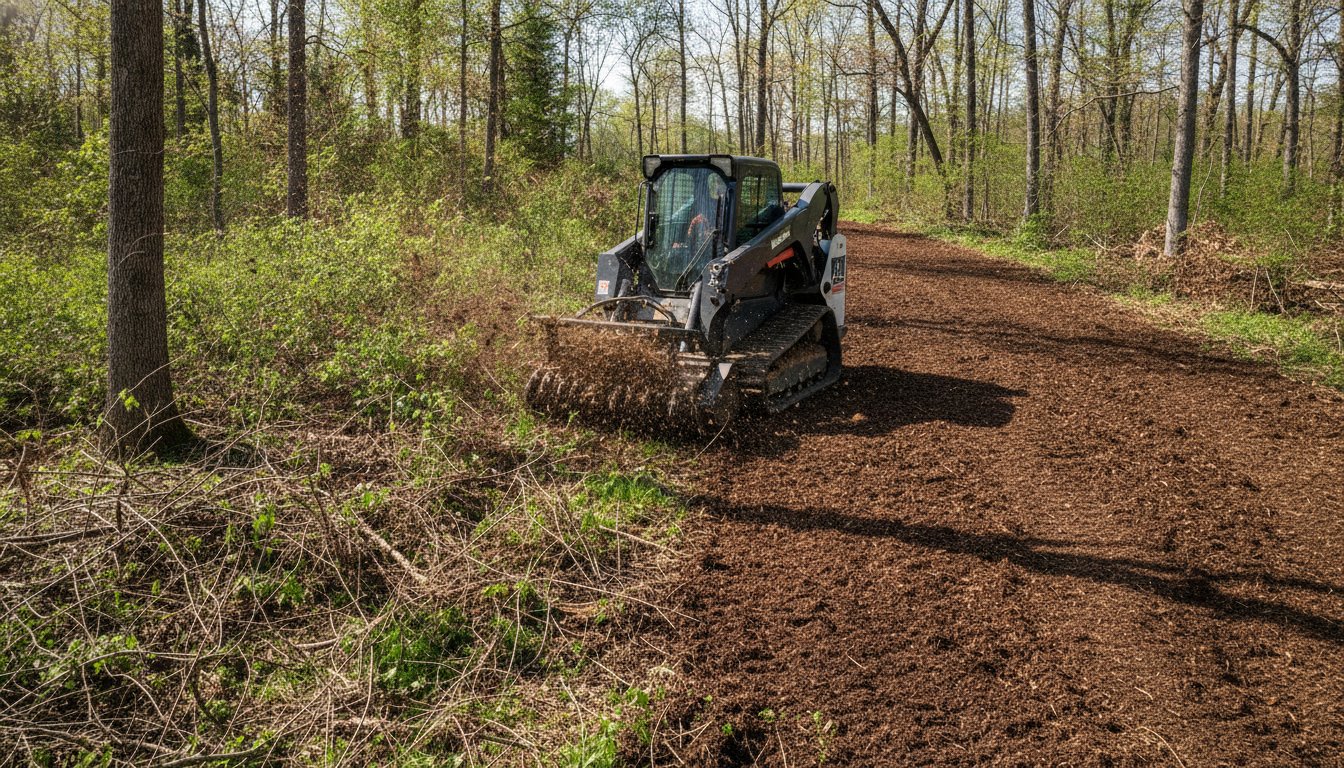
Clearing land shouldn't mean destroying the foundation of your property. Forestry mulching is a specialized land clearing method that uses a single machine to cut, grind, and clear vegetation in a single-pass operation. Unlike traditional methods that rely on multiple pieces of heavy equipment to haul away debris or create massive burn piles, this process leaves the shredded material exactly where it grew. One of the primary ways forestry mulching benefits topsoil is by eliminating the unnecessary soil disturbance that typically follows heavy machinery.
The "no-disturbance" advantage is central to this process. When you use a bulldozer to clear brush, the blade often digs several inches into the earth, ripping out root systems and leaving the soil loose. This makes your land vulnerable to the next heavy Kentucky rainstorm. Mulching keeps those roots in the ground. These underground structures act as a natural rebar, holding the soil together while the fresh mulch on the surface provides an immediate protective skin. You aren't just clearing a view; you're creating a stable environment for your land to thrive.
The Mechanics of Soil Preservation
The equipment we use plays a massive role in how we protect your ground. Most professional mulching is performed using specialized skid steers equipped with high-flow mulching heads. These machines are designed to apply significantly lower pressure to the earth than a standard bulldozer. Ground pressure refers to the amount of force exerted by a machine's tracks or tires on the soil surface, usually measured in pounds per square inch (PSI). Because our machines "float" over the terrain, we avoid the deep ruts and heavy compaction that kill soil health. Since there is no "pushing and piling" of debris, the nutrient-dense upper layer of your dirt stays exactly where it belongs instead of being scraped into a waste pile.
Local Context: South Central Kentucky Soil Types
Landowners in Adair, Taylor, and Green Counties know that our local dirt presents unique challenges. We often deal with clay-heavy soils that are incredibly prone to compaction. When traditional clearing methods are used on these sites, they can create a "hard-pan" effect. This is a dense, impenetrable crust that prevents water from soaking into the ground and stops new grass roots from taking hold. For anyone focused on pasture reclamation or farm services, maintaining a loose, aerobic soil structure is vital. Forestry mulching benefits topsoil by preventing this crust from forming, ensuring that your property remains fertile and ready for whatever you plan to plant next.
Turning Overgrowth into Organic Gold: The Science of Topsoil Creation
Many property owners look at a freshly mulched site and see a mess of wood chips. In reality, you're looking at a slow-release nutrient delivery system. One of the most significant ways forestry mulching benefits topsoil is by jumpstarting the nitrogen and carbon cycles right on your forest floor. Instead of losing the biomass of your trees to a burn pile, you're locking those nutrients into the ground. When you burn debris, the carbon is released into the atmosphere and the intense heat can actually sterilize the upper layer of your dirt. Mulching does the opposite, keeping the carbon in the soil where it can fuel future plant growth.
How forestry mulching benefits topsoil is through the biological conversion of wood into plant-available nutrients. This isn't just about clearing space; it's about active soil regeneration. By shredding invasive species and underbrush into small, manageable pieces, we increase the surface area available for local fungi and bacteria to do their work. This process mimics the natural "forest floor" cycle but accelerates it significantly by breaking down large woody debris that would otherwise take decades to rot.
From Wood Chips to Fertile Humus
The decomposition process begins almost immediately after the machines finish their work. As the mulch layer traps moisture against the earth, it creates an ideal environment for white-rot fungi and other decomposers. In our region, the breakdown speed depends on what we're cutting. Hardwoods like oak or hickory provide long-lasting structure, while invasive species like bush honeysuckle break down rapidly due to their high leafy content. Within 12 to 24 months, the bottom layer of mulch will transition into dark, rich humus that integrates directly into your existing soil profile. This new layer of organic matter improves the soil's ability to hold onto water and nutrients, making it much easier to establish a lawn or pasture later on.
Feeding the Underground Ecosystem
This organic blanket does more than just sit there. It serves as a climate-controlled habitat for earthworms and beneficial microbes. During those scorching Kentucky summers, bare dirt can reach temperatures that effectively "bake" the life out of the soil. Mulch regulates this temperature, keeping the underground ecosystem active year-round. The blanket of organic material acts as a biological filter, capturing and holding minerals that would otherwise be washed away during heavy spring rains.
The myth that wood chips "steal" all the nitrogen from the soil is a common concern. While it's true that the microbes breaking down the wood require nitrogen, they primarily pull it from the very top fraction of an inch where the wood touches the dirt. In the long run, the net gain of organic matter far outweighs this temporary surface-level trade-off. If you are preparing a site for future growth, our pasture reclamation and farm services utilize this science to ensure your land is healthier after we leave than it was when we arrived.
Forestry Mulching vs. Bulldozing: Why One Feeds Soil While the Other Strips It
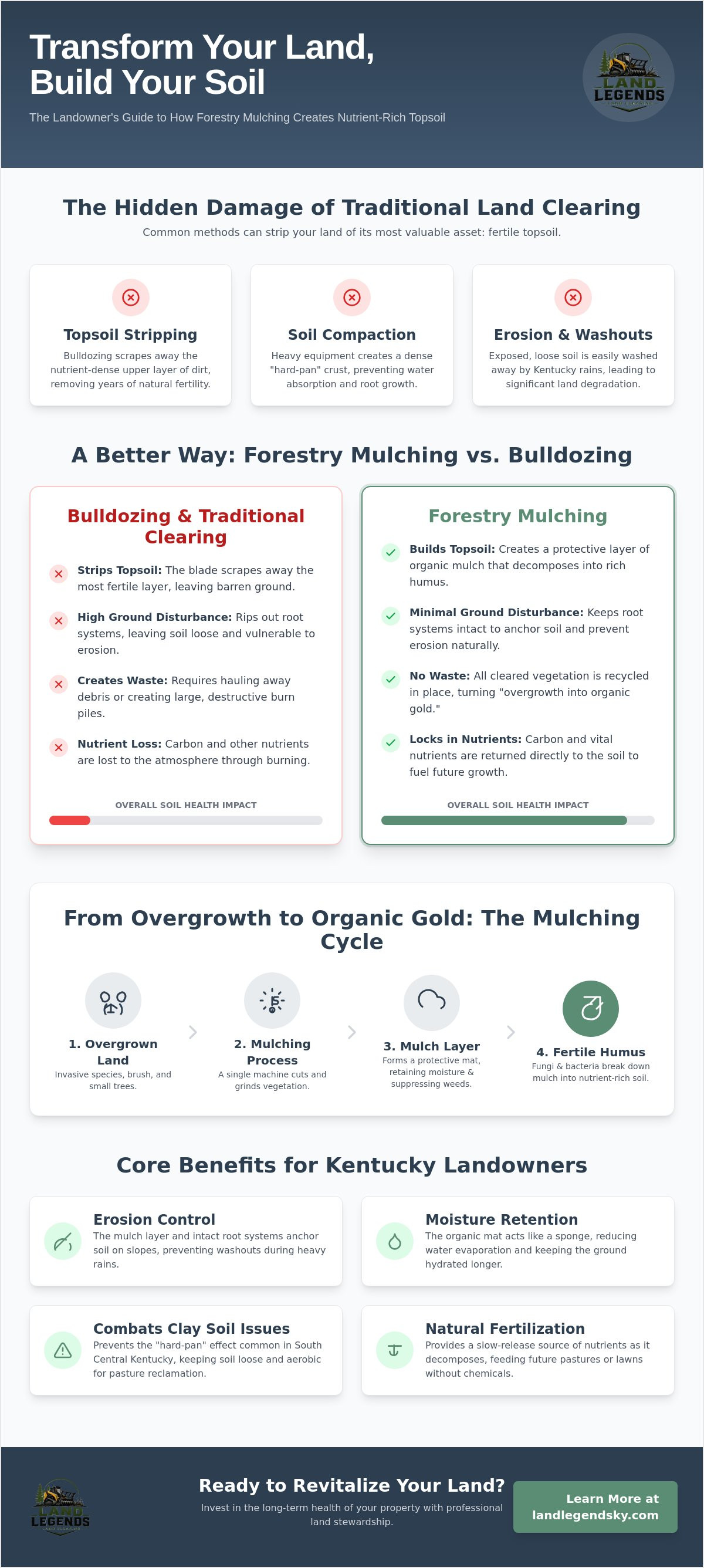
Choosing between a bulldozer and a forestry mulcher isn't just a matter of mechanical preference. It's a choice between stripping your land of its assets or investing in its future. When a bulldozer clears a site, the blade doesn't just catch the brush; it inevitably scrapes away the most fertile 2 to 4 inches of earth. This upper layer, often called the "O Horizon," contains the organic matter, microorganisms, and seed bank necessary for healthy growth. By pushing this material into a pile, you're effectively exporting your property's best topsoil to a waste heap.
One of the most immediate ways forestry mulching benefits topsoil is by keeping every bit of that organic wealth on-site. Instead of a "scrape and pile" approach, mulching uses a "cut and cover" strategy. The machine leaves the roots in the ground, which act as a biological rebar. These dead root systems continue to hold the soil structure together while they slowly rot, providing internal aeration and drainage. This keeps your ground stable and fertile, whereas a bulldozed site is often left as a barren, compacted liability.
The High Cost of Traditional Clearing
The hidden costs of traditional clearing often surprise Kentucky landowners. When you strip away the natural topsoil, you're often forced to buy replacement dirt or spend heavily on synthetic fertilizers to get anything to grow. There's also the issue of burn piles. A standard brush pile can reach temperatures high enough to sterilize the ground underneath, killing beneficial fungi and bacteria for years to come. If you're weighing your options, it's helpful to look at Forestry Mulching vs Bulldozing: Which is Better for KY? to see how these methods impact your long-term budget.
Topsoil Preservation Comparison
In the rolling hills of Adair County, erosion is a constant threat. A bulldozed slope is an invitation for a washout during the next heavy rain because there's nothing left to slow down the water. Forestry mulching benefits topsoil by creating an immediate organic blanket that absorbs the impact of raindrops and slows down surface runoff. We think of it as "soil import" through regeneration rather than "soil export" through removal. This low-impact approach is especially valuable for real estate curb appeal. You can clear a lot for a future home without leaving behind a muddy construction site, maintaining the natural beauty and value of the land from day one.
Managing Your Newly Mulched Land for Maximum Soil Health
Once the mulching head stops spinning, the stewardship of your land enters a new phase. You've successfully converted brush into a protective layer, but the way you manage this site over the next few months will determine the quality of your future soil. This is the stage where the long-term forestry mulching benefits topsoil become clear as the organic material begins to interact with the environment. Stewardship doesn't end with the clearing; it's an ongoing commitment to the health of your property.
One of the most critical tasks is monitoring for regrowth. While mulching is an incredibly effective first step in invasive plant removal, some aggressive species may attempt to sprout from remaining root fragments. Consistent management ensures that the nutrients being returned to the earth feed your desired grasses rather than the weeds you just cleared. Keeping a watchful eye on your land during the first growing season prevents old problems from returning.
Seeding and Pasture Reclamation
If your goal is a lush pasture or a clean lawn, the mulch layer provides a significant head start. You don't necessarily need to remove the wood fibers; instead, you can seed directly into them. This layer acts as a built-in straw cover, protecting seeds from birds and keeping them moist during germination. Understanding how forestry mulching benefits topsoil allows you to treat the mulch as a resource rather than a waste product. For the best results in Kentucky, we recommend:
- Selecting cool-season grass mixes that thrive in our local climate.
- Waiting 3 to 6 months before conducting a soil test to allow the initial decomposition to stabilize the soil chemistry.
- Broadcasting seed just before a light rain to help the seeds settle through the mulch to the soil surface.
Erosion Control and Water Management
On the rolling hills of our region, water management is a primary concern for every landowner. Utilizing forestry mulching for erosion control is a proven way to stabilize steep grades. The mulch layer effectively slows, spreads, and sinks rainwater into the ground, preventing the high-velocity runoff that creates gullies and washouts. By absorbing the energy of falling rain, the mulch protects the structural integrity of your topsoil. Monitoring your drainage patterns after clearing underbrush will help you identify any areas that might need extra mulch or native plantings to stay stable.
Maintaining this balance requires a partner who understands the local landscape and the practical needs of property owners. If you're ready to transform your overgrown acreage into a healthy, productive environment, contact us for professional forestry mulching services tailored to your property's specific needs.
Professional Land Stewardship with Land Legends Property Management LLC
At Land Legends Property Management LLC, we don't just see a job site; we see a piece of our local community's future. Our commitment to the Kentucky landscape means we prioritize your soil's health from the moment we unload our machines. We understand that your land is a significant investment. That's why we treat your topsoil as if it were our own. By using precision skid steer mulching equipment, we offer a surgical approach to land clearing that's specifically suited for the varied terrain of Adair, Taylor, and Green Counties. We've spent this article explaining how forestry mulching benefits topsoil, but the execution of that process requires a partner who understands the local ecosystem. Our focus on safety and meticulous precision ensures that the organic layer we leave behind is the perfect thickness to promote decomposition without smothering existing growth. We're not just clearing brush; we're building a foundation for your property's next chapter.
Local Expertise in South Central Kentucky
Our team has extensive experience dealing with the specific vegetation that defines South Central Kentucky. Whether it's clearing dense stands of cedar, removing thorny locust trees, or tackling the persistent spread of bush honeysuckle, we know how to handle each species effectively. Hiring a local specialist provides a distinct advantage because we understand regional weather patterns and how they affect soil stability. We know when the ground is too saturated for heavy work and how to time our services to maximize the forestry mulching benefits topsoil provides for your specific site. Our neighborly approach means we're here to answer your questions and provide a steady, dependable presence throughout the project.
Ready to Transform Your Property?
Are you ready to reclaim your acreage? Thinking long-term about property value means choosing methods that preserve your land's natural resources instead of stripping them away. Whether you're preparing a site for a new home, cutting recreational trails for hunting, or reclaiming old pastures for farming, our services provide the stable, fertile ground you need. We're proud to be a reliable craftsman for landowners who value stewardship as much as they value a clear view. Every property is different, and we believe your land clearing plan should be too. We invite you to reach out for a custom property assessment where we can discuss your specific goals and evaluate your land's unique characteristics. If you're ready to see what your land can truly become, Contact Land Legends for a Forestry Mulching Consultation today. Let's work together to feed your land while we clear it.
Investing in the Future of Your Kentucky Land
Reclaiming your property shouldn't come at the expense of its future fertility. When you prioritize the biological health of your ground, you're ensuring that your investment remains productive for generations. We've explored how forestry mulching benefits topsoil by mimicking the natural forest floor cycle, and the results speak for themselves in the lush pastures and stable hillsides across our region. It's a choice that balances immediate clearing needs with the long-term goal of land stewardship.
Land Legends Property Management LLC is a local owner-operated business that understands the specific needs of South Central Kentucky landowners. We use specialized skid steer mulching technology to deliver precision results in Adair, Green, Taylor, and the surrounding counties. If you're ready to clear your land while building a healthier foundation for your property, our team is ready to get to work. Request Your Free Forestry Mulching Estimate from Land Legends today. Let's build something better together.
Frequently Asked Questions
Does forestry mulching hurt the soil or cause compaction?
Forestry mulching is specifically designed to be low-impact and actually protects the soil from heavy compaction. Because we use specialized skid steers with wide tracks, the ground pressure is much lower than that of a traditional bulldozer. This prevents the "hard-pan" effect common in our local clay soils. Instead of scraping the earth, the machine processes vegetation from the top down, leaving the root structure and the most fertile layers of dirt undisturbed.
Will grass grow through the mulch left behind?
Yes, grass can grow directly through the mulch layer, which often acts as a natural nursery bed. The mulch helps retain moisture and keeps seeds in place during germination. For the best results, we suggest a mulch thickness of 2 to 4 inches. If the layer is too thick in some spots, you can lightly rake it to ensure seed-to-soil contact, but most cool-season grasses in Kentucky find the organic cover very beneficial.
How long does it take for the mulch to turn into topsoil?
The decomposition process typically takes 12 to 24 months for the bottom layer of mulch to integrate into the dirt. This timeline depends on the wood type and local moisture levels. Hardwoods like oak take longer to break down than softer vegetation or leafy invasive plants. One way forestry mulching benefits topsoil is by providing a steady, slow-release supply of organic matter that enriches the ground as it rots away naturally.
Is forestry mulching better for the environment than burning brush piles?
Mulching is significantly better for the environment than burning because it keeps carbon and nutrients on your property. Burning brush piles creates intense heat that can sterilize the soil underneath, killing the beneficial microbes and fungi your land needs to thrive. Mulching avoids this damage and eliminates the risk of escaped fires. It also follows Kentucky Best Management Practices by reducing smoke pollution and preventing the loss of valuable biomass.
Can I use forestry mulching on steep hillsides in Kentucky?
Yes, forestry mulching is one of the best choices for clearing steep hillsides in South Central Kentucky. Unlike bulldozing, which leaves bare dirt prone to washouts, mulching leaves an immediate protective barrier. This organic blanket slows down rainwater and prevents erosion. The remaining root systems act as biological anchors, holding the hillside together while you establish new ground cover or native vegetation. It's a reliable way to maintain slope stability.
Does mulching attract termites or other pests to my property?
Forestry mulch rarely attracts termites because the material is spread thin and exposed to the elements. Termites typically prefer large, buried logs or moist, structural wood in contact with the ground. Because the mulch dries out quickly and is processed into small fragments, it doesn't provide the stable, moist environment that termite colonies require. Additionally, the increased activity of beneficial soil organisms like ground beetles often helps keep pest populations in check.
What happens to the stumps after forestry mulching?
The stumps are cut flush with the ground and left to decompose naturally over time. Since the root systems remain in the dirt, they don't leave behind the large holes or soft spots associated with stump pulling or excavation. These flush-cut stumps are safe for most tractors and mowers to pass over without issue. Over several years, the wood will rot away from the inside out, providing internal aeration for the surrounding soil structure.
Is forestry mulching effective for removing invasive honeysuckle in Taylor County?
Forestry mulching is incredibly effective for removing invasive bush honeysuckle in Taylor County. The mulching head shreds the entire plant into small pieces, which helps suppress regrowth by covering the site in a thick organic layer. While some follow-up management might be needed for stubborn root fragments, this method is the fastest way to reclaim your woods. It's a standard practice for invasive plant removal because it restores visibility and access immediately.