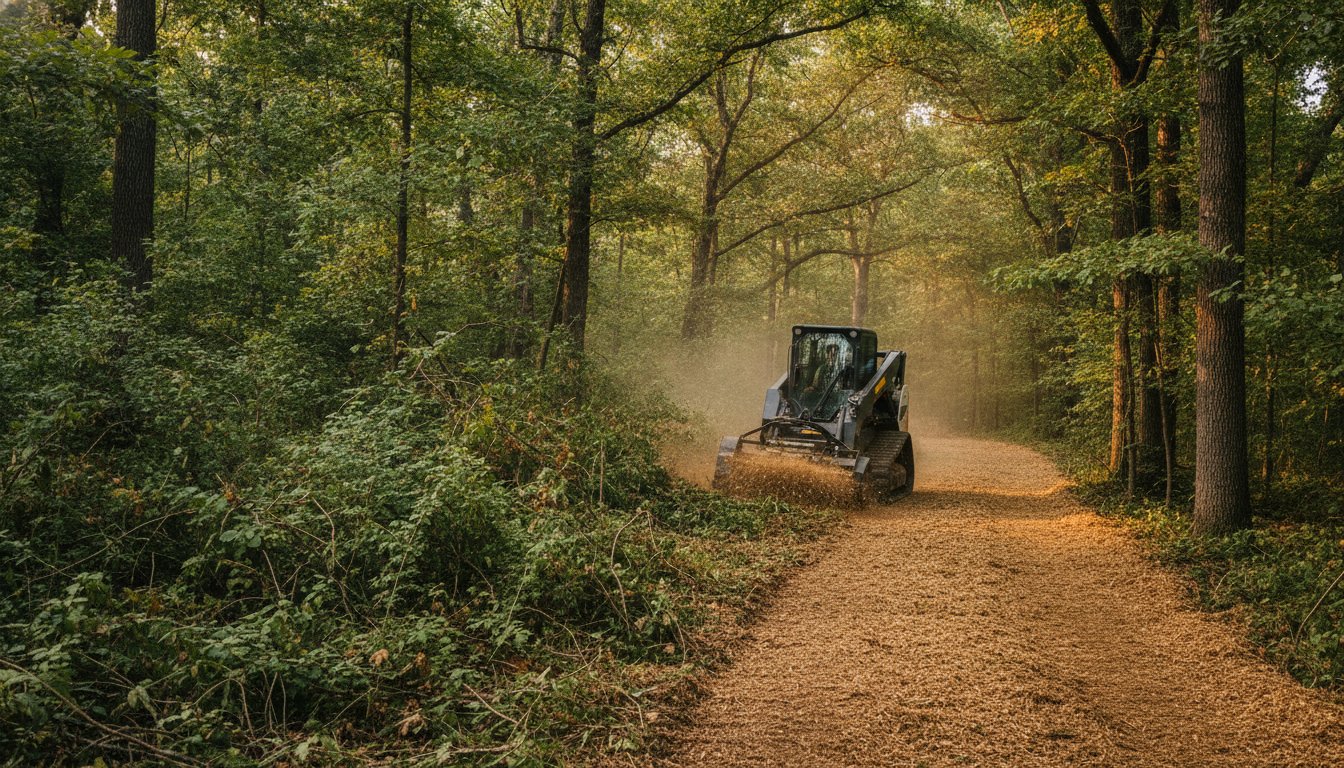
What if your weekend trail ride didn't end with a bent axle or a washed-out hillside? For many Kentucky landowners, the dream of a private trail system often hits a literal wall of invasive bush honeysuckle and hidden limestone ledges. You want a path that flows with the land, but the reality of ATV trail clearing Kentucky terrain often feels like a losing battle against stubborn thickets and aggressive soil erosion.
We understand that you view your property as a legacy, not just a place to ride. You're looking for a way to open up your woods without stripping the topsoil or damaging the canopy trees that make your acreage valuable. This guide provides the professional steps you need to design, clear, and maintain rugged trails that stay safe and stable season after season. We will explore how to identify the best routes, manage invasive species effectively, and implement low-maintenance techniques that preserve the long-term health of your Kentucky hillside.
Key Takeaways
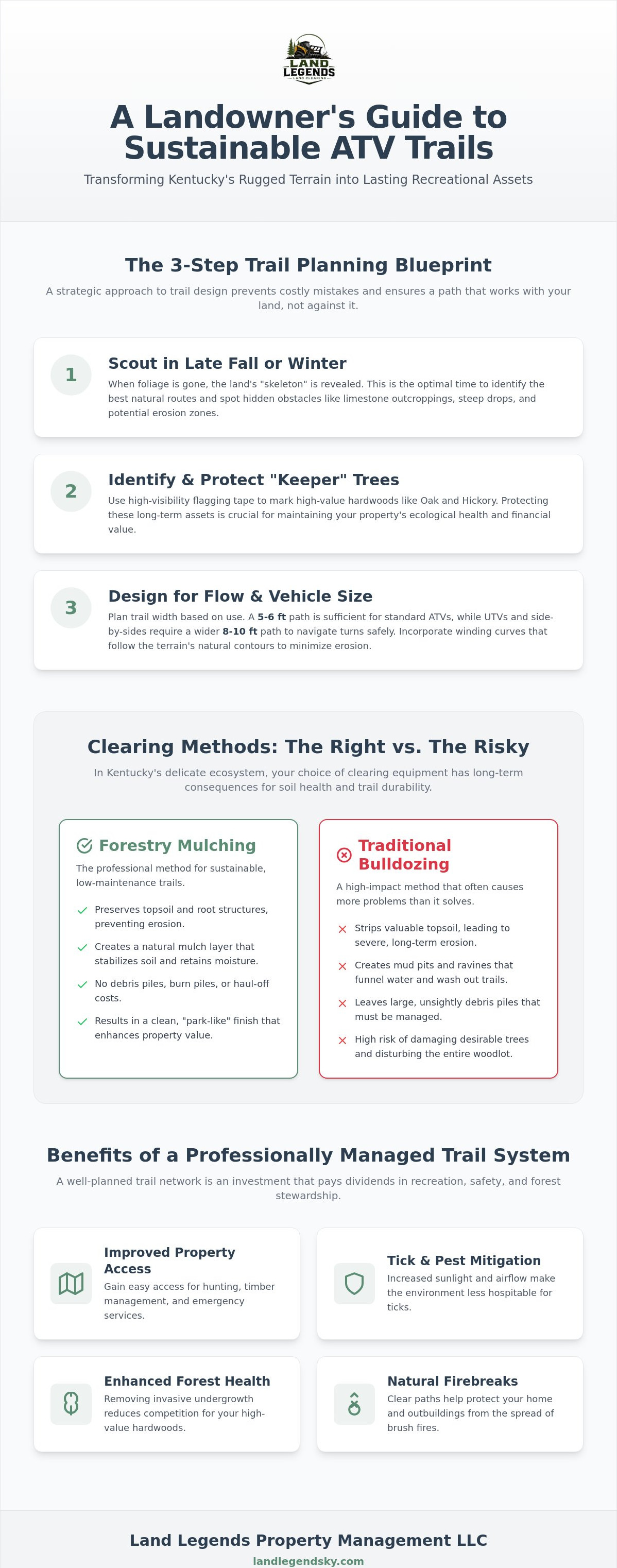
- Scout your land during the late fall or winter to identify the best natural routes and mark high-value "keeper" trees like Oak and Hickory.
- Understand the mechanics of ATV trail clearing Kentucky terrain, where specialized forestry mulching prevents the erosion and mud pits common with traditional bulldozing.
- Master the identification and removal of invasive species, specifically Bush Honeysuckle and Autumn Olive, to prevent them from choking out your new trail system.
- Discover how a professional mulch layer stabilizes the trail surface and protects soil health, resulting in a durable path that requires less seasonal maintenance.
- Learn how precision skid steer mulching creates a "park-like" finish that enhances your property’s beauty and recreational value.
What is ATV Trail Clearing and Why Does Method Matter in Kentucky?
At its core, trail clearing is the strategic removal of underbrush and small trees to create a navigable path for off-road vehicles. It's a precision task that differs significantly from general land clearing or excavation. While excavation involves moving large amounts of earth and changing the property's grade, trail clearing focuses on managing vegetation to reveal the natural contours of the land. For those new to land management, understanding What is a Trail? helps distinguish between a simple path and a sustainable recreational route. When considering ATV trail clearing Kentucky landowners must look beyond the immediate path and consider the long-term impact on the ecosystem.
In South Central Kentucky, the method you choose matters because our landscape is unforgiving. Landowners in Adair and Taylor Counties often find that a "one size fits all" approach to clearing leads to expensive mistakes. If you treat a Kentucky hillside like a flat Midwestern field, you risk destroying the very features that make your property valuable. Professional ATV trail clearing Kentucky style prioritizes the preservation of topsoil and the health of the surrounding timber, ensuring your investment pays off in both recreational enjoyment and property resale value.
The Challenge of South Central Kentucky Terrain
Navigating the rolling hills of the Green River region requires an understanding of our local geology. Our limestone-rich soil provides a beautiful backdrop, but it also creates slick, hazardous conditions when exposed to our high annual rainfall. Thick undergrowth doesn't just block your view; it hides stumps and rock ledges that can easily damage an ATV or a clearing attachment. Without a methodical approach, a new trail can quickly turn into a muddy ravine that funnels water and accelerates erosion across your entire woodlot. This makes the choice of equipment and timing essential for success.
Benefits of a Managed Trail System
Creating a professional trail system offers advantages that go far beyond a weekend ride. A well-planned network improves access for essential activities like hunting, timber management, and even emergency services if someone gets injured on the back forty. By thinning out the dense understory, you also achieve several environmental goals:
- Tick mitigation: Increasing sunlight and airflow at the ground level makes the environment less hospitable for ticks and other pests.
- Forest health: Removing invasive undergrowth reduces competition for your high-value hardwoods, allowing them to thrive.
- Fire protection: Clear paths serve as natural firebreaks, helping to protect your home and outbuildings from the spread of brush fires.
Ultimately, a managed trail system turns an inaccessible thicket into a functional part of your estate. It's about stewardship as much as it's about recreation.
Step-by-Step Guide to Planning and Mapping Your Kentucky ATV Trail
Scouting during the winter months is the smartest move a landowner can make. When the leaves are down, the true skeleton of your property is revealed. This is when you identify the obstacles that make ATV trail clearing Kentucky hillsides so challenging. You'll see the limestone outcroppings, hidden sinkholes, and steep drops that are obscured by summer's thicket. High visibility is your greatest asset during the planning phase.
While you're walking the land, bring high-visibility flagging tape and a clear plan for your timber. Your goal isn't just to find the shortest path; it's to find the path that lasts. Identify and mark your "keeper" trees early. High-value hardwoods like White Oak and Shagbark Hickory are long-term assets to your property's value and should be protected from equipment damage. Mapping the natural contours of the land helps you work with the terrain rather than against it. If you're feeling unsure about the best route, getting a professional perspective can ensure your trail doesn't interfere with future timber management or farm operations.
Designing for Flow and Safety
How wide should your trail be? For standard ATVs, a width of 5 to 6 feet is usually sufficient. However, if you're planning for side-by-sides or UTVs, you'll need at least 8 to 10 feet to navigate turns comfortably. Incorporating winding curves rather than long straightaways serves two purposes: it controls rider speed and naturally diverts water off the trail surface. Following NPS trail management guidelines can provide additional technical insights into designing for long-term sustainability and safety. Don't forget to plan for "turn-outs" and clear sightlines at intersections to prevent head-on collisions in dense woods.
Soil and Drainage Considerations
Kentucky's heavy clay soil requires a specific strategy to avoid turning your trail into a seasonal creek. A common industry standard is the "3-10 rule" for trail grades. Aim for a 3% to 10% slope where possible. Anything steeper than 10% invites rapid washout during our heavy rain seasons. Avoid the "bottoms" or low-lying areas that stay saturated. If a spot is spongy in January, it will be an impassable mud pit in June. Planning for water bars or natural diversions early in the process is essential to keep the path dry and your topsoil in place.
Forestry Mulching vs. Traditional Clearing: Which is Best for Trails?
Choosing the right equipment for your project is a decision that dictates the lifespan and maintenance requirements of your path. While many landowners initially consider traditional bulldozing, this method frequently results in long-term headaches. A dozer works by scraping away the organic top layer to reveal the soil beneath. In South Central Kentucky, this approach exposes our heavy clay, which quickly turns into deep mud pits after the first heavy rain. Without that protective organic layer, your new trail can transform into a seasonal creek bed, washing away your topsoil and creating a safety hazard for riders.
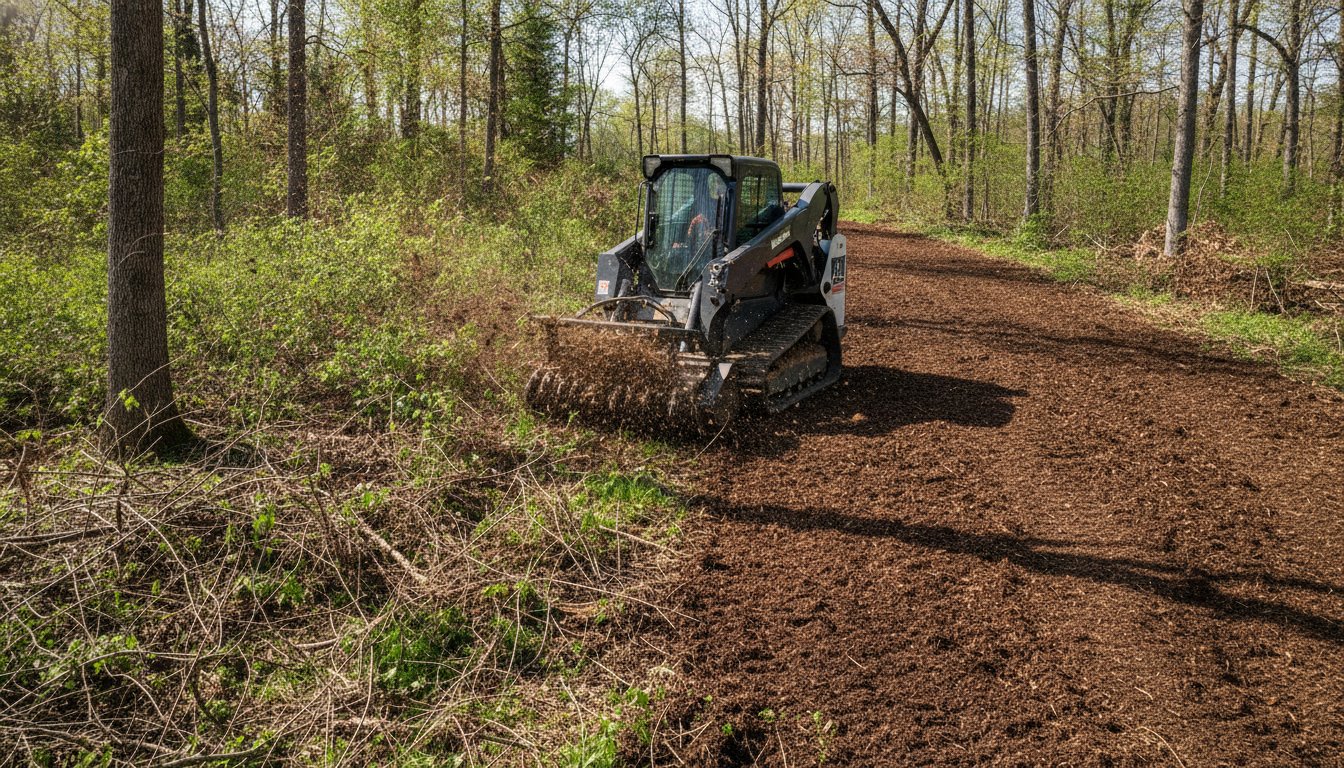
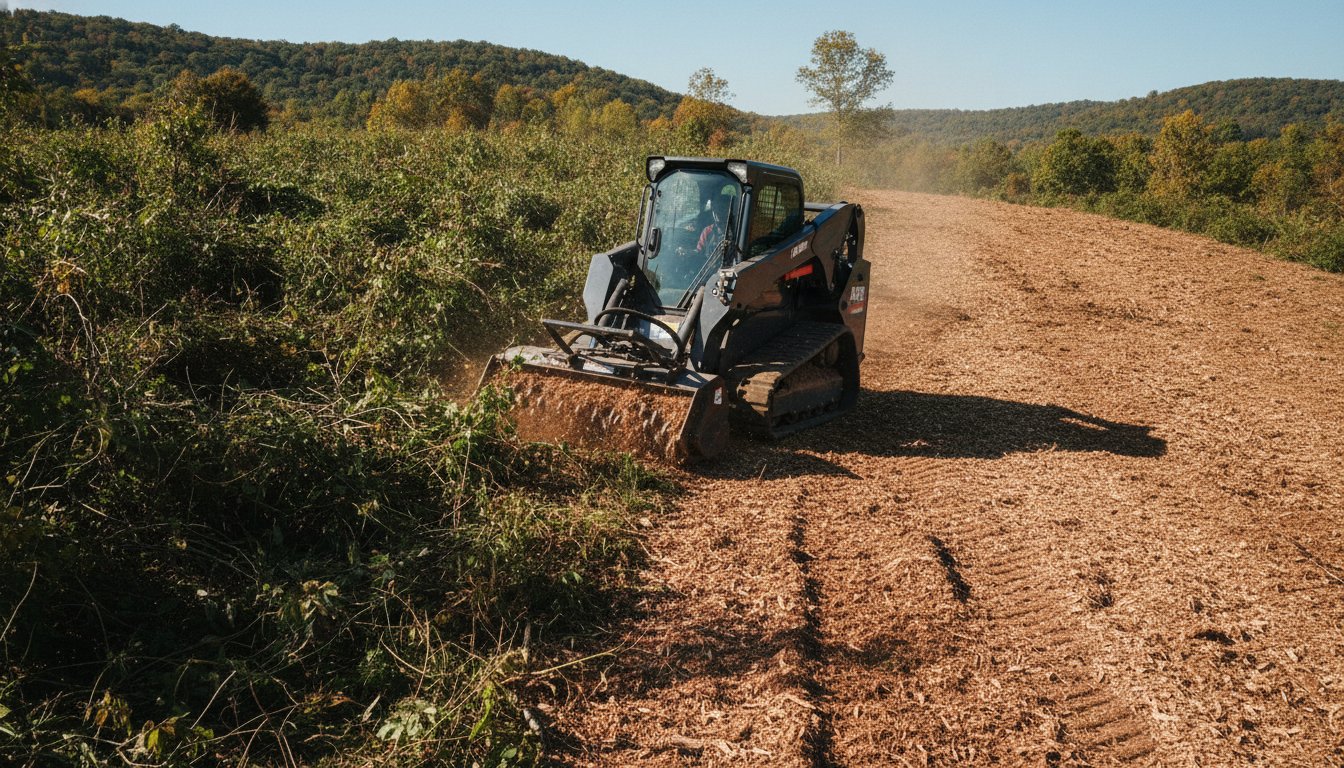
Forestry mulching offers a more sustainable alternative for ATV trail clearing Kentucky properties. Instead of stripping the land, a mulcher grinds vegetation into a shredded organic carpet. This "mulch layer" acts as a natural stabilizer for the trail surface. It distributes the weight of your ATV or UTV, prevents the soil from becoming compacted, and significantly reduces erosion. Because the machine doesn't disturb the earth, it also protects the delicate root systems of the "keeper" trees you marked during your initial scout. This ensures your high-value hardwoods remain healthy and stable for decades.
How does the cost compare? While manual labor with a chainsaw might seem cheaper, it's incredibly slow and physically demanding. A professional skid steer mulcher can clear more ground in a single afternoon than a person can in a full week of manual work. When you factor in the time saved and the lack of equipment wear and tear on your own gear, professional mulching is often the most cost-effective path forward.
The Forestry Mulching Advantage
One of the primary benefits of this method is the total elimination of debris. You won't have to manage massive brush piles or worry about the liability and smoke of burning. Mulching grinds stumps down below the soil surface, which discourages immediate regrowth and provides a smooth surface for your tires. Utilizing professional forestry mulching Adair County KY techniques ensures your topsoil remains undisturbed while the vegetation is effectively managed in a single pass.
When to Call a Professional
It's important to recognize the limits of standard farm equipment. A typical bush hog is designed for maintaining pastures and light weeds; it isn't built to handle the woody thickets and saplings found in Kentucky hollows. Attempting to force light-duty equipment through dense underbrush often leads to punctured tires, broken belts, and expensive repairs. Professional-grade mulchers are designed specifically for these conditions. They can safely navigate steep terrain and turn a wall of invasive brush into a clean, park-like trail in a fraction of the time it takes for DIY methods.
Clearing Kentucky’s Toughest Brush: Honeysuckle and Beyond
Identifying the specific vegetation on your property is the first step toward a successful trail system. In South Central Kentucky, the primary obstacle is almost always Amur or Bush Honeysuckle. This invasive species is the number one enemy of ATV trail clearing Kentucky projects because it grows in dense, impenetrable thickets that block sightlines and crowd out native hardwoods. It's often the first plant to leaf out in the spring and the last to lose its leaves in the fall, creating a permanent wall of green that makes your woods feel smaller than they actually are.
Other aggressive competitors like Autumn Olive and Multiflora Rose present similar challenges. These plants are notorious for their rapid growth and ability to reclaim cleared areas within a single season. Many landowners make the mistake of using a chainsaw or brush cutter to clear these species, only to experience the "rebound effect." When you cut an invasive shrub without grinding the stump below the soil line, the root system responds by sending up five to ten new shoots for every one you removed. This leads to even thicker growth the following year, turning your new trail into a maintenance nightmare.
Integrating your trail path into a broader land management strategy is the only way to achieve lasting results. By focusing on the removal of these specific pests, you aren't just making a path for your ATV; you're restoring the ecological balance of your forest. This approach allows native seedlings to receive the sunlight and nutrients they need to grow, eventually creating a healthy canopy that naturally shades out future invasive growth.
Invasive Species Removal Strategies
Professional invasive plant removal Taylor County landowners rely on focuses on timing and technique. Clearing during the dormant season is ideal because it prevents the accidental spread of invasive seeds that have matured during the summer. Forestry mulching is particularly effective here because it creates a heavy organic barrier on the forest floor. This thick layer of shredded wood prevents sunlight from reaching the dormant seed bank in the soil, significantly slowing down the return of honeysuckle and olive.
Maintaining Your New Trail
Once your trail is established, maintenance becomes much simpler. A well-placed mulch bed reduces the need for frequent mowing or heavy clearing. You should walk your trails seasonally and use a spot-treatment approach for any persistent sprouts that manage to poke through the mulch. By catching these early, you prevent the root systems from re-establishing their hold. If you are ready to reclaim your woods from these aggressive species and create a legacy trail system, contact Land Legends today to discuss your land management goals.
Partnering with Land Legends for Professional Trail Cutting
Creating a sustainable trail system requires more than just heavy machinery; it demands an intimate understanding of the Kentucky landscape. At Land Legends Property Management LLC, we specialize in transforming overgrown acreage into functional, beautiful recreational land. Our team brings local expertise to every project across Adair, Green, Taylor, Hart, Russell, and Cumberland Counties. We don't just clear paths; we act as stewards of your property, ensuring that every cut respects the long-term health of your soil and timber.
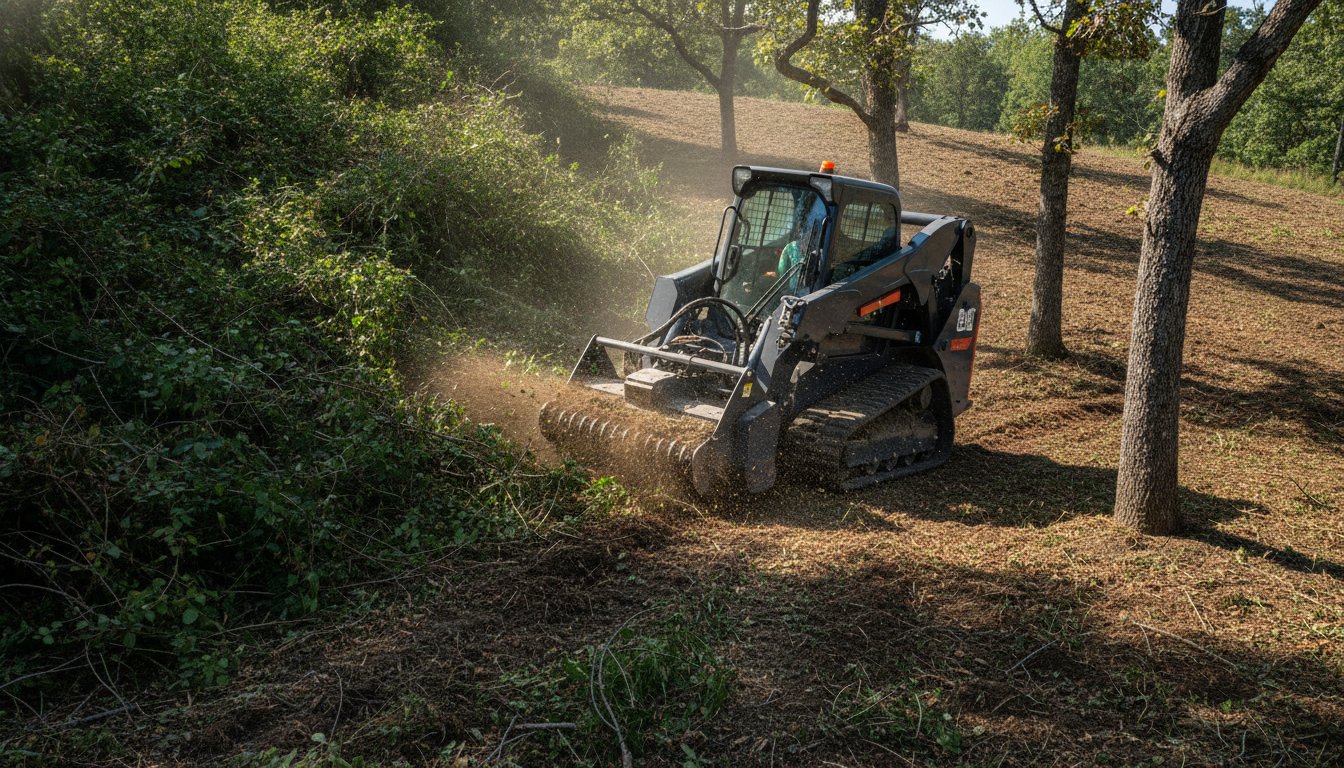
Our primary tool for ATV trail clearing Kentucky is the precision skid steer mulcher. Unlike traditional heavy equipment that can be clumsy in tight woods, our machines are sized to navigate between your "keeper" trees without damaging their bark or root systems. This allows us to create custom routes that follow the natural flow of your land. Whether you need a winding path for weekend riding or straight, clear shooting lanes for hunting season, our precision mulching leaves a "park-like" finish that is immediately ready for use. We take pride in the meticulousness of our work, ensuring that no unsightly brush piles or hazardous stumps are left behind.
Why Choose a Local Specialist?
Why does local knowledge matter for your trail project? We understand the specific challenges posed by Kentucky's heavy clay and limestone-rich terrain. We know how our seasonal weather patterns, specifically the high annual rainfall in the Green River region, can impact a newly cleared path. Because we're your neighbors, we offer no-obligation site visits to help you plan the most effective trail system for your specific acreage. Our equipment is specifically chosen for its ability to work in dense Kentucky hollows where larger bulldozers simply can't go without causing excessive disruption to the topsoil.
Ready to Reclaim Your Woods?
Starting your project is a straightforward, professional process. When you contact us, we'll discuss your vision for the property and provide a custom quote based on the density of the vegetation and the length of the trails. On the day of service, you can expect a methodical and safety-oriented approach. We work systematically to clear the designated areas, grinding invasive species below grade and leaving behind a stabilizing layer of organic mulch. This results in a clean, durable trail that enhances both your enjoyment and your property's value. For expert ATV trail clearing Kentucky landowners trust, contact Land Legends Property Management LLC today to schedule your consultation.
Transform Your Kentucky Acreage into a Recreational Haven
Building a professional trail system is a significant investment in your land's health and your family's recreation. By prioritizing precision planning and choosing methods that protect your topsoil, you ensure your paths remain stable through every rainy Kentucky season. Mastering ATV trail clearing Kentucky style means looking beyond the immediate path to consider the long-term impact on your forest's ecosystem. Success lies in removing aggressive invasive species while carefully preserving the hardwoods that define your property's value.
Our team brings specialized expertise in South Central Kentucky terrain to every project. As a trusted local provider for Adair, Taylor, and Green Counties, we use precision skid steer mulching technology to deliver results that traditional clearing methods simply can't match. We're committed to helping you achieve a park-like finish that makes your woods accessible and beautiful. Your property is a legacy, and we're here to help you steward it well.
Your woods are waiting to be explored. Let's start building the high-quality trail system you've always envisioned for your land.
Frequently Asked Questions
How wide should a private ATV trail be in Kentucky?
A private trail should be 5 to 6 feet wide for standard ATVs and 8 to 10 feet for side-by-sides or UTVs. This width provides enough room for safe maneuvering while minimizing the impact on your timber. If you plan to use maintenance equipment later, ensure your turns are wide enough for a tractor or skid steer to pass through comfortably.
Does forestry mulching require a permit on my own land?
No statewide permit is typically required for ATV trail clearing Kentucky private property. Existing regulations in the Commonwealth focus on the operation of vehicles rather than the creation of paths on your own land. However, it's always a professional practice to check with your specific county or city government for any local ordinances that might apply to your region.
Can forestry mulching clear large trees for a trail?
Forestry mulching is designed for underbrush and small trees, not for large timber removal. Most professional mulching heads efficiently handle material up to 6 or 8 inches in diameter. For larger canopy trees, you should decide whether they should remain as "keeper" trees or be handled through traditional logging methods before the mulcher arrives on site.
What is the best time of year for trail clearing in Kentucky?
The dormant season between late fall and early spring is the ideal time for clearing projects. Visibility is at its peak when the leaves are down, making it much easier to scout the natural contours of your land. This timing also helps prevent the spread of invasive seeds that mature during the warmer summer months.
How do I prevent my new trail from washing out on a hill?
You can prevent washout by following the "3-10 rule" and avoiding straight lines on steep inclines. Winding trails naturally divert water off the path surface. The organic mulch layer created during the clearing process also acts as a stabilizer, protecting the heavy clay soil from direct rain impact and rapid erosion.
Will mulching help reduce ticks on my ATV trails?
Yes, mulching significantly reduces tick populations by altering their preferred habitat. By removing dense undergrowth and thinning the understory, you increase sunlight and airflow at the ground level. This dries out the leaf litter, making the trail environment less hospitable for ticks while creating a safer recreational space for your family.
How much does it cost to clear an ATV trail per mile?
The cost of clearing varies based on the density of the vegetation and the complexity of your terrain. Factors such as the presence of limestone ledges or thick invasive thickets will influence the project's timeline and the equipment needed. We recommend a site visit to provide a specific, professional estimate tailored to your property's unique challenges.
Can you clear trails through thick invasive honeysuckle?
Professional mulching equipment is the most effective way to clear thick invasive honeysuckle on your property. The machine grinds the plant and its stump below the soil surface, which discourages the rapid regrowth common with manual hand-cutting. This creates a clean, navigable path that is significantly easier to maintain during the growing season.