Does your back forty look more like a tangled jungle than a productive Bluegrass pasture? Many Kentucky landowners watch helplessly as invasive honeysuckle and cedar trees swallow up their acreage, yet they hesitate to act because they fear the heavy footprint of a bulldozer. Clearing overgrown fields Kentucky doesn't have to mean stripping away your valuable topsoil or spending a fortune on traditional excavation. In fact, the most effective way to restore your land is often the one that leaves the soil's structure completely undisturbed.
We know that your property is more than just dirt; it's a legacy and a resource that requires careful stewardship. You want a clean, mowable field for your livestock without the risk of erosion on our signature rolling hills. This guide will show you the exact steps to reclaim your property using forestry mulching and professional management techniques. We'll cover the permitting requirements for Kentucky's 12.7 million acres of farmland, how to identify the right equipment for your specific terrain, and the best way to transform brush-choked thickets back into healthy, productive grazing ground.
Key Takeaways
- Identify the specific invasive species, such as Bush Honeysuckle and Eastern Red Cedar, that are currently choking your Kentucky acreage.
- Understand the environmental and cost benefits of forestry mulching compared to traditional "doze and burn" methods when clearing overgrown fields Kentucky.
- Learn a methodical 5-step process for restoring your land, starting with boundary identification and ending with a productive, grazing-ready pasture.
- Avoid common pitfalls like clear-cutting on hillsides, which can lead to devastating soil erosion and the loss of valuable topsoil.
- Discover how specialized skid steer mulching technology provides a "no-haul" solution that returns vital organic matter directly back to your soil.
Understanding the Challenge: What Is Reclaiming Overgrown Farmland?
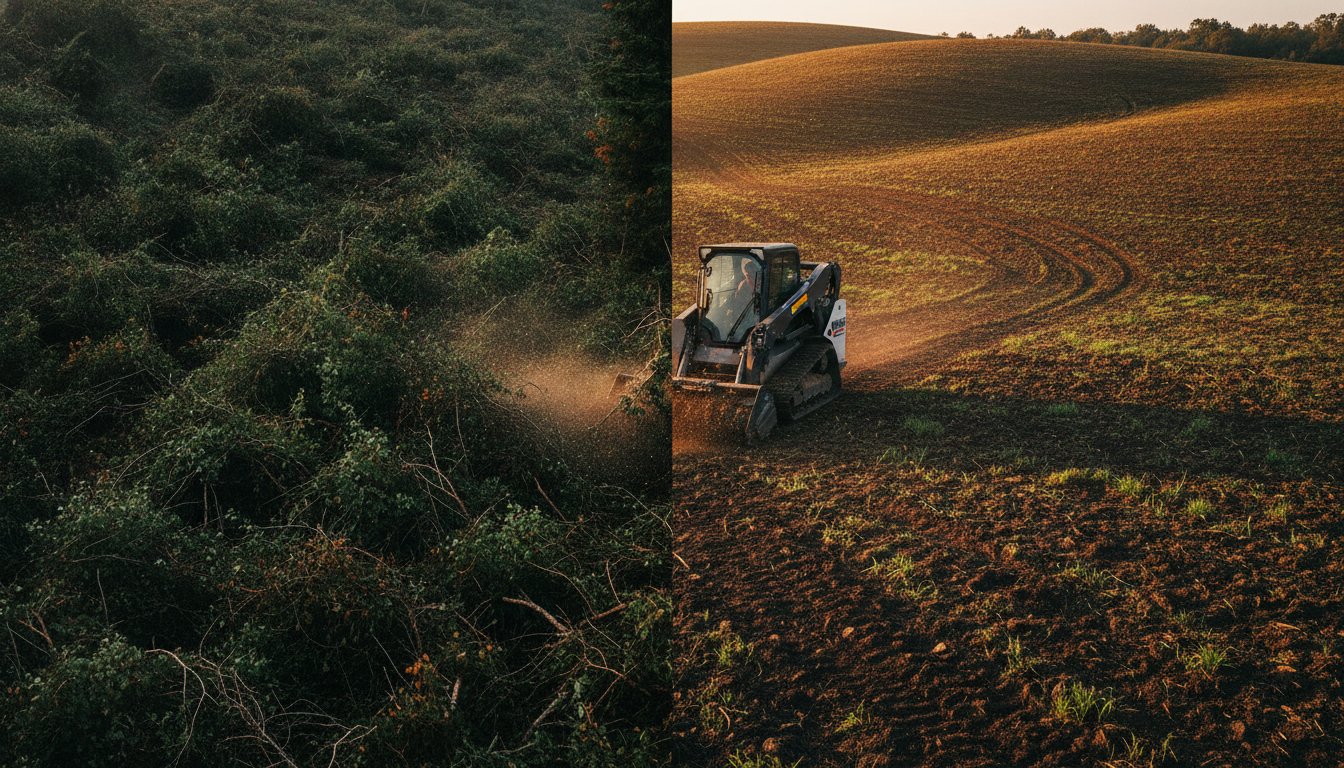
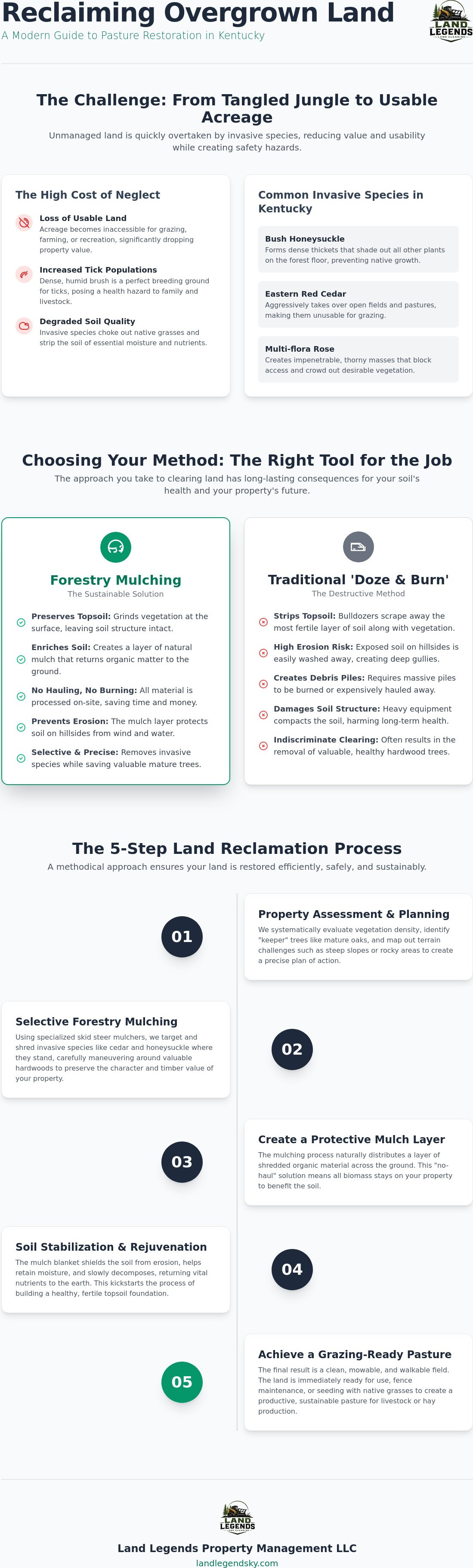
Pasture reclamation is the deliberate process of taking neglected, brush-choked land and returning it to a state of agricultural productivity. It's a common struggle for landowners in our region. When you stop mowing or grazing a field, nature doesn't just wait; it moves in fast. In Kentucky, this usually means a takeover by aggressive "invaders" like Bush Honeysuckle, Multi-flora Rose, and Eastern Red Cedar. These species don't just occupy space; they actively degrade the quality of your soil and prevent native grasses from growing. The goal of reclamation is to hit the reset button, creating a sustainable, mowable, and nutrient-rich environment that's ready for livestock or hay production.
Many people think clearing overgrown fields Kentucky is purely about aesthetics, but it's actually an investment in your property's future. Letting a field "go" might seem like the easiest path, but it quickly leads to a significant drop in property value and usable acreage. You lose the ability to walk your boundaries, check your fences, or utilize the land for any meaningful purpose. By intervening now, you're choosing to be a steward of the land rather than a spectator of its decline.
The Cost of Neglect on Kentucky Acreage
When invasive plants take hold, they create a dense canopy that chokes out the native forage your livestock need. This thick undergrowth also traps moisture and heat near the ground, which drastically alters local wildlife habitats. Perhaps the most immediate concern for families and farmers is the tick population. Dense brush provides the perfect humid environment for ticks to thrive, creating a health hazard for both humans and animals. Removing this understory is a primary step in tick mitigation, making your property safer for everyone. Unlike managed Reforestation, where native hardwoods are encouraged to grow, unmanaged neglect allows invasive species to dominate, stripping the soil of the moisture and nutrients required for healthy growth.
Assessing Your Property’s Current State
Before any equipment starts moving, you need a clear picture of what you're dealing with. A density assessment is the systematic evaluation of vegetation thickness, stem count, and species variety to determine the specific machinery and time required for efficient land restoration. This isn't a "clear everything" approach. Part of the craft is identifying "keeper" trees, like mature Oaks or Walnuts, that provide shade and value. You'll also need to evaluate the terrain challenges inherent in South Central Kentucky’s rolling hills. Steep slopes and rocky outcrops require a precise touch to ensure you don't trigger erosion while removing the brush. Understanding these variables upfront ensures the job is done right the first time without damaging the long-term health of your soil.
Choosing Your Method: Forestry Mulching vs. Traditional Clearing
For decades, the standard approach for clearing overgrown fields Kentucky was a "doze and burn" operation. This method relies on heavy bulldozers to rip vegetation out by the roots, pushing it into massive piles to be burned or hauled away. While this certainly clears the view, it often leaves the land in a compromised state. Bulldozing is an aggressive process that inevitably takes several inches of your most fertile topsoil along with the brush. On the rolling hills of South Central Kentucky, this loss of ground cover is a recipe for disaster. Without the protective root structures and organic matter, those slopes can quickly succumb to erosion, creating deep gullies that are difficult and expensive to repair.
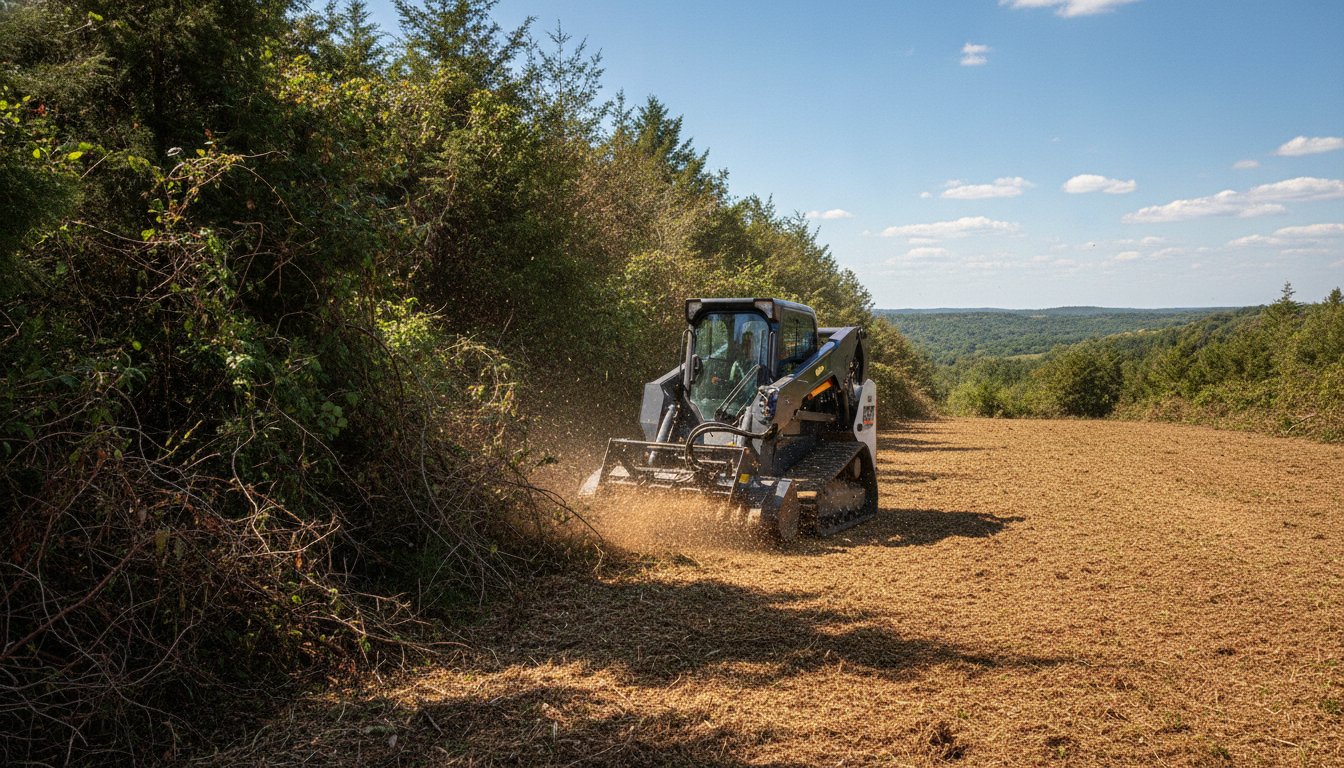
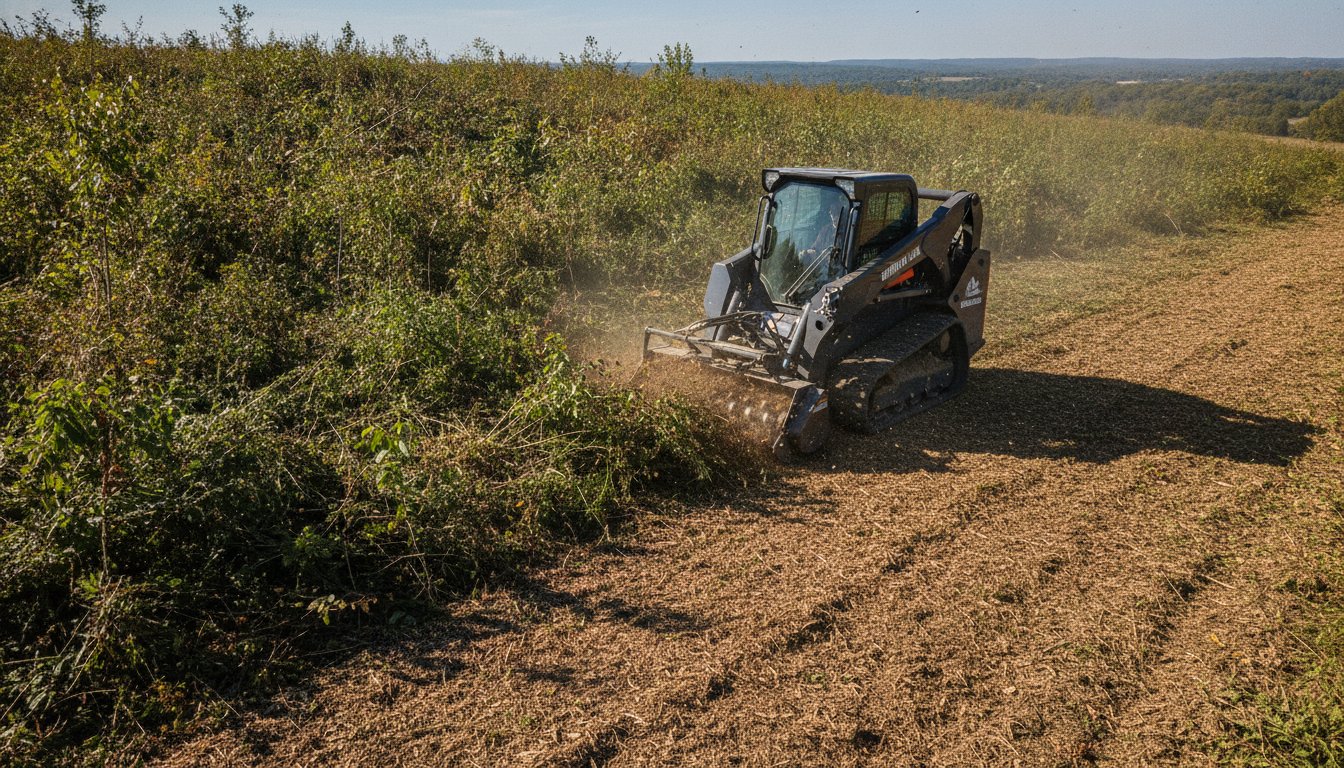
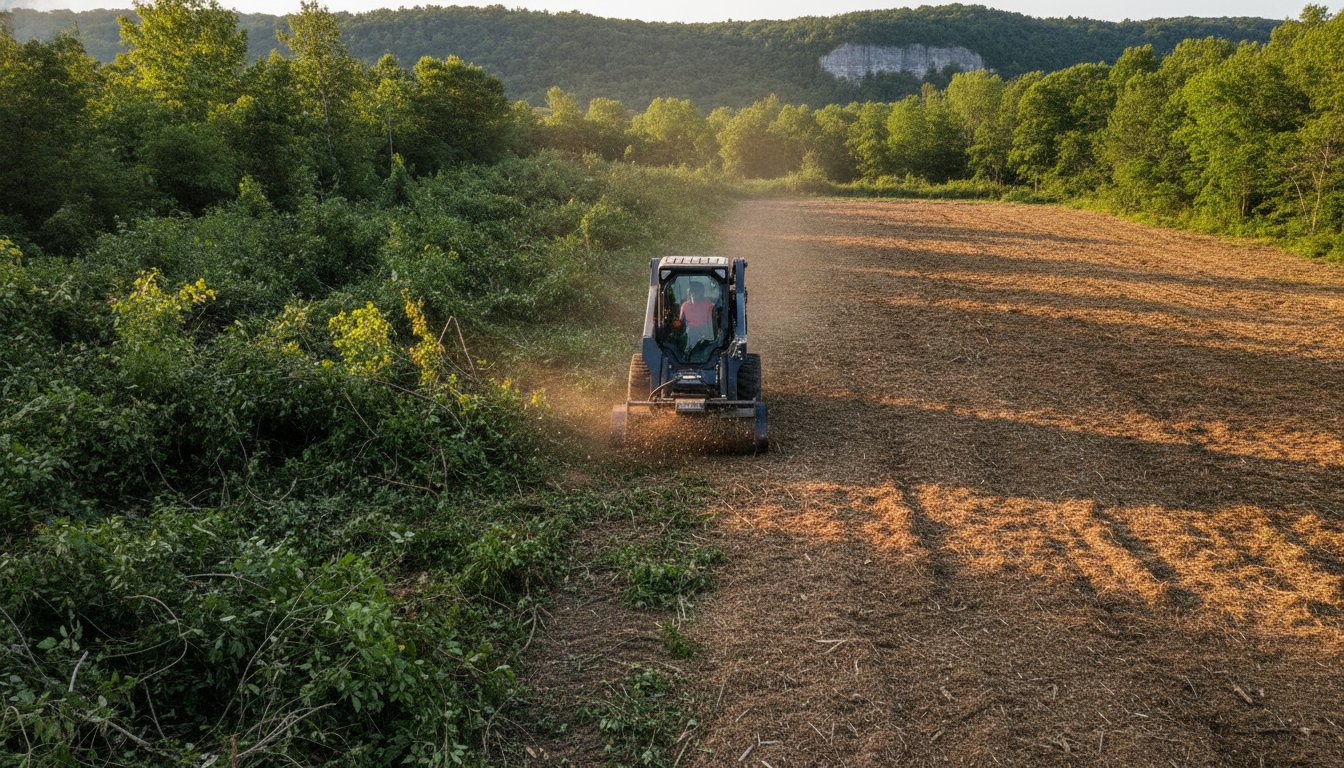
Forestry mulching provides a far more sophisticated and sustainable alternative. Instead of a "scorched earth" policy, a mulching head shreds invasive brush and small trees right where they stand. This creates a "no-haul" benefit where every bit of biomass stays on your property to serve a new purpose. The precision of skid steer mulching is a major advantage here. Unlike a massive bulldozer, a compact mulcher can weave through a stand of timber to remove invasive cedars while leaving your valuable hardwoods completely untouched. This selective clearing ensures that you don't lose the character or the timber value of your property while reclaiming your pasture space.
The Soil Health Advantage
The immediate result of mulching is a clean, walkable surface, but the long-term benefits happen beneath the surface. The shredded material left behind acts as a protective blanket, shielding the soil from the impact of heavy rain and preventing the sun from baking out vital moisture. This layer of organic material is essential for long-term productivity. Understanding how forestry mulching benefits topsoil helps you see the process as an investment in fertility. As this mulch decays, it feeds the microbial life in your soil, creating an ideal environment for establishing warm-season grasses for forage. This ensures that when you do seed your new pasture, the grass has the nutrients it needs to take hold and thrive.
Speed and Efficiency for Farmers
For a busy landowner, the one-step nature of mulching is a game changer. Traditional clearing often requires weeks of waiting for brush piles to dry out enough to burn, followed by the logistical headache of managing those fires. With mulching, there are no piles, no smoke, and no scorched earth spots where grass refuses to grow. The land is usable the moment the machine leaves the field. Because mulching is considered a low-disturbance activity, it often avoids the more stringent environmental permits required for major excavation. If you want to see how this efficient approach can work on your specific acreage, consulting with the team at landlegendsky.com can provide a clear roadmap for your reclamation project.
5 Steps to Reclaim Your Overgrown Kentucky Pasture
Reclaiming a field is a methodical journey that transforms a tangled mess into a functional asset. It's not just about running a machine; it's about a strategic plan that respects the land's current state while guiding it toward its future use. This five-step framework provides a clear roadmap for landowners who are ready to take their property back from years of neglect. Identifying "hot zones" of dense vegetation early on allows for a more efficient operation when clearing overgrown fields Kentucky.
Step 1 & 2: The Clearing Phase
Every successful project begins with a deliberate site walkthrough. You need to identify your boundaries and locate hidden obstacles like old fence wire, large rocks, or sinkholes common in our limestone-rich terrain. During this phase, we prioritize invasive plant removal in Taylor County, targeting the thickets of honeysuckle and autumn olive that prevent access to the interior of your acreage. Identifying these targets early ensures that the most aggressive "invaders" are handled first.
When clearing overgrown fields Kentucky, the technique matters as much as the machine itself. We utilize a "top-down" mulching method, which involves grinding the vegetation from the canopy down to the ground level. This approach is superior because it effectively shatters the main stem and prevents the high stumps that make future mowing impossible. It also helps deplete the root system's energy reserves, which significantly reduces the likelihood of aggressive regrowth. Clearing along your fence lines is equally vital; removing the brush allows you to inspect, repair, and secure the perimeter for future livestock grazing.
Step 3, 4 & 5: The Restoration Phase
Once the underbrush is managed, we address larger encroaching trees. Small tree clearing focuses on removing volunteer cedars or maples that have migrated from the woods into your pasture. By removing these "pioneer" trees, you open up the canopy and allow sunlight to reach the ground for the first time in years. This sunlight is the primary catalyst for the next phase of growth.
Soil testing is a critical, often overlooked step in the restoration process. Decades of cedar growth can turn the soil acidic, while honeysuckle thickets can deplete specific nutrients. By testing the soil immediately after mulching, you'll know exactly which amendments are needed to balance the pH and support healthy grass. For most South Central Kentucky farms, a mix of Tall Fescue, White Clover, and Orchardgrass provides a hardy, high-protein forage that stands up well to our climate. Seeding should ideally occur during the fall or early spring months immediately following the mulching process to ensure the new forage outcompetes any dormant weed seeds. Following this sequence ensures your reclaimed pasture remains a productive part of your farm for years to come.
Common Pitfalls: Why "Clear Cutting" Everything Is a Mistake
A common misconception among property owners is that a "clean slate" of bare earth is the ideal starting point for a new pasture. This "clear cutting" mentality often leads to long-term land management headaches that are difficult and expensive to undo. When you're clearing overgrown fields Kentucky, the goal should be surgical precision rather than total demolition. Stripping the land of all vegetation, including the root structures, leaves the soil completely vulnerable to the elements. This is especially dangerous on our signature rolling hills. A single heavy rain can wash away years of accumulated topsoil if the ground is left unprotected and the "anchor" of the root system is removed.
You should also consider the long-term welfare of your livestock. Kentucky summers are notoriously humid and hot; mature shade trees are a vital resource for animal health and weight gain. Removing every tree in a field might make mowing easier, but it forces cattle or horses to endure the full brunt of the July sun without relief. Timing is another factor that many overlook. Operating heavy machinery during Kentucky's "mud season," typically late winter and early spring, can lead to severe soil compaction. This compaction destroys the soil's pore space, making it nearly impossible for new grass seeds to take root and thrive later in the year.
The Erosion Control Factor
Mulch serves as a natural, permeable barrier against runoff. By utilizing forestry mulching for erosion control, you keep organic material on-site to slow down rainwater and encourage infiltration. This prevents silt and sediment from washing into local South Central KY watersheds and ponds. The dormant root systems of the brush you mulch remain in the ground for a time, providing a structural anchor that stabilizes steep pasture banks while your new forage establishes itself. This transition period is vital for protecting the integrity of your hillsides.
Preserving Native Kentucky Hardwoods
Identifying "Legacy Trees" is a key part of the stewardship approach. Mature Oaks, Walnuts, and Hickories add significant value to farm real estate and provide a park-like wooded pasture that boosts curb appeal. Through underbrush removal and understory thinning, we remove the competing invasive species that sap moisture and nutrients from these giants. This practice doesn't just clear the land; it actively improves the health of the mature canopy by reducing competition for resources. It transforms a tangled thicket into an organized, productive landscape. If you're ready to reclaim your land without sacrificing its natural beauty or soil health, contact Land Legends Property Management LLC to discuss a customized reclamation plan for your acreage.
Partnering with Land Legends for Your Reclamation Project
Restoring your property is a significant undertaking that requires more than just heavy machinery; it requires a partner who understands the unique character of the Bluegrass landscape. Land Legends Property Management LLC has built its reputation as the premier specialist for landowners in Adair, Green, and Taylor Counties. We recognize that clearing overgrown fields Kentucky is not a one-size-fits-all task. It's a delicate balance of removing the "invaders" while protecting the long-term health of your acreage. We utilize specialized skid steer mulching technology to achieve a level of precision that traditional bulldozers simply cannot match. This allows us to work around your legacy trees and navigate tight fence lines without causing unnecessary disruption to your soil.
Our "Trusted Steward" philosophy is the foundation of every project we accept. We don't just see a job site; we see a neighbor's farm, a family's heritage, or a future homestead. This means Land Legends Property Management LLC treats your land with the same care and meticulous attention to detail that we would apply to our own. We prioritize safety, environmental awareness, and the specific goals you have for your property. Whether you're looking to increase your property value or restore a grazing area for livestock, our approach ensures the final result is a clean, mowable, and productive landscape. We provide project-based estimates that are tailored to the specific density and terrain of your acreage, ensuring transparency from the first walkthrough to the final pass of the mulcher.
Serving South Central Kentucky Landowners
Our team brings a deep familiarity with local soil types and the specific invasive species patterns found throughout South Central Kentucky. We understand how the karst topography and rolling hills of our region dictate the best methods for vegetation management. Our commitment to safe, precise clearing serves both residential owners looking for curb appeal and agricultural clients needing to expand their forage. If you're managing property in the Columbia area, our Adair County Forestry Mulching guide provides even more localized insights into the reclamation process. We take pride in being a dependable local resource that farmers can count on for consistent, high-quality results.
Take the First Step Toward a Productive Farm
Are you ready to see what's hidden beneath that brush? The first step is to schedule a comprehensive site walkthrough. This allows us to assess the density of the vegetation and identify any terrain challenges that might affect the timeline. Beyond pasture reclamation, Land Legends Property Management LLC offers specialized services like fence line clearing and the cutting of recreational trails or shooting lanes. These additions can transform your property into a multi-functional space for both work and play. Don't let invasive species dictate the value of your acreage any longer. Reclaim your Kentucky land with Land Legends Property Management LLC and turn those overgrown thickets back into the productive fields they were meant to be.
Ready to Restore Your Kentucky Acreage?
Reclaiming your land is a rewarding journey that transforms neglected brush into a thriving, productive pasture. We've explored how forestry mulching protects your valuable topsoil while effectively removing aggressive invaders like honeysuckle and cedar. By following a methodical restoration plan, you can avoid common pitfalls such as erosion and soil compaction, ensuring your property remains a functional asset for years to come.
Clearing overgrown fields Kentucky is a task that requires both the right equipment and a deep understanding of the local environment. Land Legends Property Management LLC brings specialized skid steer mulching technology and extensive expertise in Kentucky invasive species removal to every project. We're proud to serve landowners across Adair, Green, and Taylor Counties with a commitment to stewardship and precision.
Request Your Free Kentucky Land Clearing Estimate from Land Legends Property Management LLC today to begin your reclamation project. Your land has incredible potential; it's time to uncover it and get back to the business of farming.
Frequently Asked Questions
How much does it cost to reclaim an acre of overgrown farmland in Kentucky?
Costs for reclaiming land depend heavily on the density of the vegetation and the specific terrain of your property. Dense thickets of cedar and honeysuckle require more time and specialized machinery than a field that is simply overgrown with tall weeds. We recommend a professional site walkthrough to provide a project-based estimate. This approach ensures that variables like steep slopes or rocky outcroppings are accounted for before the work begins.
What is the best time of year to clear overgrown fields?
Late fall and early winter are generally the most effective times for clearing overgrown fields Kentucky. During these months, the sap has retreated and the ground is typically firmer, which minimizes the risk of soil compaction. Working while vegetation is dormant also provides better visibility. This allows us to identify the land's natural contours and any legacy hardwoods you want to preserve before the spring growth cycle starts.
Do I need a permit for land clearing and forestry mulching in Kentucky?
Permit requirements often depend on the project's scale and its proximity to local waterways. Landowners disturbing one acre or more usually need a Kentucky Pollutant Discharge Elimination System (KPDES) permit and an erosion control plan. Additionally, all landowners with ten or more acres used for agriculture must implement a water quality plan. It is always wise to check with the Kentucky Division of Water regarding specific floodplain or stream regulations.
Will the brush grow back after forestry mulching?
Forestry mulching significantly slows regrowth by grinding stalks to the ground, but it doesn't always kill the root systems of every invasive species. Plants like multi-flora rose and honeysuckle are notoriously persistent. To ensure the brush doesn't return, you must follow up with soil testing, nutrient amendments, and competitive seeding. Once your new pasture grass is established, regular maintenance mowing will keep the invasive species from gaining a new foothold.
How soon can I graze cattle on a field after it has been mulched?
You should wait to graze cattle until your new forage is firmly established and has reached a height of at least six to eight inches. While the mulching process leaves the ground clear immediately, the new grass needs time to develop a strong root system. Grazing too early can lead to livestock pulling up young plants by the roots. This can damage your new pasture and set your reclamation timeline back significantly.
Is forestry mulching better than bush hogging for overgrown fields?
Forestry mulching is the better choice for any land that has progressed beyond simple weeds and into woody brush or saplings. A standard bush hog is designed for thick grass; attempting to use it on cedars or heavy honeysuckle can cause severe equipment damage. Mulching heads are specifically engineered to shred wood and small trees. This process turns thickets into a beneficial mulch layer that protects your soil and prevents erosion.
Can forestry mulching remove large trees or just underbrush?
Our services focus on underbrush removal, understory thinning, and small tree clearing. We specialize in removing invasive species and saplings that choke out your pasture ground. Large timber or mature canopy trees require commercial logging operations and are not part of the mulching process. Our goal is to clear the "invaders" while leaving your valuable legacy hardwoods untouched, which improves the overall health and value of your Kentucky farm.